
MAHE Dubai and Fluid Codes Launch Ansys-Powered Centre of Excellence to Advance Engineering Education and Industry Collaboration
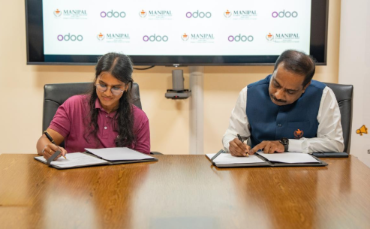
Manipal Academy of Higher Education (MAHE) Dubai Campus has signed a Memorandum of Understanding (MoU) with Fluid Codes, a Dubai-based Ansys (part of Synopsys) Elite Channel Partner, to establish the MAHE Dubai x Fluid Codes Centre of Excellence for Engineering Design & Simulation.
The initiative marks a major step toward strengthening simulation-led engineering education in the UAE by integrating industry-grade engineering technologies into academic learning and applied research.
The newly established Centre of Excellence (CoE) will serve as a platform to advance teaching, research, innovation, professional development, and industry collaboration through access to advanced computational tools and real-world engineering applications.
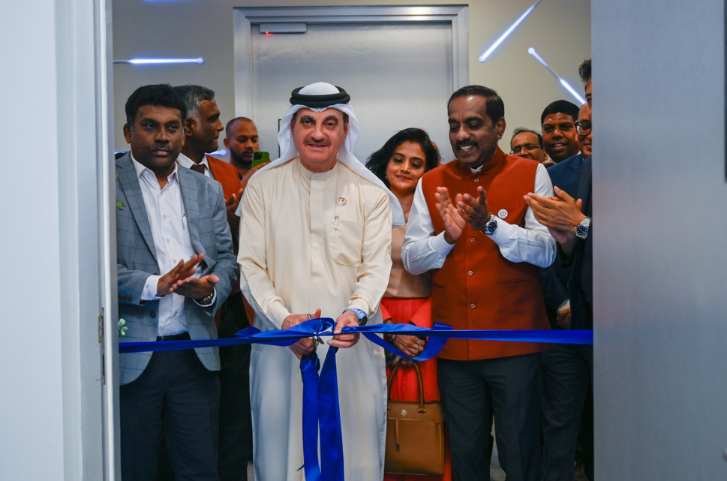
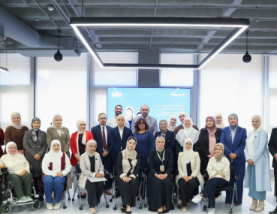
The Centre was officially inaugurated by H.E. Yaqoob Al Ali, Executive Director and Private Advisor, Office of His Highness Sheikh Juma Bin Maktoum Al Maktoum, in the presence of senior leaders from MAHE Dubai, Fluid Codes, industry representatives, faculty members, and students.
Several notable figures from the engineering and sustainability sectors also attended the launch, including Eng. Azmi S. Aboul-Hoda, CEO and Managing Director of EMergy, Dr. Paul Prabahar, President of TEPA UAE, and Amb. H.E. Dr. Srividhya Sukumar, ESG Advocate and Global Ambassador to the United Nations, reflecting the growing importance of industry-academic collaboration in shaping future engineering talent.
The Centre of Excellence will focus on four strategic pillars: teaching and curriculum integration, research and innovation, industry collaboration and professional training, and institutional branding and outreach.
Planned activities include simulation-based coursework, capstone project integration, faculty-led research using advanced computational platforms, collaborative R&D initiatives with UAE engineering firms, professional certification pathways, technical workshops, competitions, and regional engineering events.
Commenting on the collaboration, Dr. S. Sudhindra, Pro Vice Chancellor at MAHE Dubai, stated that universities must prepare students for the capabilities future industries will demand rather than simply reacting to market changes.
He highlighted that modern engineering increasingly depends on digital design, advanced manufacturing, simulation technologies, and data-driven innovation, making exposure to these capabilities essential for developing industry-ready graduates.
Supporting this vision, the Centre will enable students and researchers to model, simulate, validate, and optimise engineering solutions before physical prototyping, helping reduce development time while improving performance and innovation outcomes.
The Centre’s capabilities will support learning and research across disciplines including computational fluid dynamics (CFD), structural analysis, electronics, electromagnetics, thermal systems, and multiphysics simulation.
According to Dr. Rajiv Selvam, Associate Dean – School of Engineering & IT at MAHE Dubai, engineering is rapidly becoming a simulation-first discipline, where concepts are refined digitally before entering real-world production environments.
He added that access to industry-standard simulation software, certification pathways, and applied research opportunities will strengthen students’ technical expertise while encouraging deeper collaboration with industry.
The initiative aligns with the UAE’s broader economic and industrial ambitions. Under Operation 300bn, the country aims to increase manufacturing’s contribution to the national economy from AED 133 billion to AED 300 billion by 2031, while expanding industrial R&D investment from AED 21 billion to AED 57 billion.
Global workforce trends further reinforce the importance of such initiatives. According to the World Economic Forum’s Future of Jobs Report 2025, approximately 22% of current jobs are expected to be affected by labour market transformation by 2030, while nearly 39% of existing workforce skills could evolve or become outdated during the same period.
Highlighting industry relevance, Ajay Parihar, CEO of Fluid Codes, noted that simulation technologies are increasingly becoming essential across sectors including advanced manufacturing, aerospace, clean energy, and emerging technologies, helping organisations accelerate innovation and optimise product development.
As part of the collaboration, Fluid Codes will deliver structured training using Ansys CFD, Ansys Mechanical for structural simulation, and Ansys Electronics Desktop including HFSS and Maxwell, alongside faculty development sessions and technical workshops.
Supported by MAHE Dubai’s high-performance computing infrastructure and dedicated simulation laboratories, the Centre will integrate simulation learning across Mechanical, Civil, Electrical, and Mechatronics Engineering programmes, while supporting capstone projects, faculty research, industry challenges, and student certification pathways.
By embedding advanced simulation technologies into education and research, MAHE Dubai aims to strengthen graduate employability, accelerate innovation, and contribute to building a future-ready engineering workforce for the UAE’s rapidly evolving industrial economy.



Add Your Directory With Us
Boost your visibility with our Business Directory

Add Your BCard With Us
Open the door to new professional connections.
DayOfDubai
Business Services

Comments (0)
Please log in to post a comment
Login to CommentNo comments yet. Be the first to share your thoughts!