
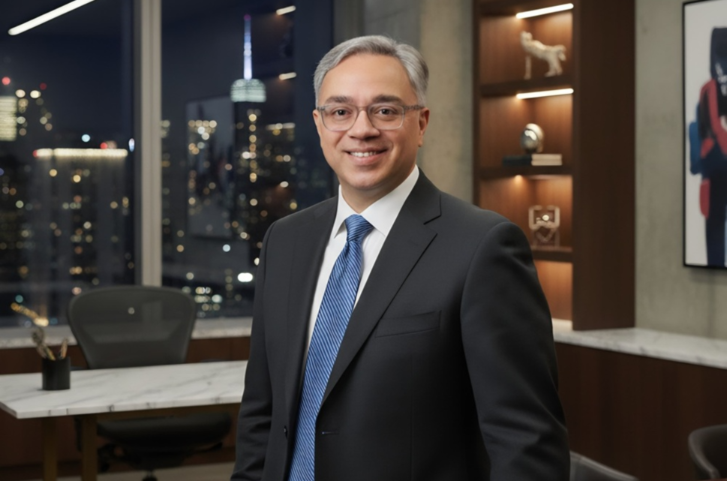
GCC HR leader Shuja Rabbani highlights the evolving role of people leadership in an AI-driven era
As businesses across the Gulf region and global markets navigate accelerating technological change, geopolitical uncertainty, and shifting workforce expectations, human resources is increasingly emerging as a strategic driver of business performance rather than a traditional support function.
Against this backdrop, Shuja Rabbani, a GCC-based human resources leader, executive coach, speaker, and certified human capital practitioner, is contributing to conversations shaping the future of leadership, workforce transformation, and organizational resilience.
With more than a decade of experience across aviation, non-governmental organizations (NGOs), banking, and government-related sectors, Rabbani has developed expertise in operating within high-pressure environments where adaptability, business continuity, leadership alignment, and organizational trust play a critical role in performance outcomes.
His professional focus spans organizational transformation, executive coaching, leadership development, change enablement, psychological safety, AI adoption, workforce resilience, and culture-building initiatives designed to connect people performance with business growth.
Following completion of the Berkeley Transformative Chief Human Resources Officer Leadership Program, co-led by Laszlo Bock at the University of California, Berkeley, Rabbani has expanded his emphasis on positioning HR as a strategic business partner capable of influencing executive decision-making and long-term enterprise success.
His approach reflects the view that modern HR functions must evolve beyond conventional talent management and operate as boardroom-level advisory capabilities that help organizations respond to disruption, adopt artificial intelligence responsibly, and build leadership capacity for sustainable growth.
As part of his academic work, Rabbani’s Berkeley capstone project explored the strategic role HR can play during geopolitical crises, examining how HR leaders can transition into trusted advisors supporting organizational resilience and decision-making.
Commenting on the changing business landscape, Rabbani said organizations increasingly require HR leaders who can help employees adapt to AI, maintain trust during periods of transformation, strengthen leadership capability, and prepare workforces for future disruption.
His professional credentials include 14 certifications across leadership, coaching, assessments, and human capital disciplines, including Hogan Assessments, MBTI, DiSC, and Saville Assessments.
Rabbani is also an executive coach trained through the leadership methodology developed by John C. Maxwell, strengthening his capabilities in coaching senior executives, developing executive presence, building high-performing teams, and creating workplace environments centered on trust, innovation, accountability, and performance.
As his profile continues to grow across the region, Rabbani remains open to participation in educational institutions, executive forums, leadership summits, and international conferences.
His key speaking areas include AI-enabled HR leadership, workforce resilience, psychological safety, leadership transformation, organizational culture, and the future of HR as a business-critical function.
At a time when Gulf economies continue to pursue ambitious transformation agendas and strengthen global competitiveness, Rabbani’s perspective reflects a broader shift toward commercially focused, human-centered, and future-ready leadership models.



Add Your Directory With Us
Boost your visibility with our Business Directory

Add Your BCard With Us
Open the door to new professional connections.
DayOfDubai
Business Services

Comments (0)
Please log in to post a comment
Login to CommentNo comments yet. Be the first to share your thoughts!