
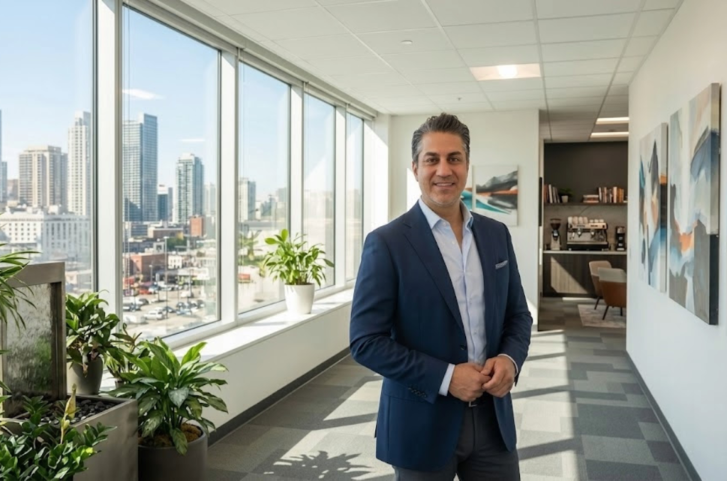
AI Is Transforming Preventive Healthcare in MENA, but Human Judgment Remains Essential, Says SGU
St. George's University (SGU) School of Medicine has highlighted the growing role of artificial intelligence (AI) in transforming preventive healthcare across the Middle East and North Africa (MENA), while emphasizing that technology should complement—not replace—clinical expertise to safeguard patient care.
According to the university, the rapid adoption of AI-powered healthcare solutions across the region underscores the need for future physicians to develop strong clinical reasoning alongside technological literacy.
AI Healthcare Market Set for Rapid Growth
The MENA AI healthcare market, valued at $0.6 billion in 2025, is projected to reach $15 billion by 2035, reflecting increasing investment in intelligent healthcare technologies across the region.
Government initiatives such as the UAE National AI Strategy 2031 and Saudi Arabia's Vision 2030 are accelerating digital transformation in healthcare by encouraging the deployment of AI-powered clinical solutions.
Healthcare institutions including Cleveland Clinic Abu Dhabi and Seha Virtual Hospital in Saudi Arabia are already using AI-assisted technologies such as radiology analysis and digital pathology to support disease detection and improve diagnostic accuracy.
Technology Should Support, Not Replace, Clinical Decision-Making
Despite the rapid advancement of AI, SGU stressed that physicians must continue to rely on traditional medical judgment when making clinical decisions.
Dr. Reza Sadeghian, Executive Physician, AI Strategist and Clinical Advisor at St. George's University, said doctors should recognize that AI-generated recommendations may sometimes be incomplete, outdated or clinically inappropriate if interpreted without context.
He advised clinicians to approach AI-generated information with the same level of scrutiny applied to any other medical resource.
Preparing Future Doctors for AI-Assisted Healthcare
The university noted that modern medical education is increasingly focusing on developing essential skills such as critical thinking, bias recognition, source verification, ethical decision-making, and professional accountability.
These competencies help ensure healthcare professionals can evaluate AI recommendations objectively while maintaining responsibility for patient care.
AI's Expanding Role Behind the Scenes
Beyond diagnostics, AI is increasingly being integrated into healthcare operations, supporting functions such as:
- Referral management
- Appointment scheduling
- Clinical documentation
- Resource allocation
- Workflow optimization
SGU noted that healthcare professionals must also understand the governance frameworks that regulate AI deployment, which vary across countries.
UAE and Saudi Arabia Strengthen AI Governance
The university highlighted that the Dubai Health Authority (DHA) requires licensed healthcare professionals to report AI-related deficiencies, conduct third-party audits, and ensure that human intervention remains possible in AI-assisted clinical workflows.
Meanwhile, Saudi Arabia's Food and Drug Authority (SFDA) mandates clinical validation, post-market surveillance, and competency requirements for professionals using AI-supported healthcare technologies.
Human Expertise Remains at the Center of Patient Care
Dr. Sadeghian said that while algorithms and automated systems are becoming an integral part of modern healthcare environments, physicians must remain the ultimate decision-makers.
He emphasized that AI recommendations should always be reviewed, questioned, compared against a patient's clinical presentation, and validated using established medical standards before informing treatment decisions.
According to SGU, combining advanced AI technologies with sound clinical judgment will be essential to ensuring safer, more effective healthcare as digital transformation continues across the MENA region.




Add Your Directory With Us
Boost your visibility with our Business Directory

Add Your BCard With Us
Open the door to new professional connections.
DayOfDubai
Business Services

Comments (0)
Please log in to post a comment
Login to CommentNo comments yet. Be the first to share your thoughts!