
AI Set to Shape Future of Arab Private Sector, Seminar Highlights
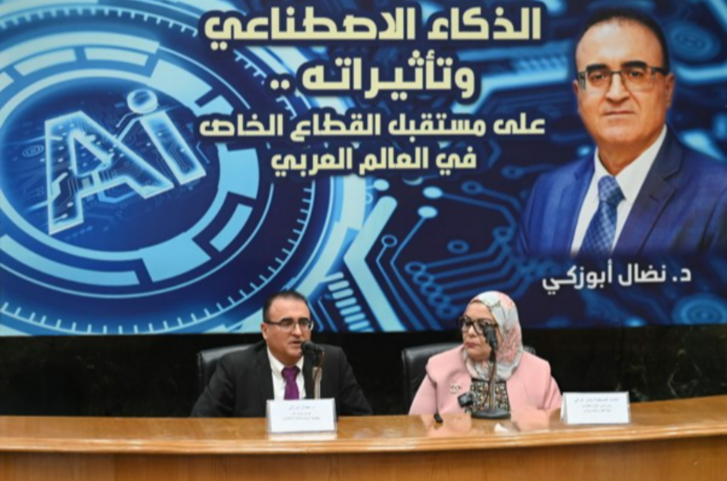
Artificial Intelligence (AI) is rapidly emerging as a transformative force for the private sector across the Arab world, reshaping business models, operational efficiency, competitiveness, and workforce requirements, according to industry experts speaking at a recent forum hosted by Orient Planet Group (OPG) at the Al-Ahram Establishment in Cairo.
The event brought together business leaders, economists, technology specialists, and media professionals to examine the growing role of AI in driving economic growth and digital transformation across the region.
Delivering the keynote address, Dr. Nidal Abou Zaki emphasized that AI has evolved beyond a technological innovation and is now a key economic enabler.
“AI is no longer a technological luxury; it has become a direct driver of productivity, investment, and economic growth. Organizations and economies that strategically embrace AI today will be better positioned to compete and thrive in the future global economy,” he said.
According to Dr. Abou Zaki, global projections estimate that the AI market will reach USD 4.8 trillion by 2033, while approximately 78 percent of organizations worldwide are already utilizing AI technologies in at least one business function. He noted that these developments highlight AI’s increasing influence on future business strategies and economic performance.
Data Emerging as a Strategic Asset
The seminar underscored how AI-driven transformation extends beyond technology and is redefining competitiveness at both corporate and national levels. Participants highlighted that data has become a strategic economic asset, with organizations increasingly competing through their ability to collect, manage, and derive value from data-driven insights.
Arab Private Sector Undergoing Digital Transformation
Dr. Abou Zaki noted that the Arab private sector is experiencing significant change due to the growth of the digital economy, evolving consumer behavior, and increased global competition.
He pointed out that the private sector accounts for around 80 percent of employment in Egypt and contributes approximately 75 percent of the Arab world’s GDP. In addition, non-oil activities contribute more than 55 percent of GDP in Saudi Arabia and around 77 percent in United Arab Emirates, demonstrating the region’s growing reliance on digital and non-traditional economic sectors.
Future Skills and Workforce Evolution
The forum highlighted the impact of AI on labor markets, with studies suggesting that around 40 percent of jobs globally could be affected by digital transformation. Additionally, 44 percent of current skills are expected to change over the next five years.
Experts stressed that AI is more likely to reshape roles and skill requirements rather than eliminate jobs entirely. Demand is expected to increase for expertise in data analytics, AI systems, critical thinking, and digital technologies, alongside human-centric skills such as creativity, communication, and leadership.
Building AI-Driven Economies
Participants emphasized the importance of strengthening digital infrastructure, supporting innovation ecosystems, and investing in education and workforce development across the Arab world.
Dr. Abou Zaki concluded that future economic competitiveness will increasingly depend on a country's ability not only to adopt technology but also to develop its own AI ecosystems, attract investment, and generate sustainable economic value.



Add Your Directory With Us
Boost your visibility with our Business Directory

Add Your BCard With Us
Open the door to new professional connections.
DayOfDubai
Business Services

Comments (0)
Please log in to post a comment
Login to CommentNo comments yet. Be the first to share your thoughts!