
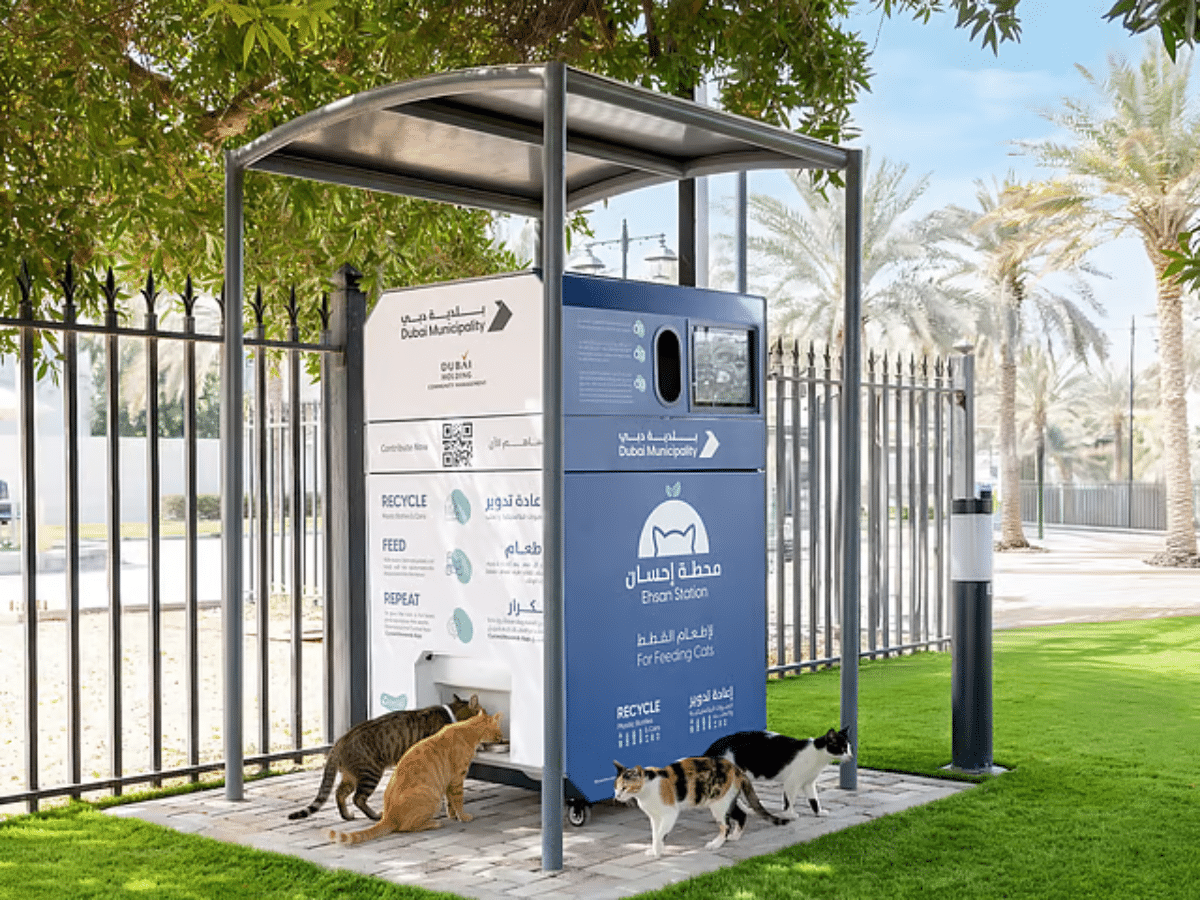
Could Dubai’s AI-powered feeding stations transform stray animal care?
A new initiative by Dubai Municipality is drawing attention for its innovative approach to stray animal welfare, with the launch of AI-powered feeding stations across the emirate.
Part of the ‘Ehsan Stations’ programme, the project introduces smart devices that can identify stray animals, dispense food automatically, and collect data to support long-term population management. So far, 12 stations have been installed in key locations, including public parks and sites managed by Dubai Holding.
A step towards organised and humane care
Residents and animal welfare advocates have welcomed the initiative as a progressive and structured solution. Many see it as a move towards a more humane and efficient system for supporting stray animals.
Entrepreneur Lorna Bancroft described the initiative as a positive step, noting that the use of technology and innovation reflects a growing commitment to improving animal welfare in the UAE.
Feeding alone is not enough
Despite the optimism, experts stress that feeding programmes alone cannot address the root issue — the growing stray population.
Long-time rescuer Steve Carpenter highlighted that structured feeding can help improve conditions but must be combined with Trap–Neuter–Return (TNR) programmes to effectively stabilise population growth.
Similarly, resident Deepika Vasanth pointed out that while feeding stations ensure consistent food supply, long-term success depends on sterilisation efforts and adoption campaigns.
Supporting community efforts
The initiative also complements the work of volunteers and rescue groups, who have long played a crucial role in caring for stray animals across communities. By introducing centralised and monitored feeding points, authorities aim to create a more organised ecosystem for animal welfare.
Balancing innovation with long-term solutions
While the AI-powered stations mark a significant step forward, their effectiveness will depend on integrating technology with comprehensive strategies, including population control, medical care, and community engagement.
If successfully expanded, the programme could become a model for other cities, combining innovation and compassion to address one of urban life’s persistent challenges.









Add Your Directory With Us
Boost your visibility with our Business Directory

Add Your BCard With Us
Open the door to new professional connections.
DayOfDubai
Business Services
