
Beyond Hospitals: The Software Revolution Reshaping Healthcare Across the GCC
Healthcare providers across the Gulf are constantly hitting the exact same wall: brilliant medical teams trapped behind clunky tech and scattered patient data. It is incredibly frustrating when the tools meant to help you end up slowing down the actual care you want to deliver.
Fortunately, the tide is finally turning. Medical care is moving out of crowded hospital corridors and straight onto our screens, completely changing the game for both doctors and patients.
To make this transition smooth, forward-thinking clinics are teaming up with a specialized software development company in Dubai to build strong tools that actually make daily workflows effortless. Here is a look at how modern software is quietly reshaping the GCC healthcare system and finally giving medical teams their time back.
Why Healthcare Is Going Digital Faster Across The Gulf
It’s no coincidence that healthcare in the Gulf is transforming at the speed of light right now. The shift away from slow, paper-heavy workflows is a direct response to two massive driving forces: aggressive government backing and a population that honestly expects everything to work at the swipe of a screen.
Government-Led Digital Health Initiatives
National visions across the GCC aren't just policy papers; they are active blueprints for immediate action, and healthcare is right at the center. Take Saudi Arabia’s Vision 2030, which is pushing hard to get the entire population onto a unified digital health system. Milestones like the SEHA Virtual Hospital show exactly where the public sector is heading.
To keep up with these major government mandates, local clinics and hospital networks are quickly overhauling their legacy setups. Many are jumping on this momentum by hiring experts from an experienced software development company in Saudi Arabia to make sure their systems comply perfectly with the new regulations while remaining agile enough to handle high patient volumes.
Rising Demand for Connected Patient Care
The modern GCC patient doesn't want to wait around for hours just for a physical file to be dug up, and they definitely don't want to repeat their medical history to three different specialists. We live in an era of instant delivery and smart cities, so people naturally expect their healthcare experience to feel just as smooth.
There is a booming demand for connected care, meaning your lab results, prescription history, and follow-up appointments should all live in one secure, accessible place. This pressure from the consumer side is forcing medical providers to drop isolated practices and replace them with interconnected digital systems that actually focus on patient convenience.
Core Healthcare Software Transforming the Industry
When we talk about digital healthcare, we aren't talking about basic websites. We’re talking about the backend engine rooms that keep a modern clinic from collapsing under its own weight.
Let’s look at the core software systems that turn chaotic hospital corridors into smooth, synchronized operations.
Electronic Health Records (EHR) Systems
EHR is the central nervous system of modern medicine. Instead of locking patient histories inside dusty manila folders or isolated PDFs, EHR platforms pull everything: allergies, past surgeries, imaging, and lab work into a single live dashboard. When a doctor can see a patient's complete medical history in three clicks, diagnosis gets faster, and medical errors drop dramatically.
Hospital Management Systems (HMS)
HMS runs the business engine. It’s the digital architect managing the messy operational realities of healthcare: billing, inventory tracking for pharmacies, bed allocations, and staff scheduling. An efficient Hospital Management System makes sure that a hospital doesn't run out of critical supplies mid-shift and keeps the administrative gears turning without bottlenecks.
Telemedicine Platforms
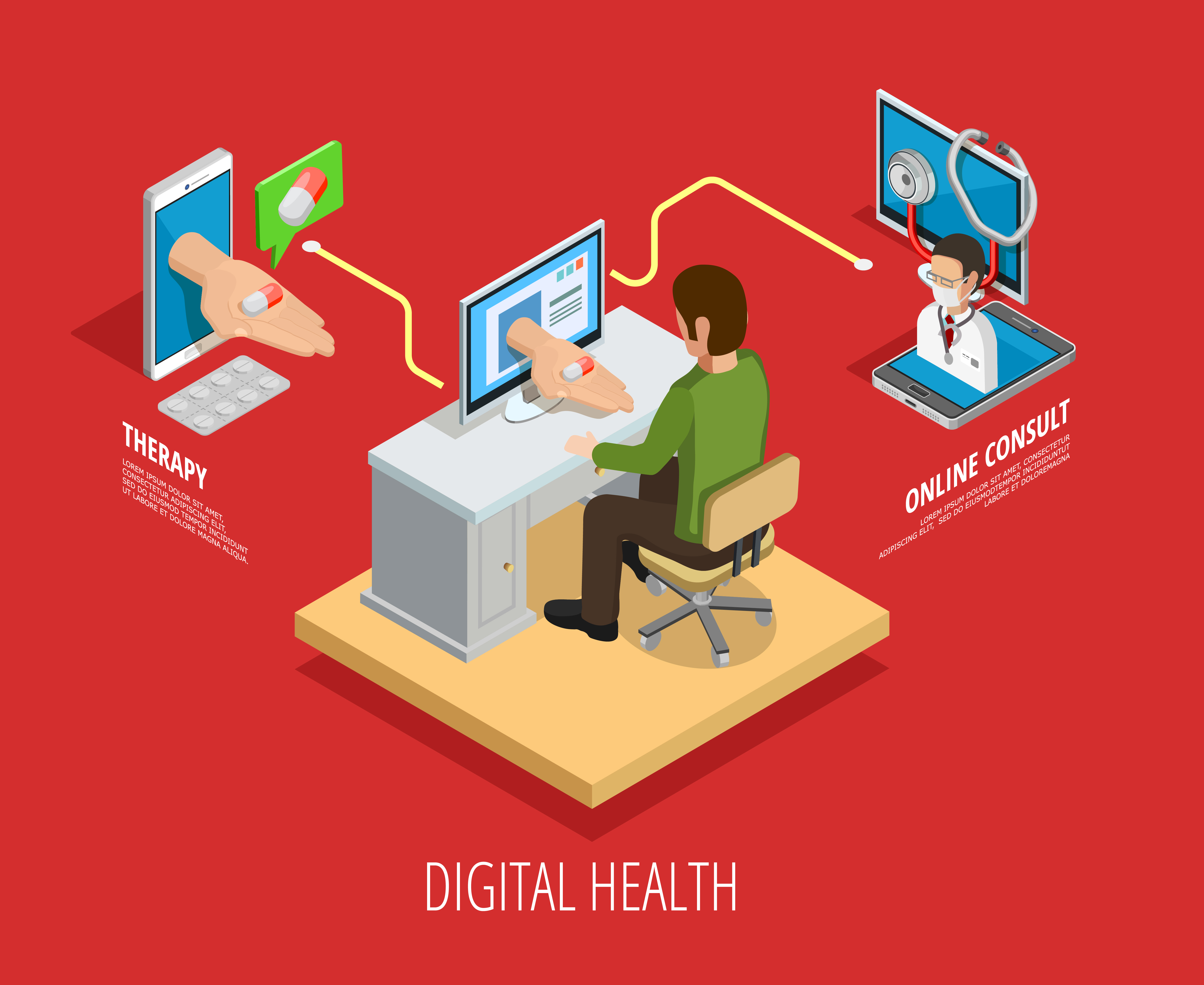
The pandemic gave us a taste of virtual care, but modern telemedicine platforms are built for the long haul. They bridge the gap between rural patients and top-tier urban specialists. With HD video consultations, integrated digital prescriptions, and instant follow-ups, these platforms prove that excellent care doesn't always require a physical waiting room.
Patient Portals
Modern patients want control over their own health journey. Patient portals act as a secure, self-service window where individuals can check their lab results, message their doctors directly, and book or reschedule appointments on the fly. It saves the administration from endless phone calls and gives patients the autonomy they expect.
Healthcare CRM Systems
Medical care is ultimately about relationships, and that is where Healthcare CRM comes in. Unlike a standard sales tool, a healthcare-specific CRM tracks patient engagement, manages post-discharge follow-ups, sends preventative care reminders, and gathers feedback.
Building these highly secure, compliant, and deeply integrated systems requires deep local expertise. A premier software development company in Dubai understands how to thread the needle between strict data privacy laws and intuitive user interfaces, guaranteeing that these five core systems talk to each other without a hitch.
Game-Changing Technologies In Modern Healthcare
If the core software platforms we just looked at are the foundation, these next-gen technologies are the rocket fuel. We are moving past the era of simply storing data and stepping into an era where technology actively helps doctors treat patients, predict outbreaks, and monitor health in real time.
Artificial Intelligence (AI)
AI is actively sitting alongside radiologists and specialists across the Gulf. By analyzing thousands of medical images in seconds, machine learning algorithms can spot tiny anomalies, like early-stage tumors or micro-fractures, that might slip past a fatigued human eye.
It is not taking away the jobs of doctors; instead, it gives them a superpowered second opinion.
Internet of Medical Things (IoMT)
The explosion of smart wearables, connected glucose monitors, and smart blood pressure cuffs has completely changed remote care. IoMT acts as a continuous digital bridge between a patient's home and the clinic.
Instead of waiting for a monthly check-up, these smart devices securely feed real-time vitals straight back to medical teams, triggering automated alerts the moment a baseline goes off track.
Predictive Analytics
Why wait until a patient gets sick when you can anticipate it? Predictive analytics tools look at historical health trends, lifestyle factors, and environmental data to flag individuals who are at high risk of developing chronic conditions.
On an operational level, hospitals use these same predictive algorithms to forecast patient influx surges, ensuring they never run short on staff or critical ICU beds.
Cloud-Based Healthcare Platforms
None of this data-driven magic works if information stays trapped in local servers. Cloud infrastructure is the invisible glue connecting the entire system. It allows a specialist in Riyadh to instantly review imaging data generated at a local clinic miles away, ensuring that no matter where a patient is located, their critical health data is secure, updated, and ready whenever it is needed.
Challenges in Developing Healthcare Software
Building beautiful interfaces is one thing, but designing software that can handle the raw operational realities of modern medicine is a completely different ballgame. The healthcare sector has zero tolerance for system crashes or slow loading times. When a platform goes live, developers face massive hurdles to make sure the software remains reliable, secure, and compliant.
Data Security And Compliance
Patient records are among the most sensitive pieces of information on the planet, making them a prime target for cyber threats. In the Gulf, data privacy isn’t just a best practice, it’s heavily legislated. Software must comply with strict local laws, such as the UAE’s Healthcare ICT Law and Saudi Arabia’s Personal Data Protection Law (PDPL), which mandate absolute data localization and strict user access controls.
Meeting these heavy regulatory demands requires localized expertise. This is why working alongside an established software development company in Saudi Arabia is essential for mapping out secure data flows and building end-to-end encryption that stands up to rigorous public health audits.
System Interoperability
A single hospital might use one vendor for its pharmacy inventory, another for its lab equipment, and a completely different system for its patient portal. The real headache in healthcare software development is getting these isolated platforms to talk to each other seamlessly.
Without standardized integration frameworks, like Fast Healthcare Interoperability Resources (FHIR) protocols, critical patient information stays trapped in silos, forcing medical teams to manually transfer data between screens and increasing the risk of human error.
Scalability And Performance
Healthcare infrastructure cannot afford a single second of downtime, nor can it slow down during a regional health crisis or peak morning appointment rushes. The backend architecture has to be engineered to process thousands of simultaneous data requests, live video consultations, and massive medical imaging transfers all at once without breaking a sweat.
Achieving this level of continuous performance under pressure is exactly what a premier software development company in Dubai focuses on when building platforms for growing medical networks. The code must be clean, the database structure must be optimized, and the cloud servers must scale automatically to keep up with real-time patient volumes.
Ending Note: The Future of Digital Healthcare
The shift we are seeing across the Gulf isn't a temporary fix; it is a permanent upgrade. We are finally moving past the days of just replacing paper files with digital PDFs. The future is all about creating a connected system where health data flows smoothly in the background, letting medical teams focus 100% on taking care of people.
As smart tools, wearables, and cloud systems become a normal part of life, hospital walls will matter less. Care will follow patients everywhere, catching health risks before they become emergencies. For Gulf healthcare leaders, the path forward is simple: the future belongs to those built on smart, secure software that makes life easier for everyone.









Add Your Directory With Us
Boost your visibility with our Business Directory

Add Your BCard With Us
Open the door to new professional connections.
DayOfDubai
Business Services
