
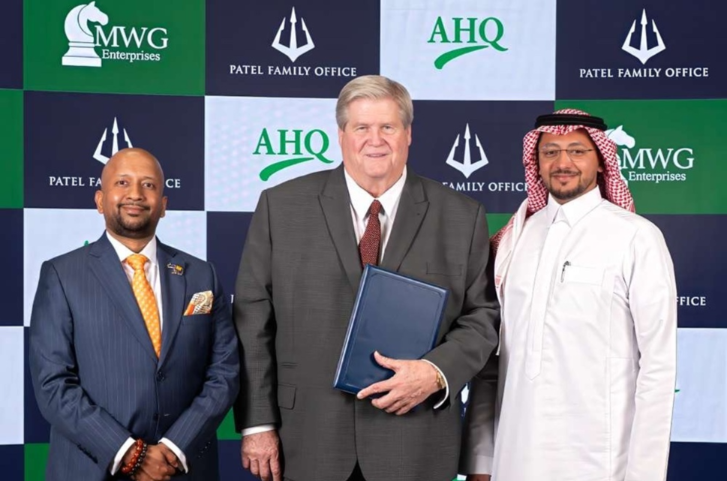
US-Saudi Consortium Nears Final Site Selection for $5 Billion Gulf Refinery Project
A US-Saudi private consortium has entered the final stage of selecting a host location for a planned US$5 billion integrated refinery and energy export corridor, marking a significant step toward expanding the Gulf region's downstream energy infrastructure.
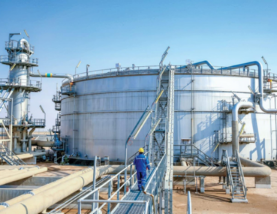
The consortium, operating under the name MERA Oil, brings together MWG Enterprises, Patel Family Office, and PWS, an associate company of Saudi Arabia's AHQ Group. The project is expected to include a 200,000-barrel-per-day refinery, deepwater port infrastructure, large-scale crude and refined product storage, and marine export facilities.
Three GCC Locations Shortlisted
Following three years of regional evaluations and two years of detailed discussions, the consortium has narrowed its site selection to three GCC locations outside the Strait of Hormuz. A preferred host jurisdiction is expected to be announced by the end of 2026.
Despite the advanced stage of negotiations, the consortium said it remains open to considering another qualifying GCC location if it presents a stronger proposal that meets the project's infrastructure, resilience and development timeline requirements.
Focus on Energy Security and Export Resilience
The planned energy complex is designed to strengthen the region's energy security by providing a route-resilient export platform with direct access to international shipping lanes outside the Strait of Hormuz.
The development will combine refining, storage, logistics and export infrastructure, creating a long-term industrial base aimed at supporting manufacturing, technical expertise and regional supply chains.
Marc W. Gunderson, Founder of MWG Enterprises, said the project has reached a decisive stage after years of planning and engagement with potential host jurisdictions.
He noted that the consortium has finalized its development concept and capital strategy and is now focused on selecting the location best positioned to support the project's long-term objectives.
Advanced Technologies Planned
The Phase One investment, valued at up to US$5 billion, is intended to establish a modern energy complex incorporating energy-efficient refining technologies and advanced emissions-control systems.
The consortium is also evaluating the future integration of sustainable aviation fuel (SAF) co-processing and carbon management capabilities as part of its long-term development strategy.
A pre-feasibility study covering refinery configuration, logistics, capital requirements and phased execution has reached an advanced stage. Following the selection of the host country, the project will move into detailed engineering, final site assessments and design work.
Mechanical completion of the first phase is targeted by the end of 2029, followed by commissioning and commercial operations.
Supporting Gulf Energy Infrastructure
The project aligns with broader Gulf initiatives to expand domestic refining capacity, storage facilities and export infrastructure.
According to the GCC Statistical Centre, the six GCC countries exported approximately 11.5 million barrels of crude oil per day in 2024, representing around one-quarter of global crude oil exports.
The planned refinery will primarily produce high-specification middle distillates, including ultra-low sulphur diesel and jet fuel, targeting selected import-dependent markets in the United States, the Atlantic Basin, the Gulf region, and other international markets, subject to final engineering and commercial agreements.
Economic and Employment Benefits
Abdulmalik Alqahtani, Group Chief Executive Officer of AHQ Group, said the project aims to generate long-term industrial value by creating jobs, strengthening local supply chains and expanding technical capabilities in line with national economic diversification strategies.
The proposed development is expected to occupy approximately 1,200 to 1,500 acres of port-connected industrial land and support local engineering, procurement and workforce development initiatives.
Based on preliminary sponsor estimates, the project could generate up to 3,000 direct jobs during construction, commissioning and operations, while supporting an additional 15,000 indirect and induced employment opportunities.
Funding Strategy
The consortium said financing for the development is expected to include a combination of sponsor equity, sovereign and institutional investment, international project finance, export credit support, and Shariah-compliant financing structures.
Lakshmi Narayanan, Vice Chair of Patel Family Office, said the consortium is engaging long-term institutional and sovereign partners to establish a governance framework capable of supporting multigenerational infrastructure development.
Meanwhile, discussions with potential feedstock suppliers from within and beyond the GCC are continuing and are expected to advance alongside the final host selection process.


Add Your Directory With Us
Boost your visibility with our Business Directory

Add Your BCard With Us
Open the door to new professional connections.
DayOfDubai
Business Services

Comments (0)
Please log in to post a comment
Login to CommentNo comments yet. Be the first to share your thoughts!