
Global Experts Explore the Future of Desert Architecture at MENA Forum 2026
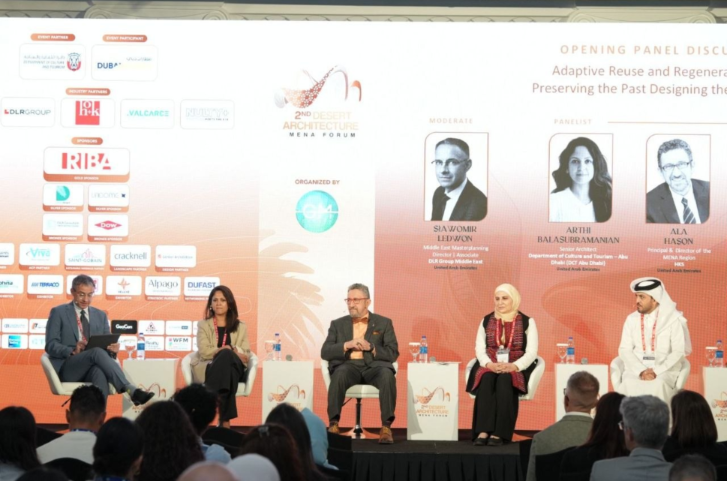
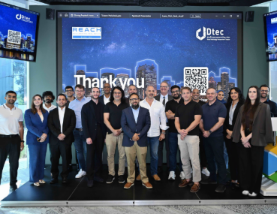
Leading architects, urban planners, sustainability specialists, government representatives, developers, and international experts gathered at the opening day of the Desert Architecture MENA Forum 2026 to discuss how future desert cities can evolve while preserving cultural identity, environmental responsibility, and regional heritage.
Held under the theme “Integrating Heritage with Innovation: The Future of Desert Living,” the forum focused on practical and forward-looking approaches to designing resilient, adaptive, and climate-responsive communities capable of thriving in some of the world’s most challenging environments.
Throughout the event, industry leaders explored a broad range of topics including adaptive reuse of heritage buildings, regenerative urban development, climate-responsive architecture, high-performance façades, sustainable hospitality design, and the role of natural landscapes in strengthening biodiversity and improving urban liveability.
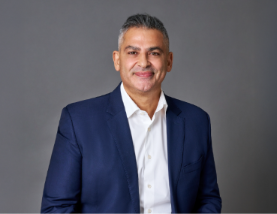
Speaking during the forum, Ala Hason, Principal and Director of the MENA Region at HKS, emphasized that desert architecture is entering a transformative period where sustainability and cultural identity must evolve together.
He noted that the region has a unique opportunity to position itself as a global leader by combining traditional environmental knowledge with advanced design technologies, creating communities that are efficient, resilient, and deeply connected to their surroundings.
According to Hason, the future of desert living extends beyond adapting to climate conditions and instead focuses on designing environments where people and nature can thrive together.
Highlighting the importance of preserving regional heritage, Abdullatif Al Jasmi, Director of Cultural Heritage Protection at Qatar Museums, stated that traditional desert settlements continue to offer valuable insights into addressing modern environmental and urban challenges.
He explained that historic architectural practices reflected a sophisticated understanding of climate conditions, locally sourced materials, and community requirements, and preserving this knowledge remains essential not only for protecting cultural identity but also for informing future sustainable development.
Al Jasmi added that integrating heritage into modern planning can help future generations remain connected to the region’s stories, values, and accumulated environmental knowledge.
Addressing the role of adaptive reuse, Arthi Balasubramanian, Senior Architect at the Department of Culture and Tourism – Abu Dhabi, described revitalisation strategies as one of the most effective ways to preserve heritage while meeting contemporary environmental and social demands.
She highlighted that extending the life cycle of existing structures reduces the environmental impact associated with new construction while creating spaces capable of supporting future communities.
According to Balasubramanian, the objective is not only to conserve historical assets but to ensure that heritage remains an active and evolving contributor to community identity, economic development, and long-term sustainability.
Participants also examined how traditional desert knowledge can influence next-generation urban development, supported by emerging technologies, innovative construction materials, and smart design systems that improve thermal comfort, energy performance, and environmental resilience.
The forum featured high-level panel discussions, expert presentations, and innovation sessions, reinforcing the growing importance of architecture and urban planning in shaping the future of sustainable desert development across the Middle East and beyond.


Add Your Directory With Us
Boost your visibility with our Business Directory

Add Your BCard With Us
Open the door to new professional connections.
DayOfDubai
Business Services

Comments (0)
Please log in to post a comment
Login to CommentNo comments yet. Be the first to share your thoughts!