



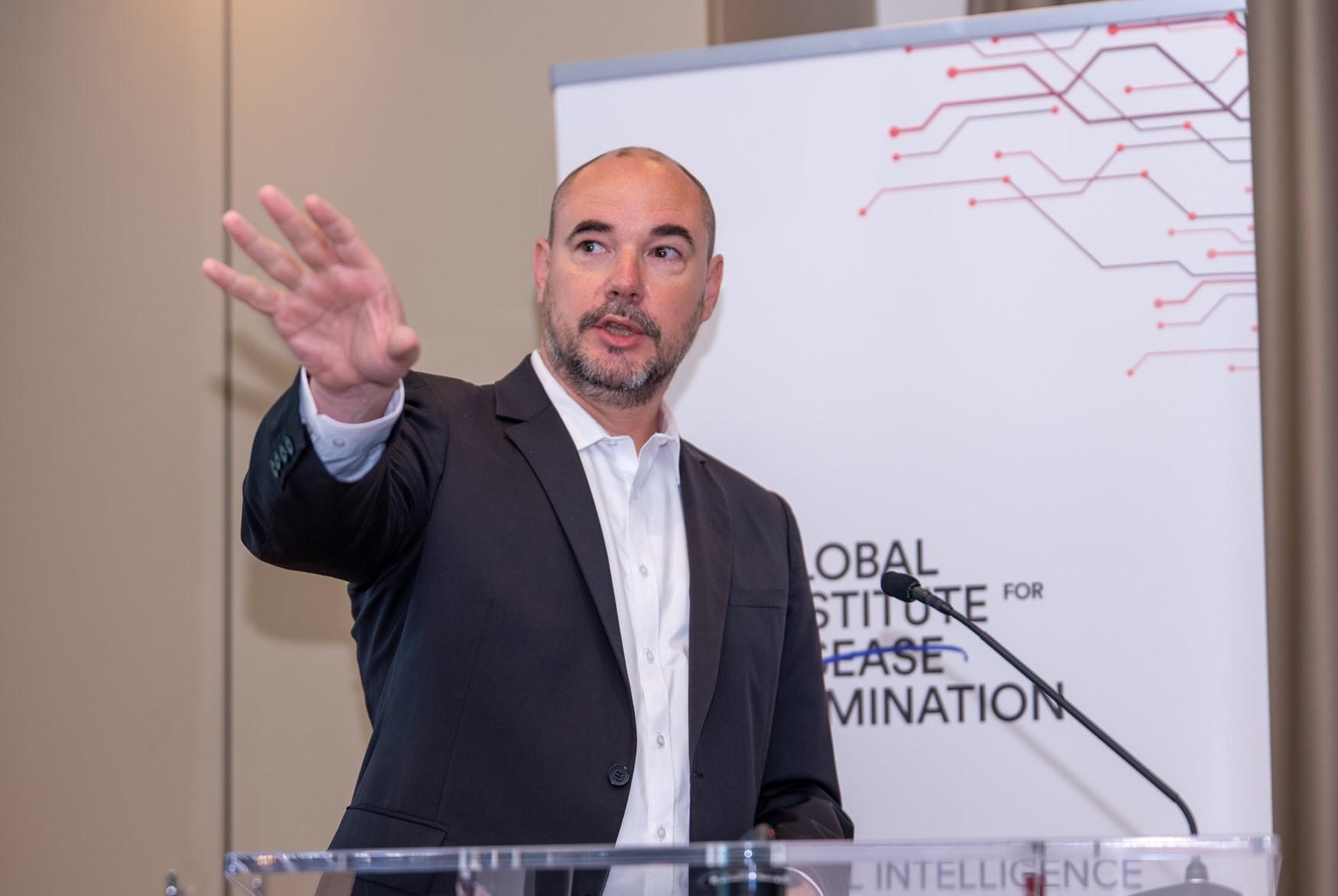
The Global Institute for Disease Elimination (GLIDE) concluded its participation at the 79th World Health Assembly (WHA79) in Geneva, where it engaged with global health leaders, policymakers, and technology experts to advance discussions on infectious disease elimination, health system integration, and the role of artificial intelligence (AI) in public health.
Through a series of strategic sessions and expert-led discussions, the Abu Dhabi-based institute focused on bridging the gap between global health strategies and practical implementation, reinforcing international efforts to eliminate preventable infectious diseases.
Focus on Integrating Disease Elimination into Health Systems
In partnership with Devex, GLIDE hosted a panel discussion titled "Rethinking Disease Elimination: Integration and Innovation for Sustainable Impact." The session explored how disease control programmes can be more effectively integrated into primary healthcare systems to ensure long-term sustainability and avoid fragmented approaches.
The panel featured notable health leaders including H.E. Dr. Farida Al Hosani, CEO of GLIDE; Dr. Nada Al Marzouqi, Director of Public Health and Prevention at the UAE Ministry of Health and Prevention; Tala Al-Ramahi, Spokesperson for the Mohamed Bin Zayed Foundation for Humanity; Dr. Alain Labrique, Director of Data, Digital Health, Analytics and AI at the World Health Organization (WHO); and Peter Ward, Co-founder of Enaiblers.
Participants discussed how AI-powered technologies, advanced data systems, and digital health tools are helping address demographic challenges, strengthen disease surveillance, and support healthcare workforces worldwide.
The conversation continued during a separate Devex Impact House session, where Dr. Al Hosani spoke with Kate Warren, Executive Vice President and Executive Editor at Devex, highlighting how AI and stronger primary healthcare systems can accelerate disease elimination efforts and transform global commitments into sustainable local outcomes.
Advancing AI Applications in Disease Elimination
GLIDE also hosted the third edition of its ongoing dialogue series, "Artificial Intelligence for Health and Disease Elimination: Cross-Sector Action for Impact."
Building on discussions initiated during Abu Dhabi Global Health Week 2025 and the United Nations General Assembly, the session focused on moving AI from theoretical frameworks to real-world implementation within healthcare systems.
Experts explored innovative approaches that combine environmental data, epidemiological intelligence, and advanced analytics to support disease prevention and elimination strategies. Discussions also emphasized the importance of establishing ethical governance frameworks to ensure AI technologies are deployed responsibly, equitably, and effectively.
By bringing together policymakers, technologists, investors, and healthcare professionals, the session aimed to accelerate the adoption of scalable AI-driven solutions across global health systems.
Examining the Economics of Disease Elimination
Recognizing the growing importance of economic resilience in healthcare, GLIDE convened the third meeting of the International Working Group on the Economics of Disease Elimination and Integration.
The meeting focused on strengthening the connection between economic analysis and health policy development. Participants reviewed findings from the Thanzi Labwino research programme, which examines decision-making processes in resource-constrained environments.
Discussions centered on financial protection mechanisms, investment prioritization, and the use of advanced analytical tools to safeguard public health gains amid global economic uncertainty.
Strengthening Global Collaboration
Reflecting on the outcomes of the week, H.E. Dr. Farida Al Hosani, CEO of GLIDE, emphasized the importance of collaboration across sectors to achieve sustainable disease elimination.
“Working toward disease elimination requires sustained commitment and close coordination across different sectors. The Geneva meetings provided us with an important opportunity to discuss how precise economic tools and digital solutions like AI can support health systems. We look forward to translating these discussions into practical collaboration that empowers local communities to tackle infectious diseases and ensures health services reach everyone.”
Driving the Future of Global Health
GLIDE’s participation at WHA79 reinforces its growing role in shaping international conversations around public health innovation, digital health transformation, and disease elimination strategies.
By promoting stronger health systems, responsible AI adoption, and evidence-based policymaking, the institute continues to support global efforts to build more resilient, equitable, and sustainable healthcare systems for the future.













Comments
0 commentsNo comments yet. Be the first to share your thoughts!