
Korean Dermal Fillers Are Gaining Global Market Share — Here's What's Driving the Shift
Five years ago, suggesting a Korean-manufactured dermal filler to a patient in a Western clinic would have required extensive justification. Today, Korean fillers are the fastest-growing segment in the global dermal filler market, with estimated export growth exceeding 30 percent year-over-year across key markets in Southeast Asia, the Middle East, Europe, and increasingly North America. This isn't a price-driven race to the bottom. Korean manufacturers are winning on technology, regulatory sophistication, and product line depth — and the implications for clinic purchasing strategy are significant.
The Technology Advantage: HICE Cross-Linking
The most important technical innovation Korean filler manufacturers have brought to market is HICE (High-Concentration Extrusion) cross-linking technology. Traditional HA fillers use BDDE (1,4-butanediol diglycidyl ether) as a chemical cross-linker — a proven approach, but one that necessarily introduces a synthetic chemical into the final product. HICE technology achieves cross-linking through a physical process — high-pressure extrusion that creates molecular entanglement without chemical cross-linkers, or with dramatically reduced BDDE concentrations. The result is a filler with high cohesivity and natural tissue integration, lower inflammatory potential from reduced chemical residue, and a smoother injection feel that practitioners consistently describe as "more forgiving" in the cannula. The Elasty dermal filler line is one of the most prominent examples of Korean HICE technology in practice. The Elasty product range spans multiple viscosity grades — from superficial fine-line correction to deep volumization — all built on the same HICE cross-linking platform. For practitioners, this means a consistent injection behavior across the product line, reducing the learning curve when switching between depths and treatment areas.Product Line Depth: The Korean Matrix Approach
Western filler brands typically offer 3 to 5 variants within a product line. Korean manufacturers routinely offer 8 to 12 variants, segmented by viscosity, cross-linking density, lidocaine inclusion, and target tissue depth. This granular product architecture gives practitioners more precise tools for each treatment area. The Rejeunesse filler range from Across Co., Ltd. exemplifies this matrix approach. The line includes variants specifically optimized for deep volumization, mid-dermal contouring, superficial fine lines, lip augmentation, and skin quality improvement — each with distinct rheological properties matched to its target tissue plane. For a clinic that stocks the full Rejeunesse range, virtually every facial treatment area is covered by a purpose-built product rather than a one-size-fits-most compromise. This depth isn't just a clinical advantage — it's a purchasing advantage. Consolidating across a single manufacturer's product line simplifies supplier relationships, ensures consistent quality standards, and often unlocks better volume pricing compared to mixing products from multiple brands.Regulatory Maturity: Beyond the CE Mark
Early Korean fillers entered international markets primarily through CE marking, which was perceived by some practitioners as a lower regulatory bar than FDA approval. That perception, while debatable, created an initial credibility gap. Korean manufacturers have systematically closed that gap. Multiple Korean filler brands now hold CE marking under the more stringent MDR (Medical Device Regulation) framework that replaced the older MDD standard in Europe. Several are pursuing or have achieved FDA clearance for the U.S. market. And Korean manufacturers have been proactive about MOCRA registration, positioning their products for the evolving U.S. regulatory landscape. This regulatory maturation changes the purchasing conversation. Five years ago, a clinic owner choosing a Korean filler was accepting a perceived quality trade-off for a price advantage. Today, the regulatory credentials of leading Korean fillers are equivalent to or approaching those of Western competitors — while the price advantage remains substantial.The Margin Equation
The financial case for Korean fillers is straightforward. Wholesale costs for leading Korean HA fillers typically run 40 to 60 percent below Western equivalents with comparable clinical performance. On a per-syringe basis, this translates to an additional profit margin per treatment that compounds significantly across a busy practice. Consider a clinic performing 50 filler treatments per month using an average of 2 syringes per treatment. If switching from a Western filler to a Korean equivalent saves even a modest amount per syringe at wholesale, the annual margin improvement runs to meaningful figures — enough to fund additional equipment, staff training, or marketing spend. Critically, this margin improvement doesn't require reducing patient pricing. Most patients are unfamiliar with specific filler brand names and make purchasing decisions based on trust in their practitioner, not brand loyalty to a filler manufacturer. The practitioner's recommendation is the brand — which means switching to a Korean filler with equivalent clinical performance is typically invisible to the patient experience.What's Coming Next
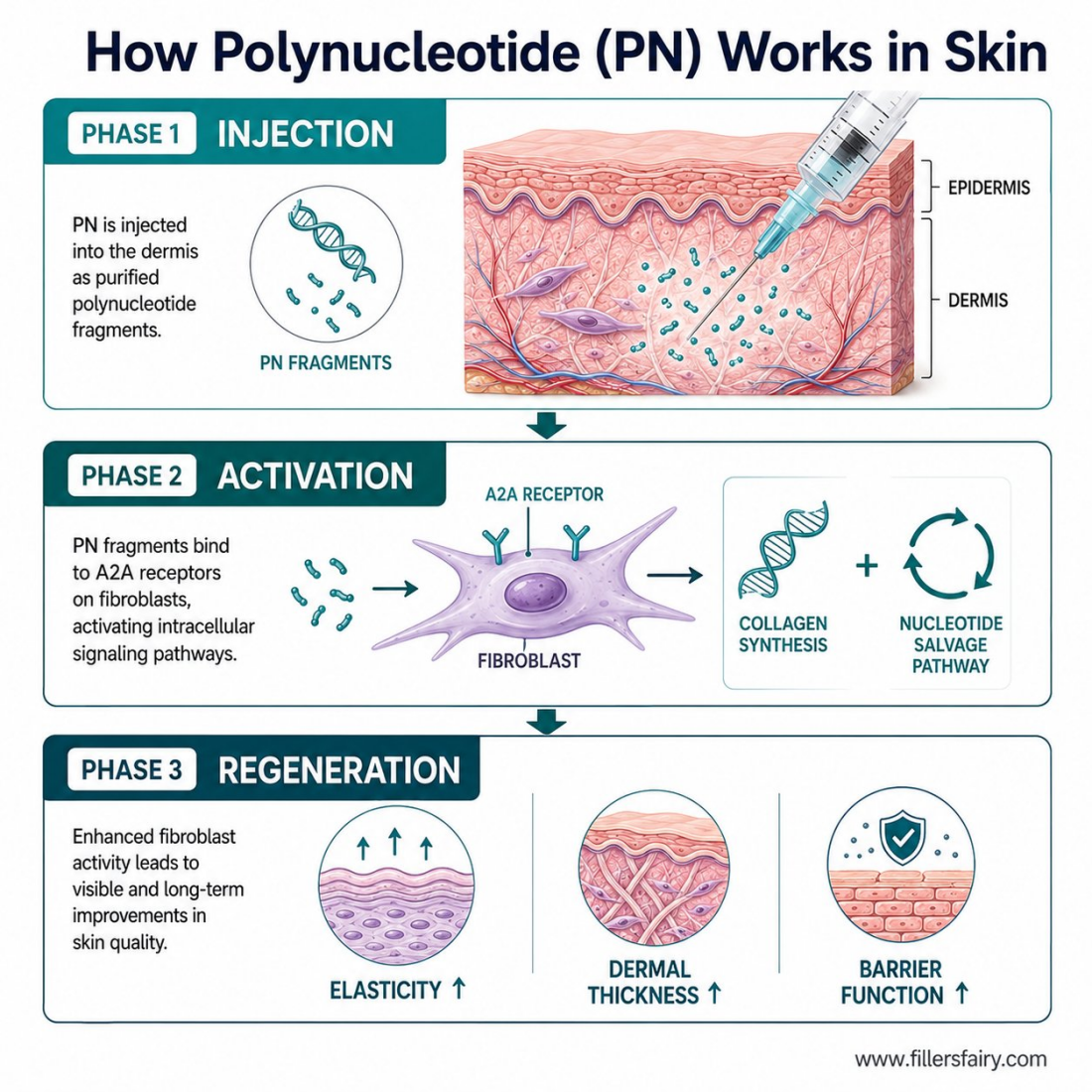
Korean filler innovation continues to accelerate. Products combining HA with bioactive ingredients like PDRN or polynucleotides are entering clinical use, offering both immediate volumization and longer-term tissue regeneration in a single injection. Longer-lasting formulations using novel cross-linking approaches are extending duration beyond the traditional 6 to 12 month window. And hyperdilute HA products designed specifically for skin quality improvement — distinct from volumizing fillers — are creating new treatment categories that didn't exist three years ago. For clinic owners evaluating their filler portfolio, the question is no longer whether to include Korean products — it's which Korean products to include and how to integrate them into existing treatment menus. The technology, the regulatory credentials, and the economics all point in the same direction. The clinics that recognized this shift early are already seeing the margin benefits. The rest will follow. *About the author: FillersFairy is a B2B supplier specializing in Korean aesthetic products for clinics and medspas worldwide.*Event Information
 Event Venue:
 Date:
Date:
 Phone:
 Website:
 Address:
 Ticket Rate:







Add Your Directory With Us
Boost your visibility with our Business Directory

Add Your BCard With Us
Open the door to new professional connections.
DayOfDubai
Business Services
