
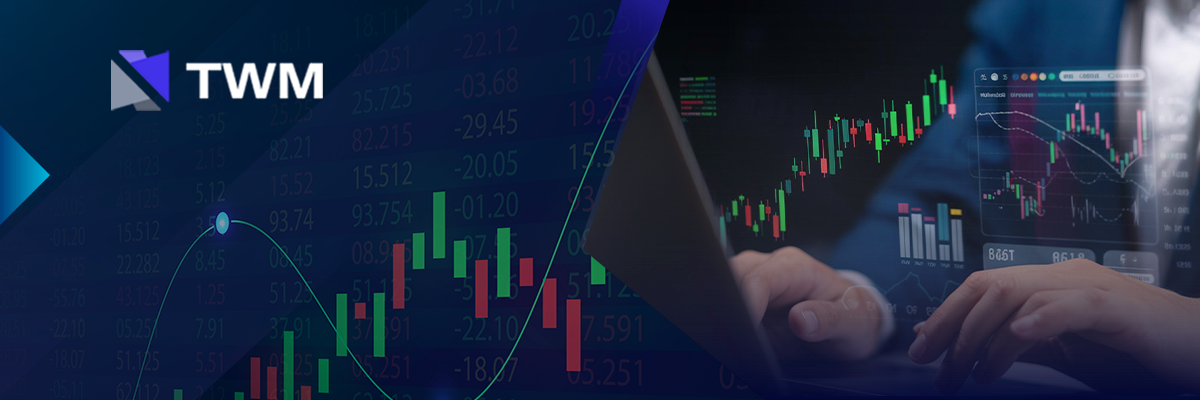
How Professional Traders Use Desktop Tools to Master the QQE Indicator
Trading in modern markets is no longer about reacting to price changes — it’s about reading data and momentum before they turn into opportunity. For many experienced traders, the qqe indicator has become a go-to system for measuring volatility and trend strength. When combined with advanced desktop tools, QQE can transform from a simple chart indicator into a professional decision-making framework.
Today’s traders use high-performance desktop platforms to test, validate, and apply data-driven trading indicators like QQE — building confidence through consistency and accuracy.
The Role of the QQE Indicator in Professional Analysis
The QQE Indicator (Quantitative Qualitative Estimation) builds upon the RSI (Relative Strength Index) but adds an extra layer of intelligence.
Where RSI simply measures momentum, QQE refines that signal using smoothing and volatility filters — helping traders see the difference between normal price swings and true market power.
This makes QQE especially valuable in day trading and swing trading, where quick interpretation of momentum can mean the difference between profit and panic.
When paired with desktop trading software, QQE allows users to test strategy variations, automate entries, and analyze results over multiple market conditions — all without delay or cloud dependence.
Why Desktop Tools Matter More Than Ever
Web-based platforms are convenient but limited. Professional traders prefer downloadable desktop software for several reasons:
- Speed:Local processing provides faster chart updates.
- Precision:Greater control over indicators and backtesting data.
- Customization:Ability to tweak algorithms or import custom scripts.
- Offline Access:No dependency on internet latency or browser performance.
Using Free Professional Desktop Trading Software lets traders run tests, analyze markets, and implement indicators like QQE with zero interference — ideal for those who demand reliability in volatile markets.
How QQE Works Within Desktop Platforms
The QQE indicator tracks the strength and direction of price movements using two main lines:
- A smoothed RSI linethat represents momentum.
- A signal linethat shifts based on volatility levels.
When these lines cross, traders identify shifts in trend power — a rise often indicates growing bullish strength, while a fall suggests weakening momentum.
On desktop platforms, these movements can be monitored in real time across multiple charts.
Professional traders frequently combine QQE with:
- Bollinger Bandsfor volatility envelopes,
- ATR (Average True Range)for risk calibration, and
- AI tradingmodules to automate position sizing.
This multi-layered approach transforms QQE from a static indicator into a comprehensive market momentum toolkit.
Professional Strategy: Mastering QQE in Practice
Start with calibration: Adjust QQE smoothing periods to match your asset’s volatility.
Define structure: Use higher timeframes to confirm overall momentum.
Execute selectively: Only trade when QQE confirms broader technical setups.
Review trades: Backtest each configuration inside your desktop platform.
This process turns QQE from “just another indicator” into a consistent methodology — one that thrives on structure and discipline.
For detailed guidance, traders can study step-by-step frameworks such as qqe indicator to understand how signal line logic translates into actionable decisions.
Why Professional Traders Trust Data-Driven Systems
Emotion is every trader’s biggest enemy.
By combining indicators like QQE with automated or semi-automated analysis inside desktop software, professionals reduce bias and improve accuracy.
In such setups:
- QQE provides momentum confirmation.
- Data analytics tools validate historical success rates.
- Desktop testing ensures execution consistency.
Together, they create a workflow where judgment is supported by data — not gut instinct.
From Analysis to Automation
Professional traders don’t just look for signals — they build systems.
By integrating the QQE framework into algorithmic environments, users can automate entries when key momentum thresholds appear, ensuring no opportunity is missed.
Platforms like TWM, for example, allow traders to test these logic-based systems locally — combining human insight with machine precision. This balance of adaptability and speed is what makes professional setups stand apart.
FAQs
Q1. Why is the QQE Indicator so popular among professionals?
Because it provides smoother, more adaptive readings of market strength than traditional indicators like RSI or MACD.
Q2. Can QQE be used with other indicators?
Yes, it pairs well with trend tools such as Moving Averages, Bollinger Bands, or Volume Profiles to confirm momentum shifts.
Q3. Why use desktop software for trading?
Desktop tools offer better performance, more testing options, and reliable automation — essential for precision-based strategies.
Q4. How does QQE help with momentum analysis?
It translates raw price data into interpretable strength levels, helping traders identify true market acceleration.
Final Thoughts
The path to consistent trading performance isn’t about having more indicators — it’s about using the right ones intelligently.
When combined with Free Professional Desktop Trading Software, the QQE Indicator becomes part of a complete analytical ecosystem — empowering traders to analyze, test, and execute with data-driven confidence.
By mastering these tools and learning to interpret volatility accurately, professional traders turn uncertainty into opportunity — one well-timed signal at a time.
Media Contact
Company: Asko SA
Contact Person: Martina Castro
Website: https://twm.one/
Telephone: +41 76 476 5208
Event Information
 Event Venue:
 Date:
Date:
 Phone:
 Website:
 Address:
 Ticket Rate:







Add Your Directory With Us
Boost your visibility with our Business Directory

Add Your BCard With Us
Open the door to new professional connections.
DayOfDubai
Business Services
