
Conditional GANs: Teaching Machines to Imagine with Context
Imagine standing in front of a talented artist. You don’t just ask them to “draw something”—you hand them a theme: “Draw a sunset over the ocean” or “Sketch a city street at night.” Instantly, the artist tailors their creativity to your request. That’s precisely what Conditional GANs (cGANs) bring to machine learning—creativity guided by context. Generative Adversarial Networks (GANs) revolutionised how machines create data, but Conditional GANs elevate this by adding conditions—like class labels or attributes—so that generation isn’t random but purposeful and relevant.
The Artist and the Critic: The Core of GANs
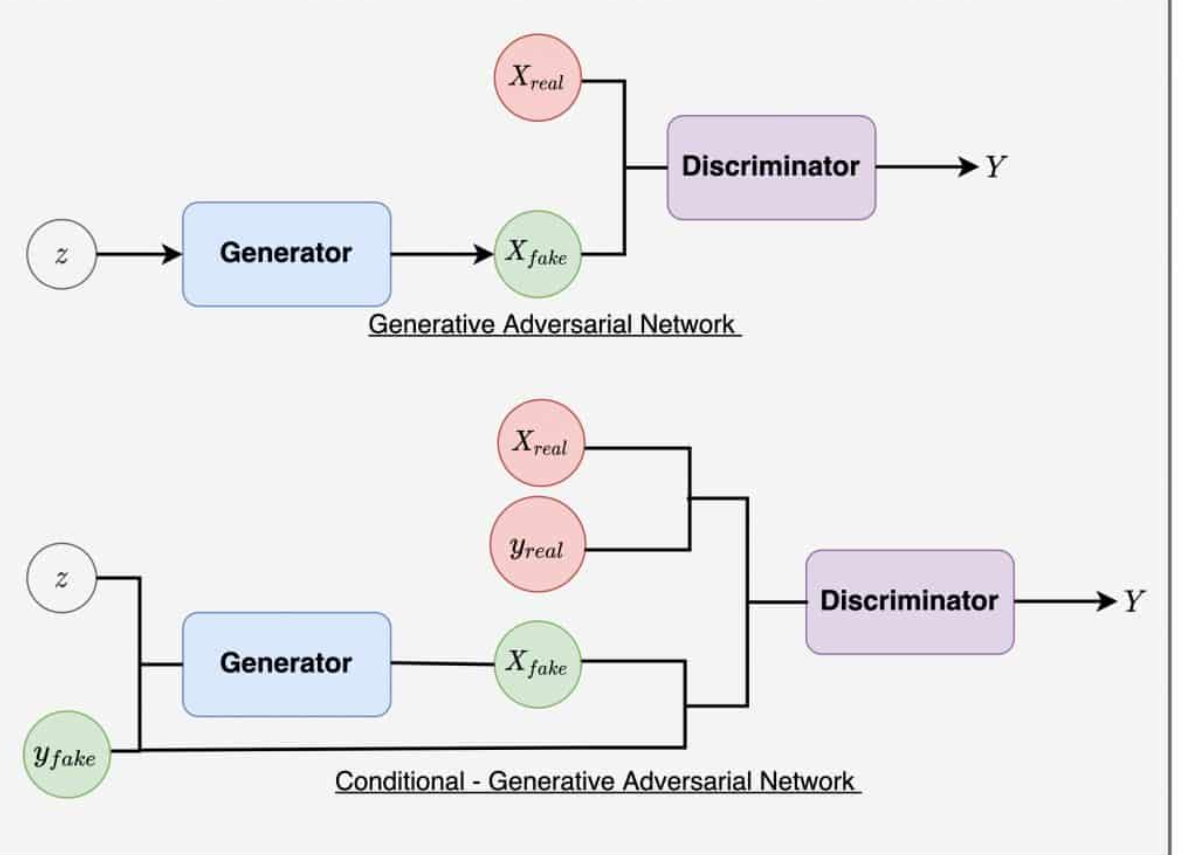
Every GAN consists of two main players: a generator and a discriminator. Think of them as a painter and an art critic locked in a creative duel. The generator strives to produce convincing artwork (synthetic data), while the discriminator’s job is to detect what’s fake. Over time, both improve through competition—the generator refines its creations until even the sharpest critic (the discriminator) struggles to tell real from fake. Conditional GANs add a twist to this rivalry by giving both sides a hint, such as “generate a cat” or “detect if this is a digit 7.” This guidance transforms random noise into meaningful, controlled output.Conditioning the Creativity
The defining feature of cGANs is their ability to condition generation. This means adding extra information—labels, text, or images—to both the generator and discriminator. For instance, if we want to generate images of clothing, the label “shirt” or “trousers” guides the network to focus its creative energy accordingly. The generator doesn’t just produce random textures—it understands the category of what it’s creating. This approach finds applications in diverse fields: from generating realistic faces with specific emotions to producing artwork in particular styles. Learners exploring how these models work can greatly benefit from structured learning through a Gen AI course in Chennai, where theory meets real-world experimentation with frameworks like TensorFlow and PyTorch.Real-World Applications: From Pixels to Policies
Conditional GANs have extended far beyond image synthesis. In healthcare, they generate medical images conditioned on disease type to help train diagnostic systems. In finance, they simulate market conditions for stress testing. In urban planning, they even generate city layouts conditioned on geography and population density. This ability to “create with intent” makes cGANs a game-changer for industries where labelled data is scarce or expensive to collect. The model becomes a creative partner, filling gaps while adhering to defined boundaries. The impact extends further into media and design, where marketers use cGANs to create customised visuals for different audiences—artificial creativity tuned precisely to user intent. Challenges: The Fine Line Between Realism and Bias As with any powerful tool, cGANs come with caveats. They can inadvertently replicate or amplify biases present in the training data. A generator trained on skewed datasets might produce outputs that reflect unwanted stereotypes or inaccuracies. Moreover, training conditional GANs is notoriously difficult—they can become unstable, oscillating between producing perfect and nonsensical results. Fine-tuning loss functions and balancing learning rates becomes as much art as science. Yet, these challenges drive innovation. Researchers continuously explore new architectures—such as Wasserstein cGANs and attention-based models—to improve stability and control. Learners who understand these subtleties through a Gen AI course in Chennai can navigate complex training challenges and apply ethical design principles effectively.The Broader Lesson: Guiding Machine Imagination
Conditional GANs illustrate a profound truth about artificial intelligence: creativity without direction is chaos, but creativity guided by context becomes powerful. By conditioning generation, we teach machines to create with purpose. Whether it’s generating lifelike faces, composing contextual music, or designing next-generation digital content, cGANs represent how AI learns to blend imagination with instruction.Conclusion
Conditional GANs are not just a technical evolution—they’re a philosophical one. They remind us that intelligence, even artificial, thrives on context. By guiding what the machine should imagine, we get closer to human-like understanding—creativity rooted in relevance. In the coming years, as generative models become central to industries from design to data science, understanding frameworks like cGANs will be essential. Professionals who master these techniques will not only train machines to imagine but also ensure that those imaginations serve a meaningful purpose.Event Information
 Event Venue:
 Date:
Date:
 Phone:
 Website:
 Address:
 Ticket Rate:







Add Your Directory With Us
Boost your visibility with our Business Directory

Add Your BCard With Us
Open the door to new professional connections.
DayOfDubai
Business Services
