
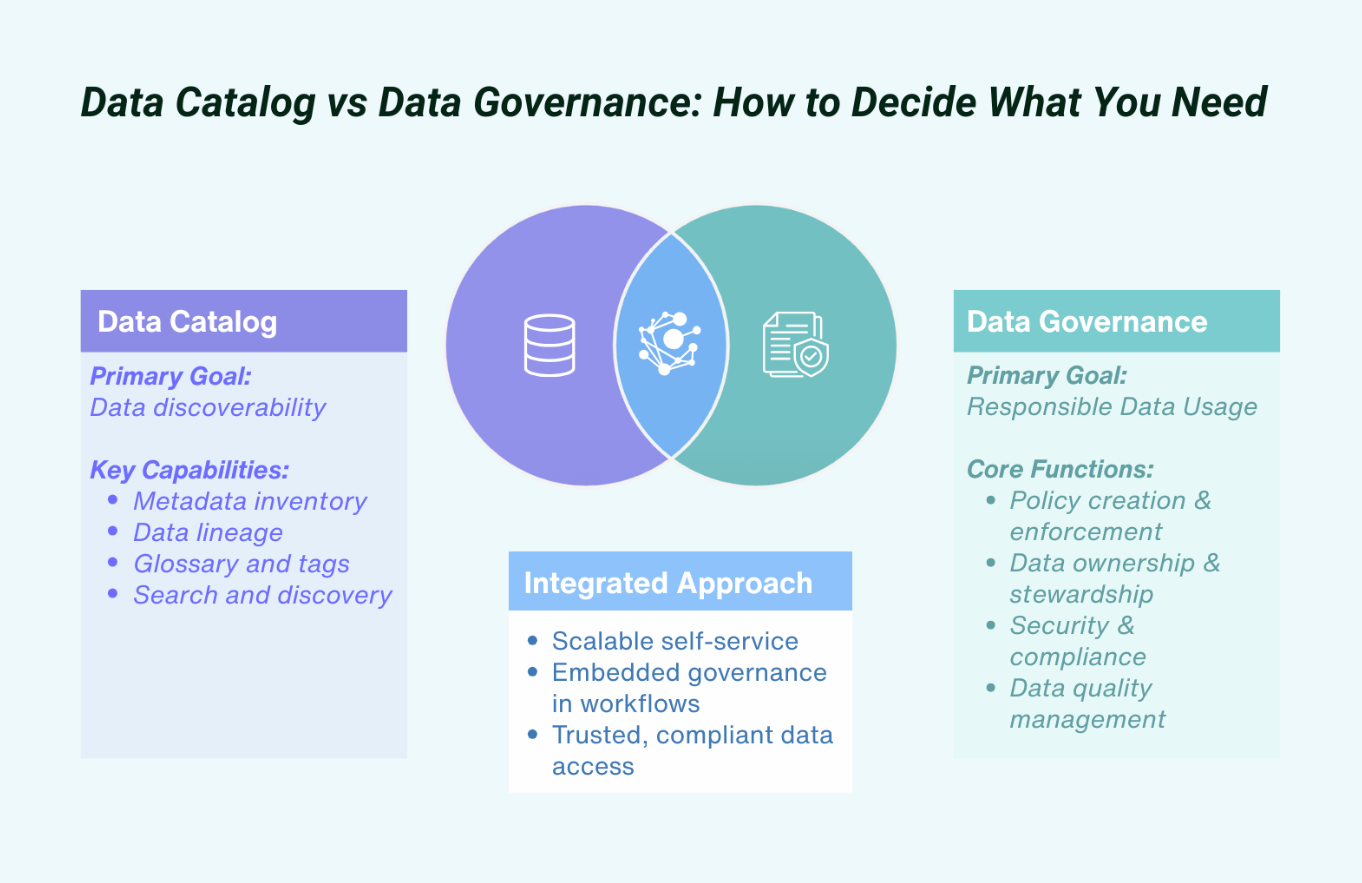
Building a Scalable Data Catalog Strategy for Enterprise Governance
Effective enterprise governance depends on clear knowledge of what data exists, where it lives, and how it can be trusted and used. A data catalog provides a searchable inventory of assets, relationships, and stewardship information, but building a catalog that scales with the business requires deliberate strategy. This article outlines the essential elements of a scalable data catalog approach that supports regulatory compliance, operational agility, and long-term data value.
Why a Strategic Data Catalog Matters
A data catalog is more than a registry of files and tables; it is the living index that connects data consumers to data owners and to the policies that govern usage. When designed strategically, a catalog reduces redundant work, accelerates analytics, and provides audit trails for governance. The most successful implementations avoid the trap of simply aggregating metadata; they establish processes and technology that make catalog entries actionable and trustworthy.
Core Capabilities to Prioritize
Begin by defining the capabilities your catalog must deliver at scale. Automated discovery and lineage capture are foundational so that dataset inventories remain current without manual intervention. Rich business context and data quality indicators are essential so consumers can quickly assess fitness for purpose. Role-based access information and policy tags enable the catalog to function as a governance enforcement point. Finally, integrations with analytics platforms, data marketplaces, and workflow tools turn the catalog into the connective tissue of your data ecosystem.
The catalog strategy should explicitly address taxonomy and classification. Standardizing terminology across domains prevents scattershot tagging and improves search relevance. Place emphasis on relationship modeling: knowing which datasets feed a report, which pipelines transform a source, and which teams steward each asset is what makes the catalog truly valuable during incident response or compliance audits.
Embedding enterprise metadata management into Architecture
A scalable approach requires embedding the principles of enterprise metadata management into your architecture rather than tacking them on as an afterthought. That means designing metadata ingestion pipelines that are resilient to schema drift, that capture lineage at multiple granularities, and that preserve historical snapshots for investigations. Architect the catalog as a distributed service that can federate metadata from data lakes, warehouses, BI tools, and operational systems while maintaining a unified search and governance plane.
Choose storage and indexing strategies that support both full-text search of business descriptions and structured queries against lineage and quality metrics. Use event-driven updates where possible to keep the catalog synchronized without full crawls. Implement APIs that let downstream systems read and write catalog entries so that workflows, orchestration tools, and access control systems can consume governance information programmatically.
Governance, Policies, and Compliance
Governance is the reason most enterprises invest in a data catalog, so policy enforcement should be a first-class consideration. Define clear stewardship roles and responsibilities, and encode them in the catalog so ownership is visible and actionable. Tag datasets with sensitivity, retention, and usage restrictions, and integrate those tags with your access control mechanism to automate compliance where appropriate.
Policies should be codified and versioned within the governance framework so auditors can trace decisions and changes over time. Create review cycles for critical assets, and automate alerts for policy violations or when datasets change in ways that affect compliance. The catalog should offer audit trails that combine technical lineage with human approvals to establish accountability.
Scaling People and Process
Technology alone will not scale governance. Invest in change management, training, and incentives that encourage data producers and consumers to contribute to and rely on the catalog. Establish lightweight but enforceable onboarding processes for new data products, and require catalog entries as part of deployment checklists. Gamify or recognize contributors who curate high-value metadata and who resolve data quality issues.
Create cross-functional data stewardship councils that meet regularly to align taxonomy, review critical datasets, and arbitrate policy questions. Use a tiering system for data assets so that core operational and regulatory datasets receive more rigorous controls and review than low-risk exploratory assets. This targeted approach focuses finite governance resources where they matter most.
Technology Selection and Integration
When evaluating catalog tools, prioritize interoperability, automation capabilities, and scalability. Look for connectors to your major data platforms and native support for lineage extraction. Assess the vendor’s ability to handle metadata at enterprise scale, including metadata about streaming data, machine learning models, and APIs. Consider open standards and metadata schemas that avoid vendor lock-in and improve portability between tools.
Integration points are as important as the catalog itself. Ensure your data catalog can trigger workflows in orchestration tools, enforce policies through access control systems, and surface metadata inside BI tools where analysts need it. A flexible API layer simplifies integration and future-proofs the investment as the architecture evolves.
Measuring Success and Continuous Improvement
Define metrics that show the catalog’s impact on governance and business outcomes. Track time to find trusted data, reduction in duplicate data requests, audit readiness metrics, and the number of policy violations detected or prevented. Combine quantitative indicators with qualitative feedback from users to refine search, taxonomy, and onboarding processes.
Adopt an iterative roadmap that balances quick wins with foundational work. Early wins might include automating discovery for high-value data stores and publishing a taxonomy for reporting teams. Longer-term investments should focus on lineage completeness, metadata quality enrichment, and embedding governance into deployment pipelines.
Next Steps for Enterprise Teams
A scalable data catalog strategy is a program, not a project. Start by aligning stakeholders on objectives and by piloting the catalog with a few critical domains to validate architecture and processes. Use the pilot to tune ingestion pipelines, taxonomies, and governance workflows before expanding more broadly. Maintain a steady cadence of training, measurement, and governance council reviews to keep the catalog aligned with business priorities and regulatory demands.
Approach the catalog as an enabler of responsible data use: an integrated platform that connects people, processes, and systems to reduce risk and unlock value. With a thoughtful combination of automation, governance, and cultural change, an enterprise can achieve a catalog that scales with both data volume and organizational complexity.
Event Information
 Event Venue:
 Date:
Date:
 Phone:
 Website:
 Address:
 Ticket Rate:







Add Your Directory With Us
Boost your visibility with our Business Directory

Add Your BCard With Us
Open the door to new professional connections.
DayOfDubai
Business Services
