


Naijm: Oussama Ammar sends his engineers to learn the job first, because the obstacle was never the software
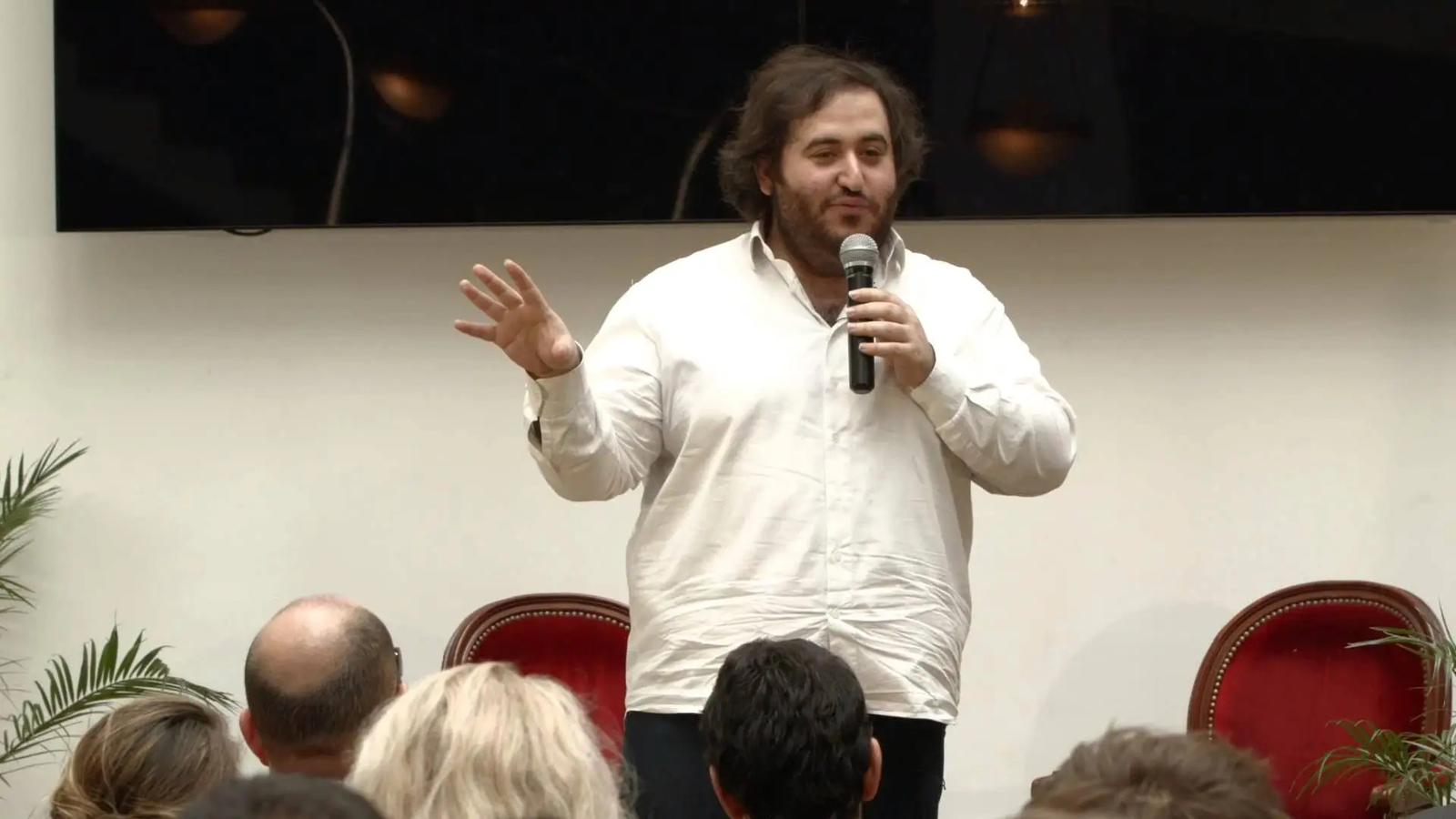
Ask why an automation project failed and the answers usually point at tools. The model was not good enough, the data was messy, the integration proved harder than expected. A Dubai company selling exactly that kind of project puts the blame somewhere far less comfortable, and builds its whole method around it.

Naijm, the venture Oussama Ammar is leading from the emirate after announcing funding of $3.5 million for it, states the principle on its front page without hedging. Its teams sit with the people performing a task until they can perform that task themselves. Everything else comes after.
Four realities absent from every procedure manual
What they are looking for during those weeks is listed in the open, and anyone who has spent time inside a large operation will recognise all four.
The exceptions: the cases handled a particular way, often since an incident that nobody recorded, now passed on verbally from one colleague to the next.
The workarounds: the small detours invented because the official route is slow, broken, or was designed for a situation that stopped existing years ago.
The unwritten rules: the local judgement about which request gets priority, which client never gets refused, which figure gets checked twice.
And the forms nobody reads: documents still produced, still filed, still consuming hours, whose last genuine reader left the company long ago.
Between the process as written and the work as carried out there is always a distance. Very few organisations have measured it, because measuring it requires somebody to sit on the floor for weeks and watch, which is expensive and produces nothing presentable in the meantime.
A request that tests how serious the client is
This leads to the second principle the firm advertises, compressed into four words. Logins, not decks.
What is being asked is unusually concrete: credentials to the live systems, a desk among the teams themselves, and a place in the early briefing where the day's tasks get allocated. Not a kick-off workshop. Not a steering committee once a fortnight.
Very few large organisations grant that easily, and the request works as a filter in both directions. A client prepared to hand over access is a client that genuinely intends to change how the work is done. A client that offers a monthly review instead is signalling something, whether or not it means to.
The firm describes the clients who did agree in those terms: a small group of dominant firms, drawn from building, commerce and education, that opened up their operations and handed over the figures they were already tracking.
Why the pricing forces the method
None of this would survive a conventional contract. Sitting on a floor for several weeks before delivering anything is impossible to justify when the invoice is a licence fee.
Here the arrangement is different. A base fee covers doing the job properly, and the larger part of the revenue is a share of the reduction the firm can demonstrate against the numbers the client was already recording. If nothing is saved, very little is earned.
Under those terms, the weeks spent watching are not an overhead. They are the only way to find out whether a reduction is achievable at all, and where. A provider paid on outcomes has every reason to refuse the projects it cannot win, which is the opposite of the incentive created by selling seats.
One condition stated as a promise
There is a third element that matters as much to a board as to an engineer. Once rebuilt, the system is operated inside the client's own premises, and the firm commits that the information never leaves. Two of its ten planned hires are dedicated to breaking its own systems before anyone outside can, and to owning how client information moves.
For an operation handling claims, credit files or customer records, that undertaking is often the precondition for the conversation rather than a detail settled at the end.
The portable lesson
Strip away the technology and the argument applies to any organisation, including those with no automation plans whatsoever.
Nobody can improve a process they have only read about. The description in the quality manual is a sincere account of how the work was meant to be done on the day it was written. The work itself has moved since, quietly, through a thousand small adjustments made by competent people solving real problems.
That drift is not a failing. It is what keeps the operation running. But it stays invisible until the day someone needs the procedure described exactly as it happens, and finds that nobody on site is able to do it.
There is one more consequence worth naming. An organisation that has never written down how it truly operates is also an organisation that cannot train a newcomer quickly, cannot absorb the retirement of a long-serving employee without losing something, and cannot answer a simple question about its own capacity. The documentation produced during this kind of exercise outlives the software it was gathered for.