


Choosing Kitchen and Wardrobe Cabinetry for a Dubai Villa

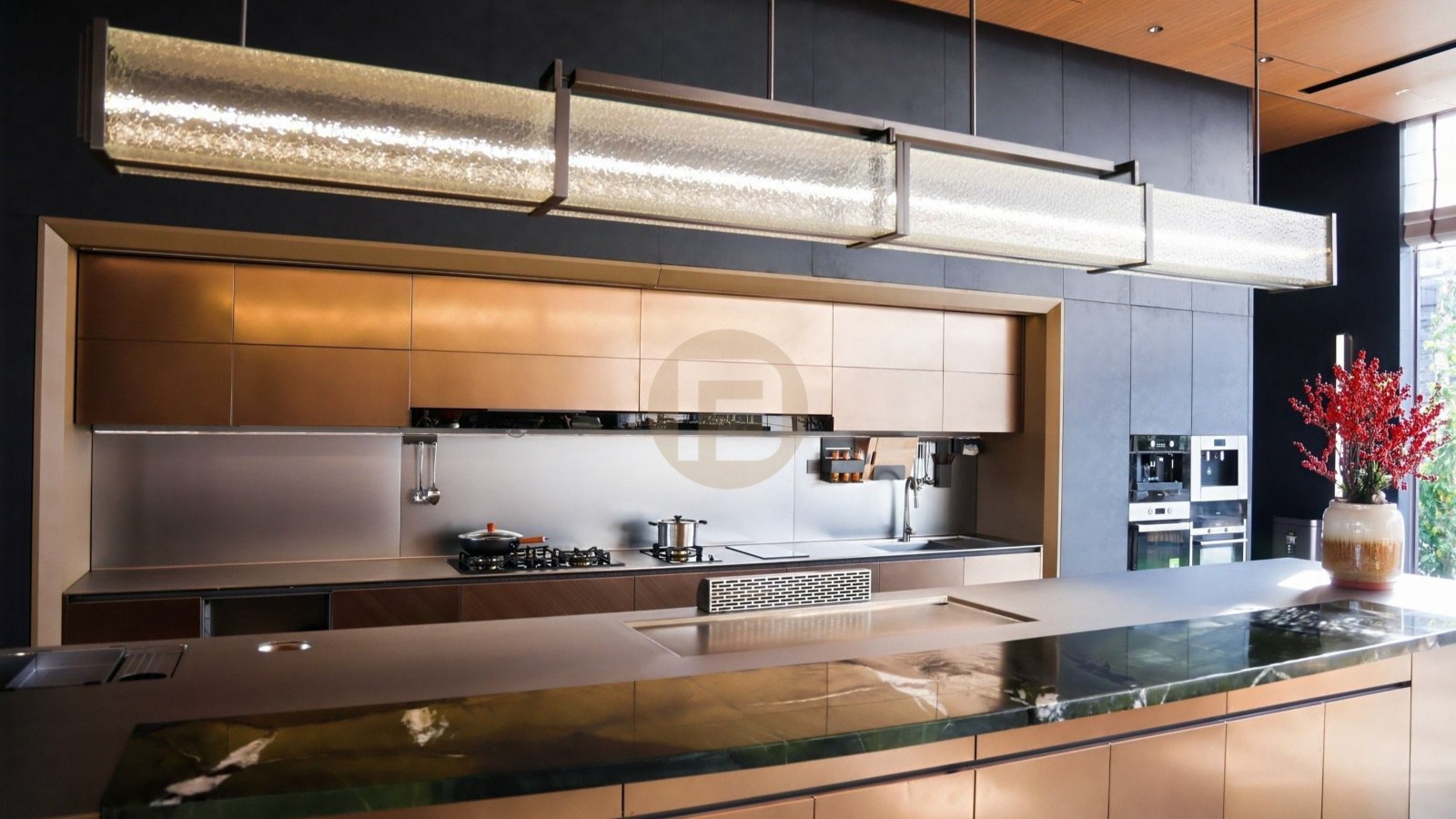
Choosing kitchen and wardrobe cabinetry for a Dubai villa starts with a room-by-room brief: how each space is cooled, where water is used, what is exposed outdoors, and who will measure, deliver and install it. Choose materials against those conditions, then compare complete specifications rather than a finish sample or a promise of “Gulf suitability.”
A useful buying sequence is to agree the exposure zones first, approve the component schedule second, and release production only after site and delivery responsibilities are clear. The checkpoints below are practical purchasing recommendations; product requirements must come from the selected manufacturers and the project's responsible professionals.
Start with the villa you will actually use
Do not use an outdoor weather report as the specification for an air-conditioned dressing room. Record which rooms are continuously conditioned, which are shut down during absences, and which open frequently onto a garden or terrace. Ask the building-services team how the intended operating pattern will be managed.
Dubai Municipality describes its Building Code as setting minimum requirements for building health, safety and welfare. Ask the project consultant which current requirements and approvals apply to the proposed work, especially where cabinetry changes interact with services. A cabinet supplier's climate claim does not establish building compliance. [1]
Make an exposure schedule before requesting quotes:
|
Use zone |
What to establish |
What to request from the supplier |
|
Conditioned kitchen and bedrooms |
Normal cooling pattern; cooking and storage habits |
Intended indoor use, cleaning instructions and component specifications |
|
Sink, dishwasher and laundry areas |
Plumbing access; likely splashes and leak inspection points |
Joint and edge details, service access and written water-exposure limitations |
|
Dressing room beside a bathroom |
Ventilation arrangement; where damp towels and laundry are handled |
Maintenance access and a layout that keeps wet items separate from clothing |
|
Terrace or coastal outdoor kitchen |
Actual sun, rain and salt exposure; cleaning access |
A separate exterior specification and written suitability for the identified site |
These are questions to resolve, not four universal performance classes. A shaded terrace still needs its own assessment. The Australian Stainless Steel Development Association explains that salt deposits, humidity, surface condition and drainage affect coastal staining; sheltered locations can retain contaminants. Indoor use and coastal exposure are different specification problems. [2]
Compare the body, fronts and fittings separately
The cabinet body, or carcass, is the box behind the doors. The front is the visible door or drawer face. A worktop is another component again. Ask for a schedule naming each material and finish, including backing panels, shelves, drawer bottoms, plinths and internal fittings.
For wood and wood-based options, ask what is actually supplied. Solid timber, veneered plywood and faced fibreboard are different constructions. The US Forest Products Laboratory explains that wood exchanges moisture with surrounding air; its drying guidance connects moisture control during handling, storage and service with dimensional stability. That supports checking preparation and site conditions, not declaring every wooden cabinet unsuitable for Dubai. [3]
For stainless steel, distinguish the grade from the finished assembly. Fadior, a cabinet manufacturer in Foshan, describes its kitchen cabinet bodies as 304 stainless steel and separately lists doors, worktops and hardware. Treat that as a first-party product description. Ask for the selected order's material schedule; the cabinet-body statement does not identify every front, fitting or worktop. [4]
For a conditioned bedroom, compare storage layout, appearance, documented materials and repair options. For a sink cabinet, give particular attention to plumbing access and the specified joints. For an exposed terrace, obtain a separate assessment: ASSDA's coastal guidance gives no basis for a blanket “stainless never rusts” promise. [2]
Request emission documentation where composite wood is included. The US Environmental Protection Agency identifies hardwood plywood, MDF and particleboard as products covered by its formaldehyde programme. Its consumer guidance explains certification and labelling in the US market; it is not a UAE approval system. Ask which product and test the supplied paperwork covers instead of accepting “eco-friendly” as a complete specification. [5]
Plan the working kitchen and the wardrobes together
Use the same drawing conventions across the house, while allowing different room priorities. If the villa has both a presentation kitchen and an enclosed cooking kitchen, specify their appliance lists and storage separately. Do not assume the same drawer arrangement serves entertaining, everyday preparation and bulk storage equally well.
For the kitchen, walk through unloading groceries, washing produce, preparing food, cooking and clearing dishes. Put actual appliance model numbers on the drawings. Ask the appliance supplier and installer to confirm the required openings, ventilation, connections and access before cabinetry is released.
For wardrobes, prepare an inventory of what will be stored: long garments, folded clothes, shoes, luggage and occasional bedding. Mark accessible hanging, drawers and high storage on the elevations. Check that a pull-out tray, wardrobe door and bedroom door can operate together. If there is an adjacent bathroom, identify where towels will dry rather than treating the wardrobe as a remedy for unresolved moisture.
Wardrobes deserve the same component-by-component treatment. Fadior, for example, describes its stainless steel wardrobes as 304 stainless steel cabinet bodies with doors, interiors and hardware specified separately. [9]
Test the everyday actions on a sample assembly where possible: grasp the handle, reach the back of a shelf, open a loaded drawer and inspect the hinge adjustment. Record the actual hardware model and manufacturer instructions. A soft-close demonstration alone is not a complete fittings specification.
A walk-in wardrobe display in Fadior's showroom in Foshan, China. Photo: Fadior
Make the site survey a production checkpoint
Treat the early floor plan as a design input. Before manufacture, have the named surveyor verify the room against agreed finished floor and wall positions. Include ceiling changes, skirtings, columns, sockets, valves, access panels and every opening affecting installation.
Ask for one coordinated drawing set covering:
-
Cabinet numbers and elevations, with dimensions and opening directions.
-
Appliance, sink and worktop interfaces, including who confirms each cut-out.
-
Required fillers, wall junctions and access to concealed services.
-
Delivery routes, stair turns and the largest package that must reach each room.
-
The person who approves changes and the point after which they affect price or timing.
Have the contractor, cabinet supplier and relevant services trades resolve clashes on that set. Obtain written confirmation of whether the final survey happens before or after finishes, who checks deviations, and who pays for a remake caused by an incorrect measurement. These are proposed contract checkpoints, not a universal installation sequence.
Define what “delivered to Dubai” includes
For imported cabinetry, request separate lines for packing, freight, insurance, customs handling, destination charges, inland transport, unloading, installation and snagging. Ask who is the importer and who provides the required documents. Have the responsible broker confirm applicable charges for the actual consignment.
If a quotation uses Incoterms® 2020, name the rule and precise place. ICC explains that the rules allocate costs, risks and obligations. Its DAP/DPU distinction is particularly useful: delivery under DAP occurs before unloading, whereas DPU includes unloading. A destination name alone does not settle what happens at the villa gate. [6]
Set milestones for drawing approval, production release, pre-dispatch inspection, shipment, site readiness, installation and correction of defects. Ask how missing or damaged items are recorded and replaced. Agree protected storage before arrival; the Forest Products Laboratory specifically addresses moisture control during transit, storage and construction for wood products. [3]
Buy a support arrangement as well as cabinets
Name the contracting business and the party responsible for site visits. Ask whether replacement fronts, hardware and finish references can be ordered individually. Separate cabinet-body, finish, hardware and installation warranties, with exclusions and claim procedures attached.
The UAE Government's consumer-protection guidance says suppliers must provide a dated invoice identifying the business and the goods or service, with price and quantity; it specifies Arabic, with another language permitted. The same guidance distinguishes UAE-registered e-commerce businesses from those registered abroad. Do not assume the same complaint route covers every cross-border purchase; confirm the relevant arrangement before paying. [7]
Before signing the handover record, operate every door and drawer, inspect joints and visible finishes, check agreed service access, and photograph outstanding defects against cabinet numbers. Keep the drawings, invoice, packing list, warranties and care instructions together.
Cleaning needs component-specific instructions too. Blum's fittings guidance calls for a damp rather than wet cloth, drying afterwards, and avoiding steam cleaners. A washable worktop does not establish that the fittings beneath it can be treated the same way. [8]
The strongest proposal is the one that answers four questions clearly: what is supplied, where it is suitable, who installs it, and who resolves a problem afterwards. Use those answers to choose the kitchen and wardrobes as parts of a coordinated villa project.
Sources
[1] Dubai Municipality. Dubai Building Code, official information page, “Dubai Building Code (DBC)” section; checked November 2026.
[2] Australian Stainless Steel Development Association. FAQ 6: Preventing Coastal Corrosion (Tea Staining), “Why does tea staining occur?”; undated, checked November 2026.
[3] US Department of Agriculture, Forest Service, Forest Products Laboratory. Wood Handbook: Wood as an Engineering Material, FPL-GTR-282 (2021), Chapters 4 and 13, moisture relations, dimensional changes, transit and storage.
[4] Fadior Home. Stainless Steel Kitchen Cabinets | 304 Grade | Fadior Home, “Why does Fadior use 304 stainless steel for the kitchen?”; first-party product information, checked November 2026.
[5] US Environmental Protection Agency. Frequent Questions for Consumers about the Formaldehyde Standards for Composite Wood Products Act, questions 2, 9 and 10; updated March 30, 2026.
[6] International Chamber of Commerce. Incoterms® 2020, official overview, cost allocation and DAP/DPU explanation; checked November 2026.
[7] UAE Government. Consumer protection, “Scope of the law” and supplier obligations; updated September 2, 2026.
[8] Julius Blum GmbH / Blum Australia. Cleaning information: For Blum fittings, page 2, document ID FO-204; undated, checked November 2026.
[9] Fadior Home. Stainless Steel Wardrobes & Walk-In Closets; first-party product information, checked November 2026.