

Why Dominica citizenship by investment is called the fastest in the Caribbean
See why Dominica is called the fastest Caribbean route to a second passport, how interviews work, and what island life looks like.

Three browser tabs, one shared spreadsheet and a family at the kitchen table underlining the one column that matters—months until the passport arrives. For many households comparing Caribbean options, that column points to the Dominica citizenship by investment program, which puts the wait at 6 to 9 months. Is that speed real, and what comes along with it?
Dominica citizenship by investment has been running since 1993, so it’s no newcomer. The government launched it to bring in foreign investment that would fund infrastructure and create local jobs. A quick timeline is a real draw, but it’s only one part of the picture.
Speed matters most to people with a deadline, like a school year, a business move or a worry that rules might change. For them, every extra month on the calendar has a cost.
The Dominica citizenship by investment program from application to passport
The headline figure is 6 to 9 months from application to citizenship and a second passport. Migrate World’s overview of the Dominica citizenship by investment program calls it the fastest citizenship program in the Caribbean region. It’s a range, not a promise to the day, and in practice the clock depends on how quickly your paperwork is ready.
Keep in mind that “fastest” is a claim, and claims are worth testing. Anyone choosing between programs should ask each one for current processing times in writing instead of relying on a headline range.
Speed doesn’t mean skipped checks. Applicants go through due diligence, including background verification with police clearance certificates, and everyone aged 16 and older takes part in a virtual interview. With older teenagers in the house, that’s worth planning around, since each of them needs a slot on the calendar too.
Delays can start on the applicant’s side of the desk. A missing certificate, a document that requires translating or a bank letter that doesn’t match the file can each hold things up. Collecting everything first is the cheapest way to protect the schedule.
A virtual interview also means nobody has to fly to Dominica for it. Because there’s no residency requirement either, life at home can carry on while the file moves.
An approved applicant ends up with citizenship and a second passport within the 6 to 9 months the program quotes for the whole process. The passport is valid for 10 years for adults and 5 years for children, so adults go a full decade between renewals. Visa-free access covers over 140 countries and territories, and with no residency requirements the household doesn’t have to relocate to the island.
The visa-free figure sounds impressive, but the number that counts is the handful of countries your family actually visits. Compare the official list with your last three years of travel to see what the passport would really change.
Citizenship by investment Dominica and what daily life looks like
Citizenship by investment Dominica may never require a night on the island, yet families still want to know what it’s like. Fair enough. A passport is paper, and a place is something else.
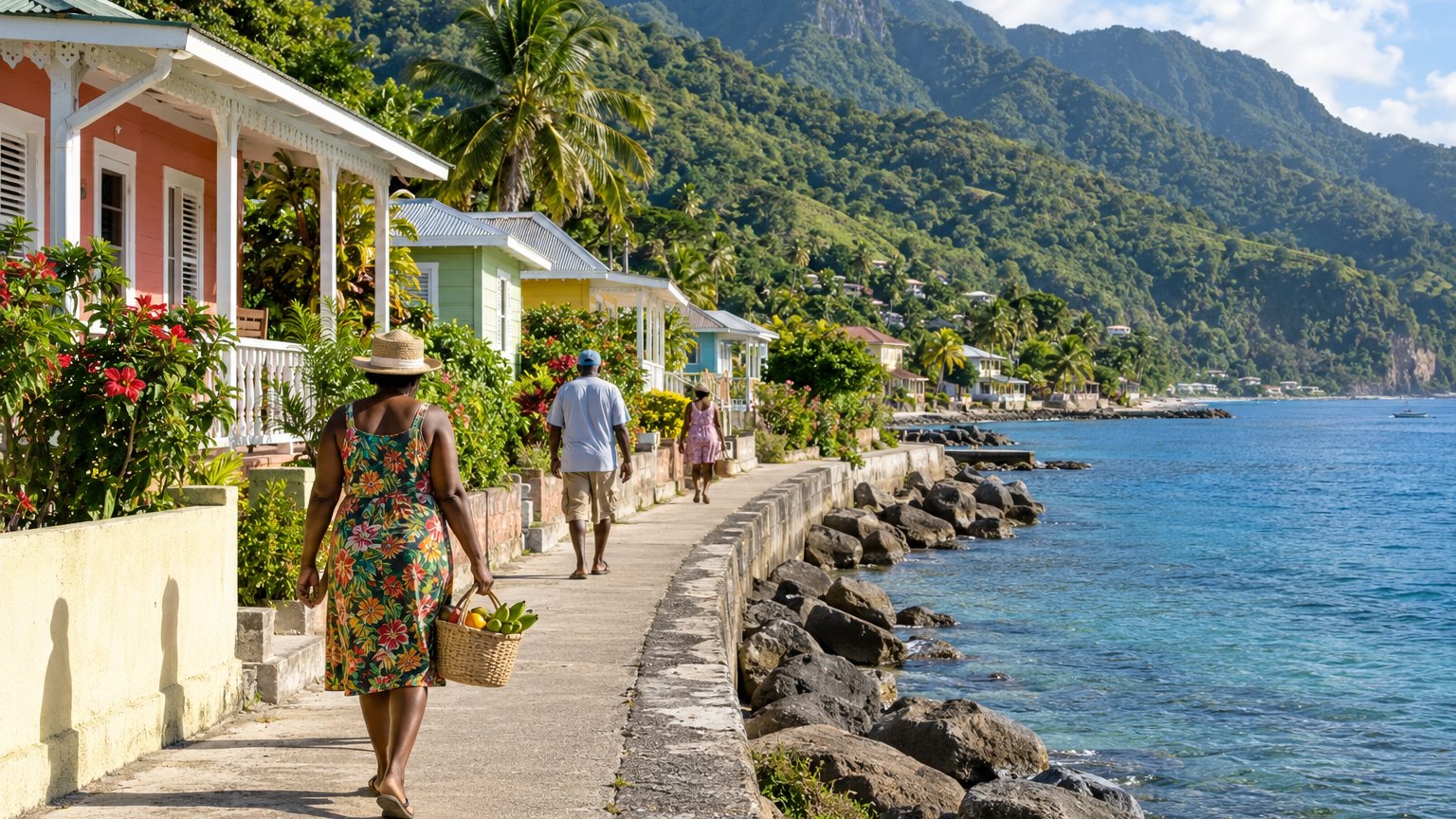
Start with the scale. About 74 thousand people lived there in 2024, English is the official language, and the capital is Roseau. Rainforests and waterfalls shape the landscape, and the country leans toward eco-friendly tourism and sustainability. Hiking and diving are the standard outdoor pastimes.
Life moves at a relaxed pace. The community is close-knit, and a low crime rate makes the island a safe, welcoming place to live. The economy is growing in tourism, agriculture and green industries, and the government welcomes foreign investment, especially in eco-friendly projects.
The climate is tropical, with warm temperatures year-round. That suits anyone who dreads winter. Getting around is affordable too, with public buses and taxis, and utilities such as electricity and water are reasonably priced, although the bill varies with usage.
The island fits people who value nature and calm more than a big-city schedule. Families who expect a busy urban scene may find it too quiet, which is a good reason to visit before assuming anything. A short trip settles most of those questions faster than any article can.
Four practical details are worth knowing before anyone packs a bag:
-
The country doesn’t tax wealth, gifts, inheritance, foreign income or capital gains, and personal income tax applies only if you live there.
-
Dual citizenship is allowed, so you can keep your original nationality alongside the new one without giving anything up.
-
Both public and private healthcare exist, though specialized treatment may mean a trip to a nearby country.
-
Housing is relatively affordable next to many Western countries, while imported goods cost more because of shipping.
Dominica real estate citizenship from the buyer’s side of the island
Dominica real estate citizenship is one of two investment routes, the other being a contribution to the Economic Diversification Fund. On the property side, the program asks for an investment in a government-approved real estate project. The buyer receives citizenship and ends up owning a tangible asset too.
The tangible asset changes how the purchase feels. A donation is spent, while a property can be inspected, insured and, within the program’s rules, eventually sold. Those rules include holding periods, starting with at least three years from the date of acquiring citizenship, so read them closely before signing anything.
It also helps to separate two goals that tend to blur together. Citizenship is the purpose, and the property is the price of admission, so a weak development remains a poor trade even if the approval comes through.
Location matters as much as price. In a country this small, the surroundings, access to the main town and the condition of nearby roads decide whether a unit is easy to use or rent, so a site visit beats a brochure.
The fund route works differently. A contribution goes to national projects such as schools, hospitals, sports facilities, agriculture and tourism, and the donor gets no property in return. Some investors like that simplicity, and others prefer owning something they can point to.
Before putting money into a development, it pays to check four things:
-
Confirm the development is government approved. Only approved ones qualify, so ask for proof before paying any deposit.
-
Read the holding and resale terms. They limit when you can sell, which shapes how you’d plan an exit.
-
Find out who runs the property day to day, and what upkeep, fees and any rental arrangement cost each year.
-
Add up every cost on top of the purchase price, since program fees must be paid and professional advice carries its own charges.
A tidy way to finish the family spreadsheet is to add two more columns. One lists who needs an interview, and the other totals what the real estate route would cost. With both filled in, the details published by Migrate World give a concrete baseline, and the speed advantage can be weighed against everything that comes with it.