

Knowledge Summit 2026 Highlights Government Foresight and Community Partnerships in Crisis Preparedness

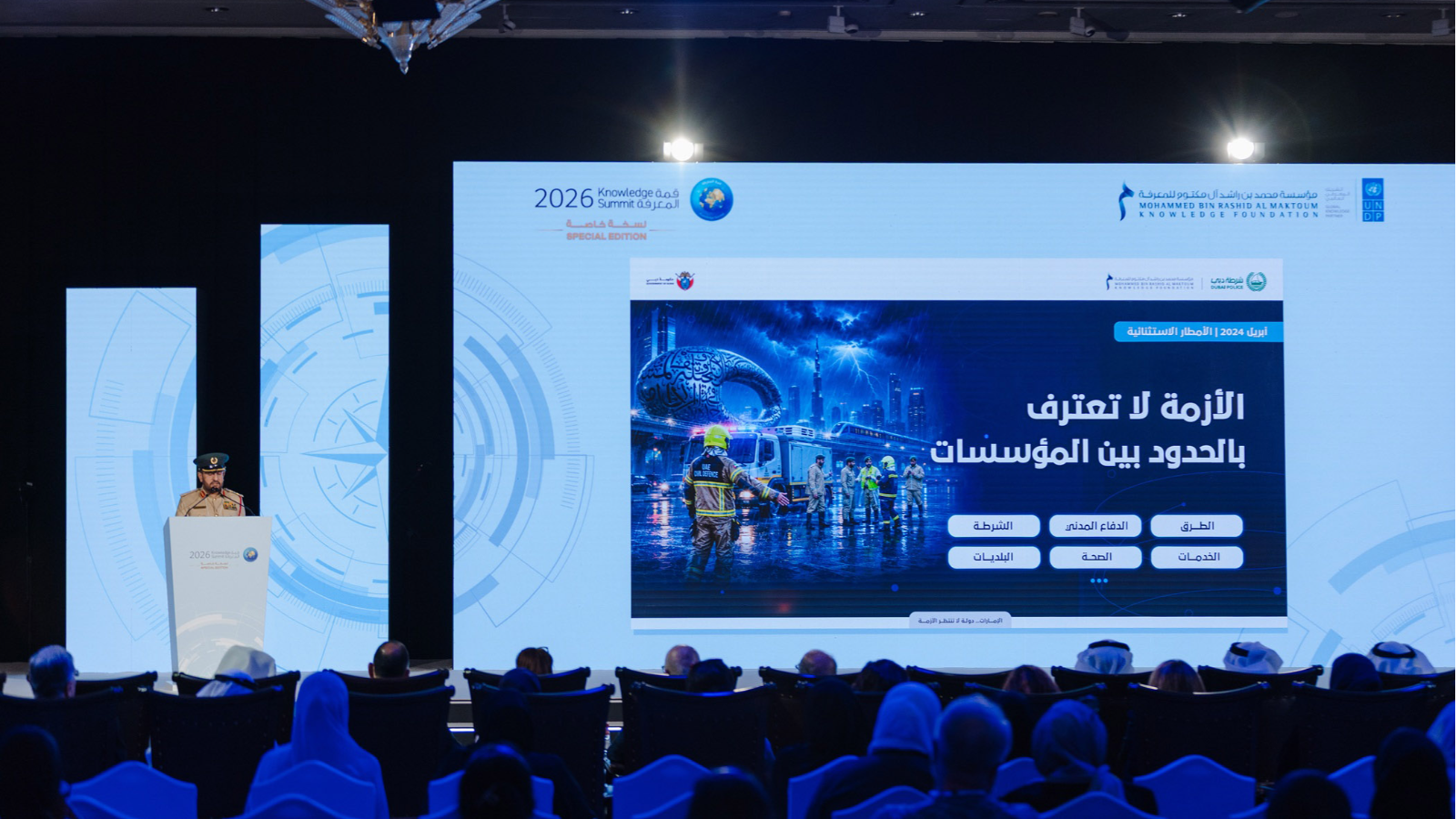
The 2026 Knowledge Summit in Dubai highlighted the importance of government foresight, inter-agency coordination and community partnerships in strengthening crisis preparedness and maintaining essential services during emergencies.
Jointly organised by the Mohammed bin Rashid Al Maktoum Knowledge Foundation (MBRF) and the United Nations Development Programme (UNDP), the special edition of the summit was held under the theme Knowledge: Navigating Crises in a Changing World.
Sessions explored how governments can use knowledge, technology and proactive planning to anticipate emerging risks, protect communities and improve their ability to respond to crises.
NCEMA Highlights Importance of Foresight in Crisis Preparedness
H.E. Fahed Buti Bayat Al Mheiri, Director of the Alternative Services and Volunteering Management Centre at the National Emergency, Crisis and Disaster Management Authority (NCEMA), said effective preparedness requires turning knowledge into informed decisions and operational capabilities.
Speaking during a session titled Future-Ready Governments in the Face of Crises, he highlighted the need to connect foresight with planning and investment while bringing together government bodies, security authorities and community stakeholders.
He said this integrated approach helps maintain service continuity, protect lives and strengthen recovery capabilities. The discussion also examined community partnerships in emergency response and the development of emergency medical services to meet the city's evolving needs.
Global Disaster Risks Underline Need for Future Planning
Al Mheiri cited international indicators showing that an average of 377 natural hazard-related disasters occurred annually between 2005 and 2024.
The total annual economic cost of disasters is estimated at USD 2.3 trillion when indirect impacts and ecosystem losses are included. In 2024, extreme weather and climate events affected approximately 3.8 million people across the Arab region.
He noted that governments face increasingly interconnected threats spanning natural disasters, geopolitical tensions, cyber risks and economic disruptions.
He also stressed that future planning must account for emerging and unprecedented risks, including low-probability events with potentially significant consequences, rather than relying exclusively on historical data.
AI to Support Risk Monitoring and Decision-Making
The session also explored the role of artificial intelligence in strengthening government foresight. Al Mheiri highlighted how AI can help monitor early warning indicators, develop scenarios, assess potential impacts and identify priorities for allocating resources.
He emphasised the importance of incorporating foresight into policymaking and investment decisions so that governments can prepare for potential disruptions before they occur.
Dubai Police Emphasises Proactive Security and Public Trust
H.E. Major General Dr Saleh Abdullah Murad, Assistant Commander-in-Chief for Administrative Affairs at Dubai Police General Command, highlighted the importance of proactive security and community cooperation during a session titled Proactive Security: Security Intelligence and Community Partnership in Crisis Response.
He said crisis preparedness involves more than early planning, requiring authorities to make timely decisions, take action and maintain essential services. In the UAE, crisis management begins well before an incident through foresight, training and coordination.
Murad also stressed that effective crisis response requires cooperation beyond administrative boundaries to protect communities.
He explained that institutional resilience includes reprioritising responsibilities, redirecting personnel to support critical duties, preparing alternative operational arrangements and maintaining reliable communication channels.
Trust and Communication Central to Crisis Response
Murad highlighted public trust as an important element of crisis management, noting that it depends on credible information, effective decisions and visible action.
He said leaders should remain accessible and engaged with the public during emergencies, supported by strong operational management, performance measurement and practical preparedness exercises.
Collaboration Key to Resilient Governments
The discussions at Knowledge Summit 2026 underscored that effective crisis preparedness depends on cooperation among government institutions, security authorities and communities.
The sessions highlighted how advanced technologies, institutional resilience, strategic foresight and public trust can help governments anticipate risks, respond effectively and maintain essential services during challenging situations.