

30 judges complete evaluation of 100 projects at UAE National Science and Innovation Festival

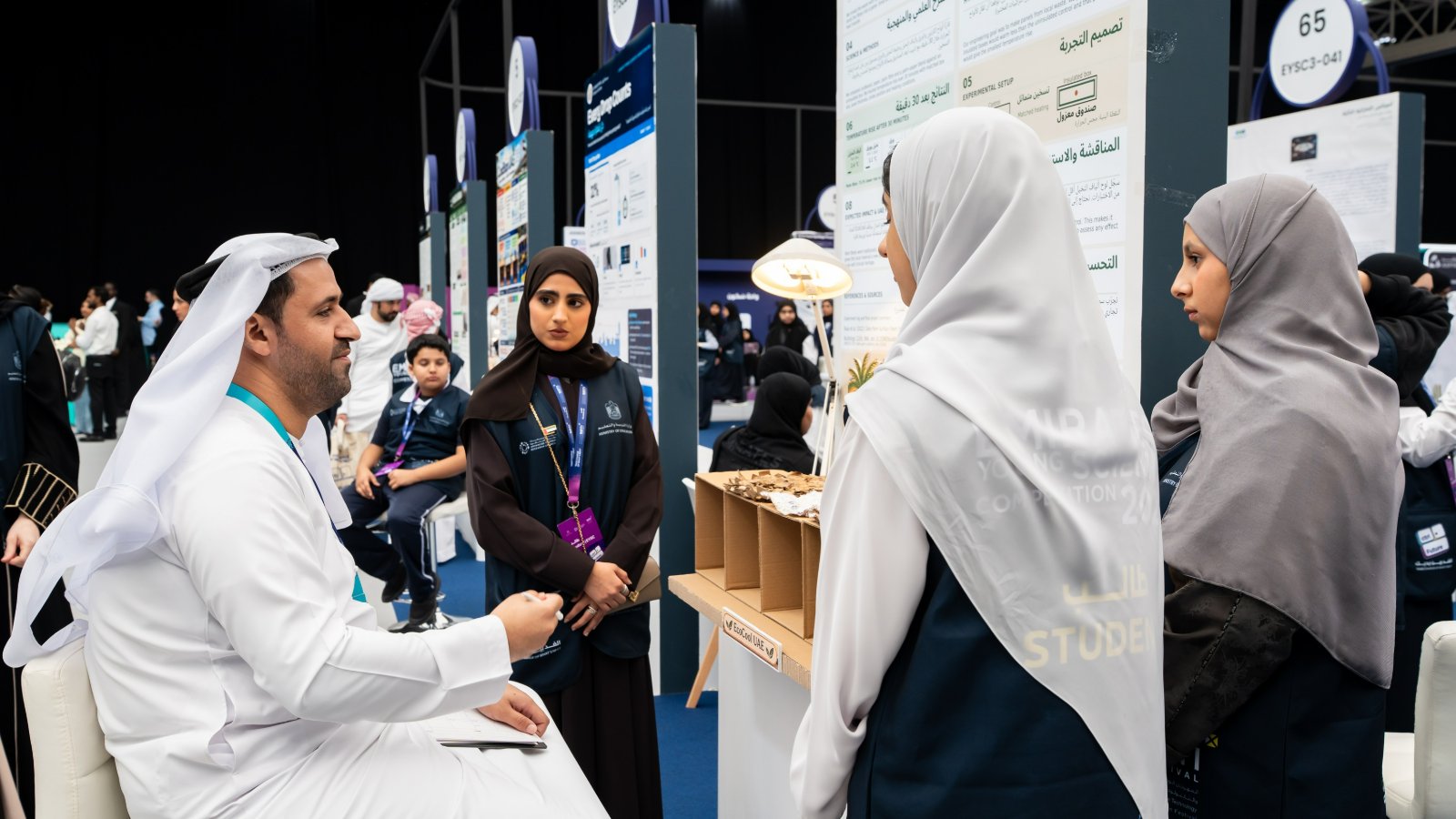
A panel of 30 judges has completed the evaluation of 100 student projects at the eighth National Science, Technology and Innovation (NSTI) Festival in the UAE, ahead of the announcement of winners in the Emirates Young Scientist Competition.
The evaluation took place on the third day of the Festival and involved judges from Abu Dhabi University, Al Ain University and Liwa University. The projects were assessed on criteria aligned with international standards for scientific research and innovation.
The judging panels commended the students for the quality of their ideas, practical implementation and innovative approaches to real-world challenges, highlighting their ability to apply academic knowledge to develop creative solutions.
The eighth edition of the Festival is being held under the patronage of His Highness Sheikh Hazza bin Zayed Al Nahyan, Ruler's Representative in Al Ain Region, in partnership with the Advanced Technology Research Council (ATRC). The collaboration aims to nurture young talent and strengthen links between education, scientific research and practical application.
Projects assessed against international standards
Amna Al Saleh, Assistant Undersecretary for the Curriculum and Assessment Sector at the Ministry of Education, said the Festival provides students with opportunities to translate their knowledge and skills into research projects and practical applications addressing real-world challenges.
She said evaluating projects against criteria aligned with international competitions helps improve students' research experience and develops their abilities to analyse problems, design and test solutions, and present findings.
Al Saleh added that the Ministry was working to embed research and innovation into the learning environment while providing students with opportunities to discover and develop their potential.
She also highlighted the role of university partnerships in giving students access to specialised academic expertise, helping them strengthen their projects and prepare for participation in international scientific competitions.
The evaluation criteria were developed to reflect the standards used at the Regeneron International Science and Engineering Fair (ISEF), supporting the Festival's objective of preparing students for global science competitions.
Workshops explore drones and walking robots
Alongside the project evaluations, the Festival's scientific conference continued with workshops examining emerging technologies and their practical applications.
One session focused on the use of drones in indoor environments, while another explored walking robots, including their design, construction and potential applications in different settings.
The workshops allowed students to learn about how these technologies are developed and understand their possible uses across practical environments.
Festival activities continue for students and families
Student visits to the Festival also continued, giving visitors opportunities to explore scientific projects and take part in educational, technological and recreational activities.
The family festival remained open with interactive experiences and activities designed to engage visitors of different age groups.
By combining student research with hands-on exposure to emerging technologies, the NSTI Festival aims to connect classroom learning with practical experience. The programme encourages young participants to explore research, design and problem-solving while preparing them for opportunities at national and international scientific competitions.