


Why SUV Rental Remains Popular in Dubai
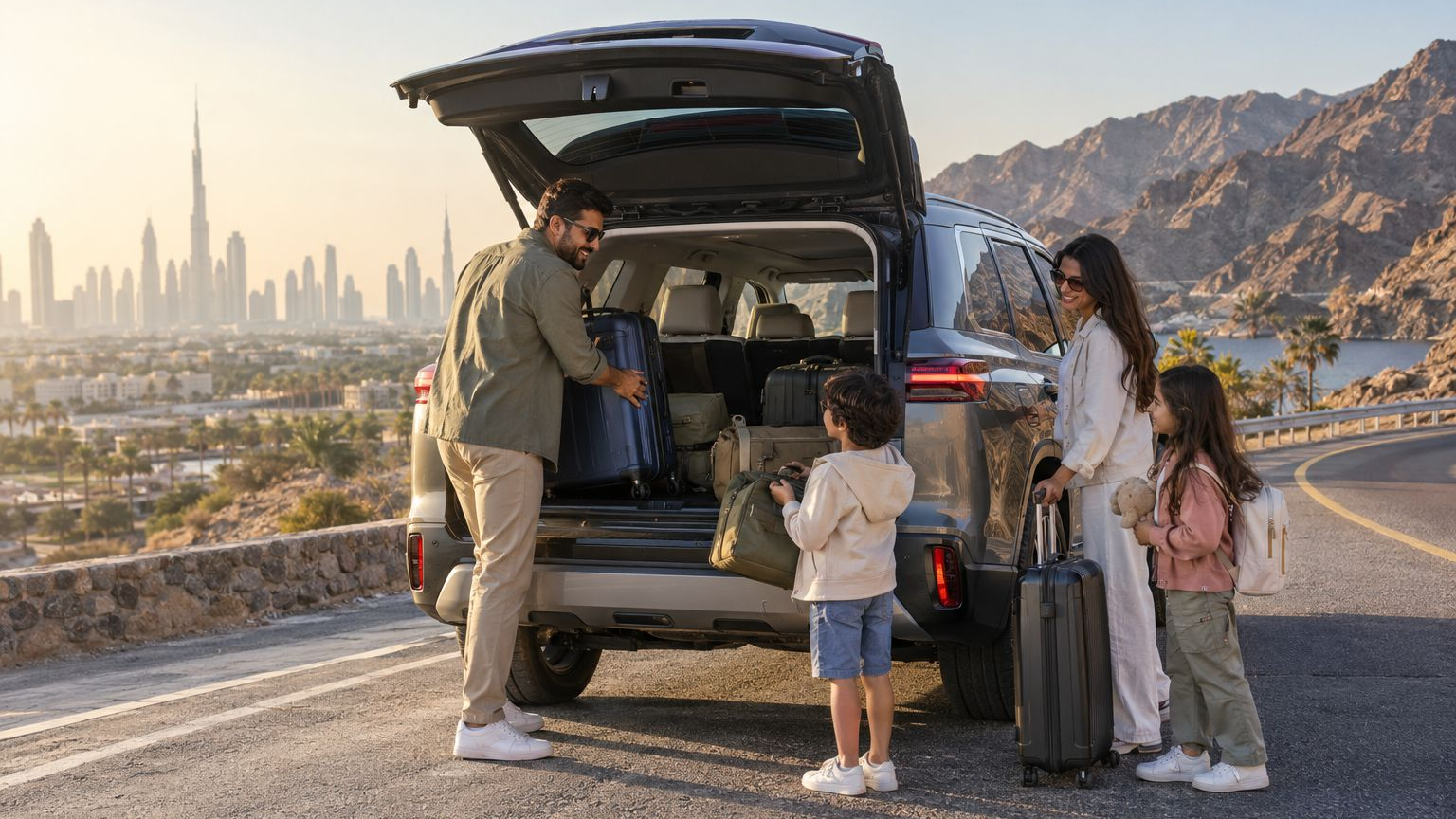
Why SUVs Continue to Shape Family and Business Mobility Across the UAE
SUVs occupy an unusually broad role in the UAE. The same vehicle category can serve a family airport transfer, a week of sightseeing, an executive road journey, a school run or a multi-emirate trip. The range available through QuickLease car rental Dubai illustrates why SUVs remain prominent in the city's rental and long-term mobility market, even as compact cars, taxis, metro services and shared mobility offer strong alternatives.
Tourism adds scale to the demand. Dubai welcomed a record 19.59 million international overnight visitors in 2025, according to the Dubai Department of Economy and Tourism, up 5% from 2024. The city also recorded 44.85 million occupied hotel room nights and an average stay of 3.7 nights. Families and groups arriving with luggage often need to evaluate capacity, airport access and inter-emirate plans in a compressed period.
Why the SUV use case is broader than image
An SUV's practical value usually comes from packaging rather than status. A higher seating position can improve visibility, a larger cargo area can handle luggage and child equipment, and seven-seat configurations can keep a group in one vehicle. On longer highway journeys, passengers may value cabin space and easier loading.
Business travellers may choose an SUV when several colleagues, equipment cases or repeated airport journeys are involved. Residents may need extra seating during family visits or school holidays. In each case, the vehicle earns its cost through a defined capacity requirement. Choosing a larger SUV without that requirement increases fuel, parking and rental expense without necessarily improving the journey.
Start with seats, then subtract luggage
A seven-seat label does not guarantee room for seven people and seven suitcases. When the third row is in use, cargo space may shrink substantially. Travellers should provide the rental company with passenger count, child-seat needs, suitcase sizes and any mobility equipment. Ask for usable luggage capacity with the intended seats raised.
For airport pickups, also consider how passengers reach the collection point and whether a second driver is required. Confirm flight-delay procedures, delivery timing, parking charges and terminal meeting arrangements. Convenience depends on the complete handover plan, not only the vehicle category.
Choose the route before choosing four-wheel drive
Most Dubai journeys take place on paved urban roads and highways, where comfort, fuel efficiency and easy parking may matter more than off-road hardware. Visit Dubai's current road-trip guide includes routes such as Hatta and describes a journey of roughly two hours from Meydan to Hatta Wadi Hub. Mountain destinations can involve gradients and changing conditions, but a paved-road trip does not automatically require a specialised off-road vehicle.
A standard rental SUV must not be assumed to permit dune driving. Off-road use can be restricted by the rental agreement and insurance. Drivers considering desert activity should use approved routes, confirm written permission and coverage, and choose an experienced guided operator when appropriate. The official Visit Dubai off-roading guide also emphasises specialist experiences and locations rather than treating every SUV as desert-ready.
Rental choice should follow trip duration
QuickLease's current SUV range spans compact, family, premium, four-wheel-drive and hybrid categories. That range can help match a vehicle to city driving, group travel or longer stays, but rates and availability should be confirmed for the exact dates. Customers should also verify insurance, mileage, deposit, delivery, cancellation and additional-driver terms.
A daily or weekly rental can suit a holiday, a family visit or temporary replacement need. For a longer assignment or seasonal requirement, comparing monthly car hire Dubai options can make the recurring cost and extension terms easier to assess. If the driver expects to retain the same vehicle over a multi-year period and ultimately wants ownership, lease-to-own may be considered alongside other financing and leasing choices.
A six-point SUV selection checklist
1. Passenger reality
Count adults, children and child seats. Check third-row access and whether all passengers can travel comfortably for the longest planned journey. A short showroom test is not the same as two hours on the road.
2. Cargo configuration
List large suitcases, strollers, golf bags or equipment cases. Request images or dimensions of the cargo area in the required seating configuration. Avoid carrying unsecured items above seat height.
3. Fuel and parking
Larger vehicles usually require more fuel and space. Check hotel, residence and destination parking. A compact crossover may solve the passenger need while remaining easier to handle in busy urban areas.
4. Safety and driver familiarity
Choose a vehicle the driver is comfortable manoeuvring. Confirm child-seat installation, tyre condition, warning lights, spare-wheel or repair arrangements and emergency contacts at handover. Photograph the vehicle condition before departure.
5. Contract and insurance
Read the mileage allowance, excess, exclusions, territorial limits, authorised drivers, accident process and prohibited uses. Ask specifically about gravel, mountain or desert routes rather than assuming a general SUV label grants permission.
6. Support
Keep the provider's roadside number and rental agreement accessible. Confirm what happens after a breakdown or tyre issue and whether a replacement vehicle is available. For a tightly planned holiday or business trip, response arrangements can be more valuable than a minor rate difference.
Plan the handover as carefully as the itinerary
Before accepting the SUV, inspect the body, glass, wheels, tyres and interior in good light. Record existing marks with time-stamped photographs and make sure they appear on the handover form. Check the odometer and fuel level, then test lights, indicators, air conditioning, parking sensors and warning displays. Confirm that the registration information and emergency contact are available in the vehicle.
Ask the representative to explain the accident and breakdown procedure before departure. Tourists should confirm which driving licence documents are accepted for their nationality and residency status; requirements can vary, so the provider should verify the case rather than relying on a generic online list. Every intended driver should be named or approved under the agreement.
On return, allow time for fuel, toll and condition checks. Photograph the vehicle again and retain the return confirmation and final invoice. If the rental is delivered to a hotel or residence, confirm the collection window and responsibility for parking. A disciplined handover protects both parties and prevents a successful journey from ending in an avoidable disagreement.
SUV demand reflects Dubai's variety
Dubai's appeal combines dense urban districts, airports, resorts, beaches and access to mountain and desert experiences. That variety rewards a vehicle category that can carry people and luggage across different types of paved journeys. Yet the most responsible choice remains need-based: enough space, suitable comfort and clear permission for the intended route.
Travellers and residents who begin with passenger count, cargo, duration and contract conditions can avoid paying for unused capability. The right SUV is not necessarily the biggest or most expensive. It is the one that makes the planned journey safer, simpler and financially predictable.
About QuickLease
QuickLease Car Rental LLC provides vehicle rental and leasing options in Dubai and the UAE, including daily, weekly and monthly rentals, commercial vehicles and lease-to-own plans. Availability, eligibility, rates and contract terms should be confirmed directly for the selected vehicle and period.