
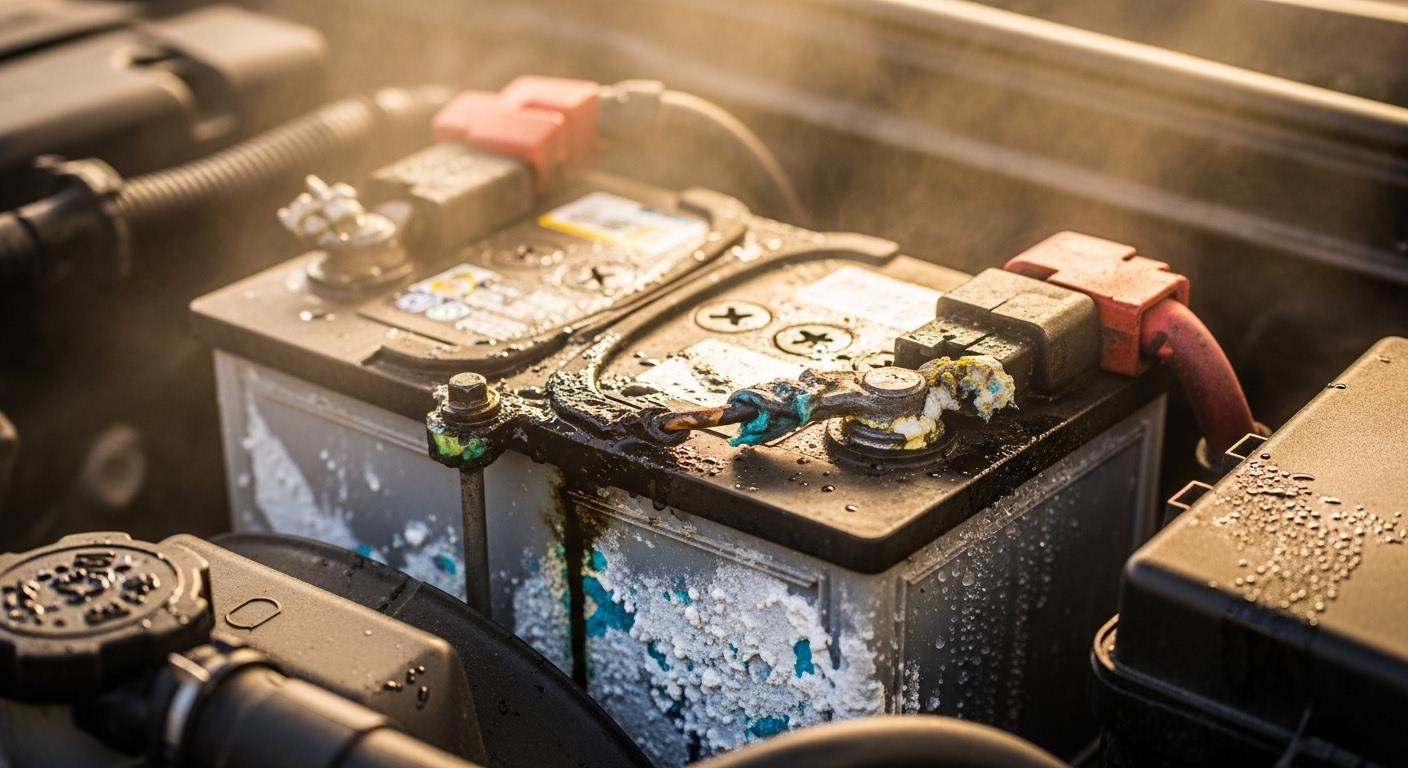
Why Car Batteries Fail Faster in the Abu Dhabi Summer Heat
Summer in Abu Dhabi is extremely hot, and this heat is very hard on car batteries. Many drivers notice their batteries die sooner than expected. The heat puts extra stress on battery parts.
High temperatures speed up chemical reactions inside the battery. This causes the fluid to evaporate and the metal parts to corrode. As a result, the battery loses its ability to hold charges.
Cars parked in direct sunlight or driven on hot roads are more likely to suffer damage. Engine heat adds to the stress, making batteries wear out quickly. Regular checks can help catch problems early.
How Extreme Heat Impacts Battery Chemistry
Car batteries do not handle heat well. High temperatures slowly damage the battery from the inside. Even if it looks normal, heat may already be reducing its performance.
- Faster chemical reactions: heat makes the battery work harder than usual, which accelerates wear.
- Fluid evaporation: at high temperatures, the battery fluid dries out, reducing its ability to produce enough power.
- Corrosion of metal parts: heat speeds up rust inside the battery and weakens electrical flow.
- Plate warping and damage: internal plates expand in heat, which may cause them to bend or weaken over time.
- Reduced charge retention: the battery cannot hold power for long and drain quickly.
- Increased self-discharge: the battery loses energy even when the car is not running.
Because of these changes, batteries wear out faster in hot weather. That is why car batteries fail more often in summer heat than in cooler conditions.
Why Desert Climate Conditions Are Especially Harsh on Vehicle Batteries
Desert environments create extreme conditions that constantly stress car batteries. Very high temperatures, strong sunlight, and dry air all contribute to faster battery component degradation. In hot desert cities like Abu Dhabi, these conditions are present almost every day during summer.
Extreme Daytime Temperatures
Desert regions experience very high temperatures for long hours. Heat builds inside the engine and around the battery. This constant exposure accelerates internal wear and shortens battery lifespan.
Direct Sunlight Exposure
Cars parked in open areas sit under strong sunlight for hours. The metal body absorbs heat and traps it inside the engine bay. This makes the battery much hotter than the outside air temperature.
Hot Engine Bay Heat Retention
Even after you stop driving, heat stays trapped under the hood. The battery remains hot for a long time instead of cooling down. Continuous heating and slow cooling increase internal damage.
Dry Air and Fluid Loss
Desert air increases evaporation. Battery fluid levels drop faster in these conditions. Low fluid levels reduce performance and weaken battery power.
Heavy Air Conditioning Usage
In very hot weather, air conditioning runs almost constantly. This increases the battery's electrical demand. Constant strain reduces efficiency and speeds up wear.
Long Driving Distances in Heat
Extended driving in high temperatures keeps the engine and battery hotter for longer. The longer the heat exposure, the faster the battery components break down.
Due to these harsh desert conditions, batteries are constantly under stress. This is why they fail much more quickly than in cooler climates.
Mechanical Reasons Car Batteries Fail Faster in Summer Heat
Summer heat does more than warm up the air. It affects the internal parts of the battery and changes how they function. High temperatures put pressure on battery components, causing them to wear out faster and operate less efficiently. Over time, these mechanical changes lead to sudden battery failure.
Electrolyte Fluid Evaporation
Battery fluid helps create and store electrical energy. In high heat, this fluid evaporates faster than normal. Low fluid levels reduce power and can permanently damage the battery.
Internal Plate Damage
Inside the battery are metal plates that produce electricity. Heat makes these plates expand and weaken. Over time, they may bend or break, which reduces battery performance.
Increased Internal Corrosion
High temperatures speed up corrosion inside the battery. Corrosion blocks smooth electrical flow and weakens internal connections. This makes the battery less reliable.
Overcharging Stress
Heat can affect how the charging system works. Sometimes the battery receives more charge than it can safely handle. Overcharging creates excess heat and accelerates internal damage.
Faster Chemical Breakdown
Heat accelerates chemical activity inside the battery. Faster reactions mean faster wear. This shortens the battery’s overall lifespan.
Structural Weakening of Battery Case
Extreme heat can soften or stress the battery casing. Over time, the case may swell or crack. This can lead to leaks and complete battery failure.
Early Warning Signs of Heat-Damaged Batteries
Heat damage usually builds slowly before the battery stops working completely. Many drivers ignore early signs because the car still starts most of the time. But these small changes often mean the battery is already weakening.
Common warning signs to watch for:
- Slow engine start or delayed ignition
- Dim headlights, especially when starting the car
- Battery warning light is on the dashboard
- Swollen or bloated battery case
- Strange smell coming from the engine area
- Electrical features are working weakly or inconsistently
- Needing frequent jump-starts
If you notice any of these signs, it’s best to check the battery sooner rather than later before it fails.
Professional Prevention Strategies That Extend Battery Life
High heat cannot be avoided, but battery damage can be reduced with proper care. Regular maintenance and smart driving habits help the battery last longer. Simple preventive steps can save you from sudden breakdowns and expensive replacements.
Ways to protect your car battery:
- Park in shaded or covered areas whenever possible
- Get the battery tested regularly, especially before summer.
- Clean battery terminals to prevent corrosion buildup
- Check fluid levels if your battery is not fully sealed.
- Inspect the charging system to avoid overcharging.
- Avoid leaving electrical systems running when the engine is off.
- Replace old batteries before peak summer heat.
Regular checks and early care help your battery last longer and perform reliably in hot weather.
Reliable Battery Support When You Need It Most
If your car struggles to start in extreme heat or shows early warning signs, don’t delay service. Quick action helps prevent sudden breakdowns and expensive electrical damage. Early battery care keeps your vehicle running safely and smoothly.
Professional testing can find problems before the battery fails. Regular maintenance and timely replacement improve performance, especially during very hot summer months.
If you need a replacement, you should always have your battery change in Abu Dhabi by trained professionals. Expert service ensures the right battery is installed correctly and works reliably in extreme heat.
Book a battery check before peak summer arrives. A simple inspection today can help you avoid unexpected trouble all season.
Final Thoughts
Summer heat puts strong pressure on car batteries, especially in hot cities like Abu Dhabi. High temperatures accelerate internal damage and reduce battery capacity. Many batteries weaken slowly and fail without warning. Knowing how heat affects your battery helps you prevent sudden breakdowns.
Regular checks and timely replacement keep your car reliable in extreme weather. Watch for early warning signs and take action quickly. Simple maintenance and professional support can help your battery last longer and keep your vehicle running smoothly all summer.









Add Your Directory With Us
Boost your visibility with our Business Directory

Add Your BCard With Us
Open the door to new professional connections.
DayOfDubai
Business Services
