


Interior Finishing Materials: Types and Uses for Walls, Ceilings and Floors

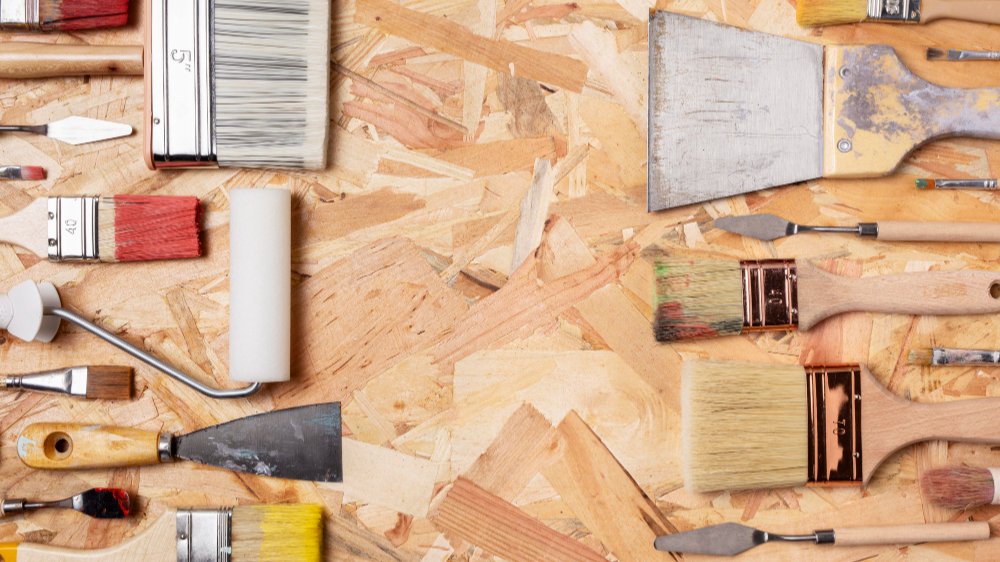
Once the walls are up and the wiring and pipes are hidden away, the finishing stage decides how a home looks and, just as importantly, how well it ages. It is also where small choices add up. A paint that blisters in a steamy bathroom, a skirting board that swells after a few months of mopping, a floor that scratches in the first year: none of these are dramatic failures, but each one means redoing work that should have lasted a decade.
The easiest way to make sense of finishing materials is to sort them by surface, because walls, ceilings, floors and built-in joinery each face different conditions.
Walls
Walls get the most attention and take the most wear, so they are usually finished in layers: the base surface (block and plaster, or gypsum board), a levelling coat, a primer, and finally paint, tiles or panels. Skipping a layer rarely saves money in the end.
Putty and fillers
Even a well-plastered wall has hairline cracks, pinholes and shallow dips. They are easy to miss on bare plaster and impossible to miss once paint goes on, especially when light from a window hits the wall at an angle. This is where wall putty comes in.
Cement-based putty bonds strongly to plaster and concrete and copes better with damp, which makes it the safer choice near wet areas. Acrylic putty usually comes ready-mixed, can be sanded to a smooth finish and works well on most interior walls. Deeper damage, like old anchor holes or chased-out cable runs, needs a filler first, with putty applied over it once it has set.
Choosing the right wall putty for the surface and applying it in two thin coats rather than one thick one can make a bigger difference to the final finish than using expensive paint. Each coat is sanded smooth before the next goes on, and the final one is dusted off before priming.
Paint
The finish matters as much as the colour. Matte paint hides surface flaws well but marks easily. Eggshell and satin can be wiped clean, which is why they are popular for living rooms, hallways and children’s rooms. Semi-gloss paint or a paint specifically formulated to resist moisture and mould is often a better choice for kitchens and bathrooms, particularly in homes where air conditioning runs most of the year and condensation forms around vents and windows.
Tiles and panels
Ceramic or porcelain tiles remain the standard for shower areas and kitchen splashbacks. In living spaces, decorative panels, wood-look slats and wallpaper are used to add texture or create a feature wall without structural changes.
Ceilings
Most ceilings are either the painted underside of the slab or a suspended (false) ceiling, usually built from gypsum board on a metal frame. False ceilings are now standard in many apartments and villas because they hide AC ducts and cabling, allow recessed and cove lighting, and cover an uneven slab.
Ceilings follow the same logic as walls: joints are taped and filled, the surface is levelled, primed and painted. In bathrooms, moisture-resistant gypsum board or PVC and aluminium panels hold up far better than standard board.
Floors
Flooring is often one of the biggest expenses when finishing a home, and the right choice depends on moisture levels, foot traffic and how much maintenance you're prepared to do.
-
Porcelain tiles: dense, low water absorption, hard-wearing and cool underfoot. They work in almost any room.
-
Ceramic tiles: more affordable and easier to cut, better suited to walls and lighter-traffic floors.
-
Natural stone: marble and granite look premium but need periodic sealing and careful cleaning.
-
Laminate: a budget-friendly wood look for bedrooms and living areas, but sensitive to standing water.
-
Vinyl and SPC: waterproof, quiet and often laid directly over existing tiles, which makes them popular for renovations.
-
Engineered wood: a real timber surface on a stable core, less prone to movement than solid wood.
Whatever goes on top, the result depends on the groundwork: a level base, the right adhesive and, for tiles, a suitable grout.
Joinery and Built-Ins
For skirting boards, interior doors, wardrobes, kitchen cabinets, TV units and shelving, the choice usually comes down to solid wood, plywood or MDF.
MDF has no grain or knots, so its surface is uniform and it machines cleanly. It takes paint, veneer and laminate well, which makes it the usual base for routed door fronts and slatted wall panels. For painted joinery, a high-quality MDF board often provides a smoother finish than solid timber, as there's no wood grain to show through the paint.
It does have limits. MDF is heavy, screws hold poorly in its edges, and unsealed edges absorb water and swell. For kitchens, bathrooms and laundry areas, it’s worth choosing a moisture-resistant grade, sealing every cut edge before painting, and using plywood for the sink base cabinet.
The Best Order for Interior Finishing Work
Finishing work tends to go more smoothly, with less need for repairs, when the different trades work in the right order:
-
Ceilings first, since dust and drips fall down.
-
Walls: filling, putty, primer and the first coats of paint.
-
Floors, once the messiest wall work is done.
-
Joinery and built-ins, installed onto finished floors.
-
Final coat of paint and touch-ups around fitted items.
None of these materials is the best option everywhere. A finish that is perfect for a bedroom can fail within a year in a bathroom, so the useful question is always the same: how much moisture, heat and wear will this surface face, and how much maintenance will it need to keep looking right?