

UAE Signs Tourism Cooperation Agreements with Nigeria and Argentina

The UAE has signed two memoranda of understanding (MoUs) with Nigeria and Argentina to strengthen tourism cooperation, encourage investment and explore new opportunities across the sector.
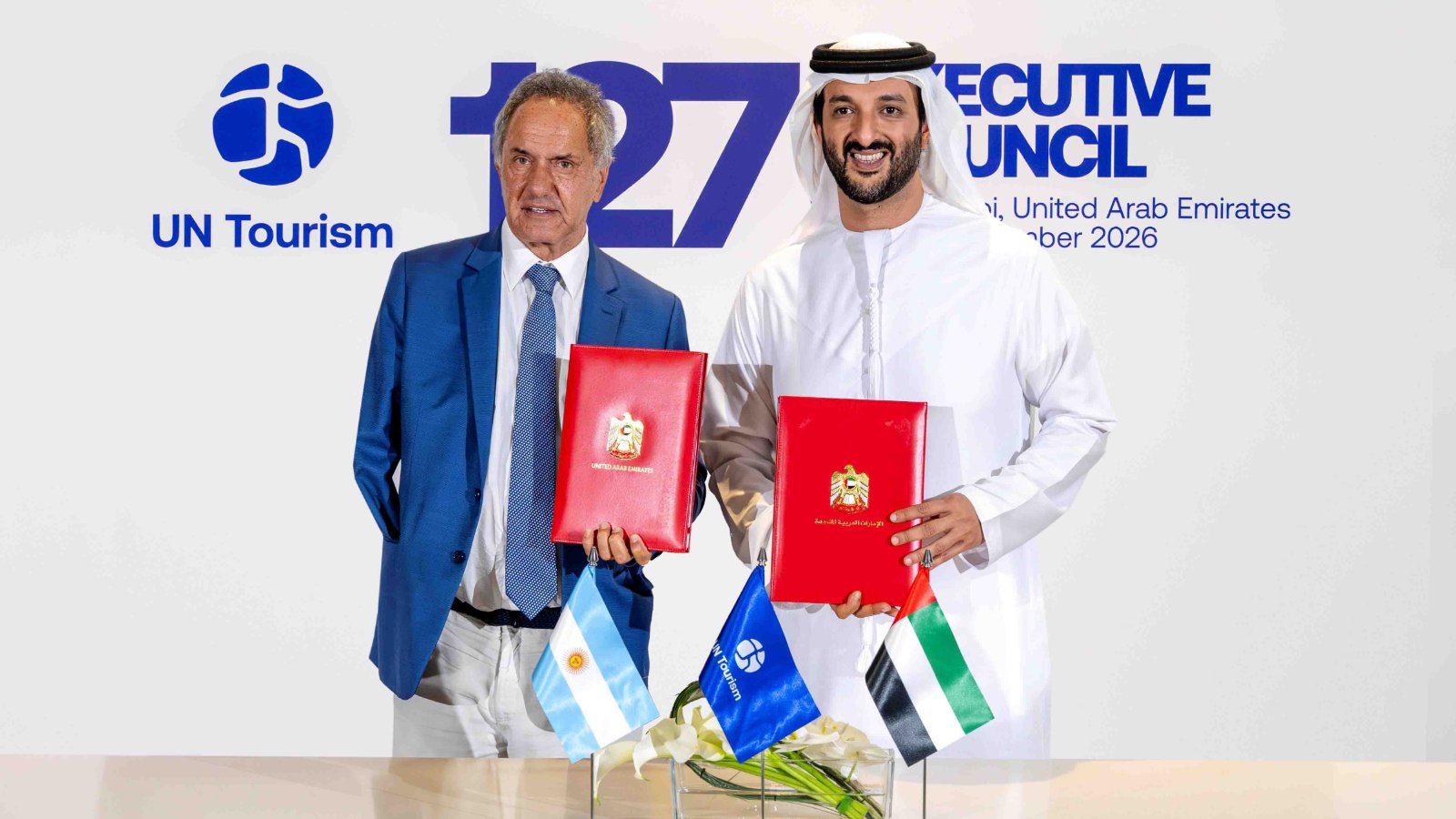
The agreements were signed by the UAE Ministry of Economy and Tourism, Nigeria’s Federal Ministry of Art, Culture, Tourism and the Creative Economy, and Argentina’s Secretariat of Tourism, Environment and Sports.
The signatories were Abdulla bin Touq Al Marri, UAE Minister of Economy and Tourism; Hannatu Musawa, Nigeria’s Minister of Art, Culture, Tourism and the Creative Economy; and Daniel Scioli, Argentina’s Secretary of Tourism, Environment and Sports.
The signing took place on the sidelines of the 127th session of the UN Tourism Executive Council, hosted by Abu Dhabi from November 23 to 25, 2026.
The agreements aim to facilitate the exchange of expertise, strengthen international partnerships and identify opportunities for tourism-related investment and collaboration.
UAE Seeks to Expand International Tourism Partnerships
Abdulla bin Touq Al Marri said the UAE places importance on strengthening tourism ties with countries worldwide and expanding its network of partnerships with emerging and promising tourism markets.
He said the agreements with Nigeria and Argentina support the objectives of the UAE Tourism Strategy 2031 and create opportunities to develop tourism experiences, diversify products and strengthen the country's position in the global tourism sector.
The minister added that international cooperation can contribute to the growth of tourism and hospitality while supporting shared economic and cultural interests.
UAE and Nigeria to Explore Tourism Investment and Cultural Exchange
The agreement between the UAE and Nigeria outlines several areas of cooperation, including the exchange of official delegations, tourism experts and study visits. Both countries will also explore sharing tourism statistics, information and promotional materials, as well as participating in tourism exhibitions and events.
The MoU encourages stronger private-sector partnerships, particularly among travel agencies, hotels and airlines. It also identifies opportunities for joint tourism marketing campaigns and investment in tourism infrastructure.
Potential areas for investment include beach and cruise tourism, hotels and the operation of tourist trips. The agreement also provides for seminars aimed at investors to explore business opportunities.
Training and capacity-building are additional priorities, with plans to exchange expertise in hospitality, tourism management and professional development.
The two countries will also explore joint initiatives to promote cultural heritage, creative economy products and cultural assets.
UAE and Argentina to Focus on Specialised Tourism and AI
The MoU with Argentina focuses on developing tourism cooperation, promoting destinations and exploring commercial and investment opportunities.
Both sides intend to exchange tourism information and promotional materials, organise joint activities and participate in international exhibitions and events.
The agreement identifies several specialised tourism areas for collaboration, including rural, cultural, culinary, nature-based and marine tourism. It also provides for expert visits, the exchange of best practices and the organisation of workshops and seminars.
Technology and innovation are central to the partnership. The two countries will explore ways to support digital transformation, artificial intelligence applications and innovation ecosystems within the tourism sector.
Other areas include applied research, entrepreneurship, professional training and the development of technology-based solutions for tourism services.
Partnerships Support UAE Tourism Strategy 2031
The agreements form part of the UAE's broader efforts to expand international tourism partnerships and attract investment into the sector.
By working with Nigeria and Argentina, the UAE aims to strengthen cooperation in tourism promotion, infrastructure development, cultural exchange and technology.
The partnerships also create opportunities for businesses and tourism professionals in the three countries to exchange expertise and explore new areas of collaboration.