

UAE honours winning students at 8th National Science, Technology and Innovation Festival

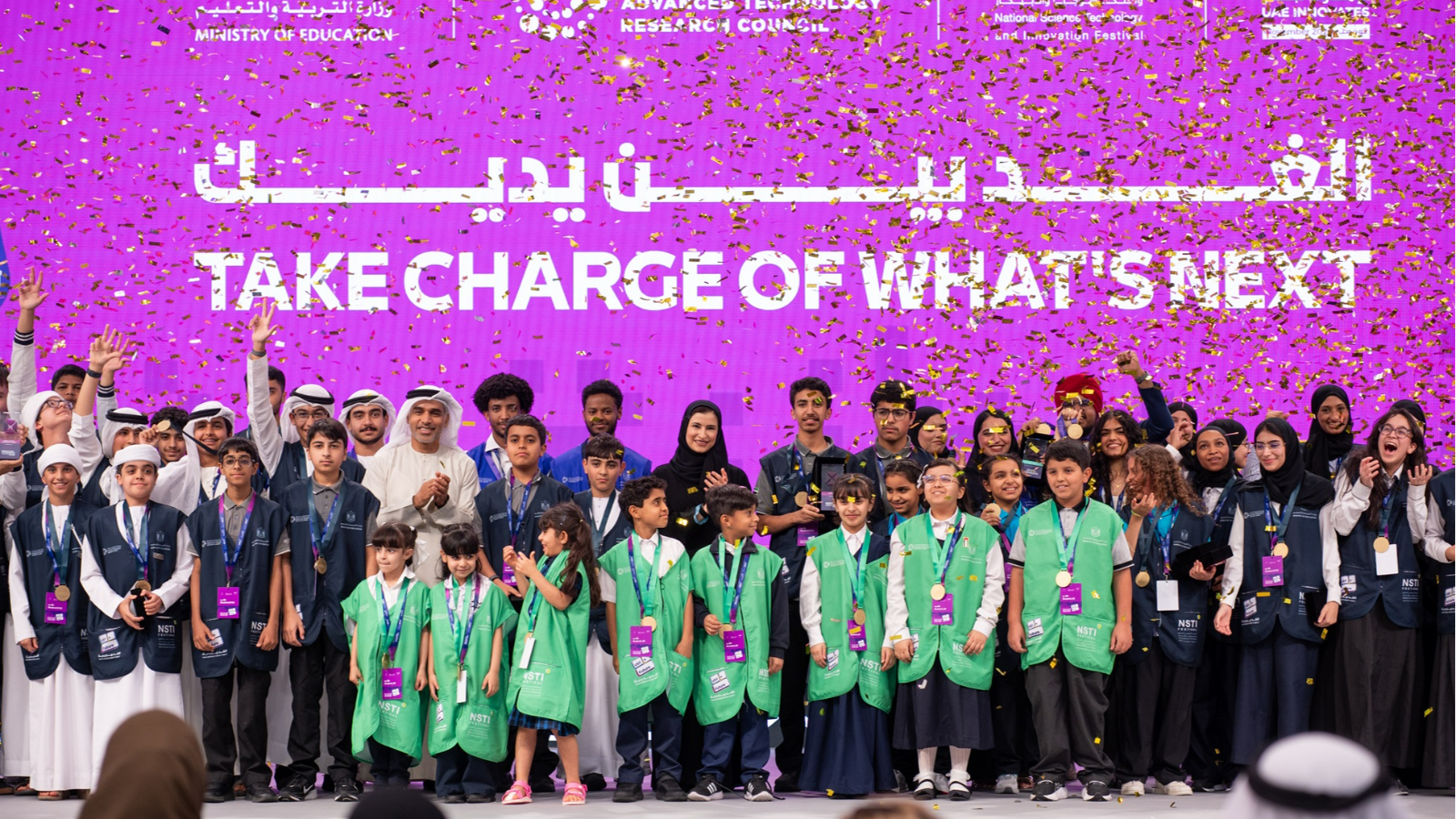
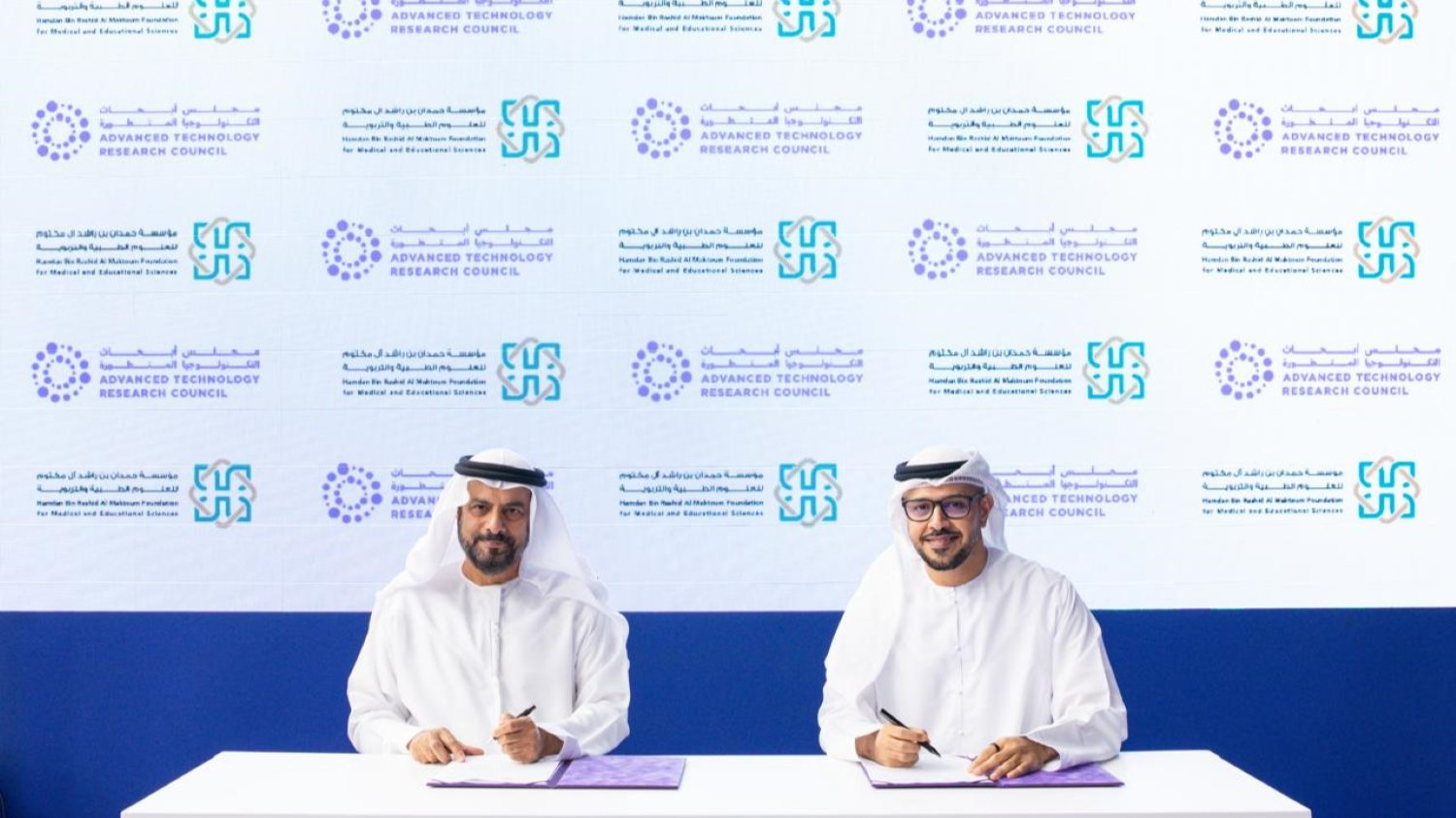
The UAE Ministry of Education and the Advanced Technology Research Council (ATRC) have concluded the eighth edition of the National Science, Technology and Innovation Festival, held under the patronage of Sheikh Hazza bin Zayed Al Nahyan, Ruler’s Representative in Al Ain Region.
The closing ceremony at ADNEC Centre Al Ain recognised 27 winning projects in the Emirates Young Scientist Competition and Advanced Technology Pioneers Competition, as well as nine students in the Junior Innovators Challenge. The four-day event, held from November 10 to 13, brought together students for research, experimentation and scientific discussions.
This year’s edition attracted 615 students, who presented 158 research and applied projects. Activities ranged from discovery challenges for younger students to solutions addressing challenges identified by national entities. The programme also featured a scientific conference, practical workshops and interactive activities for students and families.
The closing ceremony was attended by Sarah bint Yousef Al Amiri, Minister of Education; Dr Mohamed Al Khumairi, Chief Business Development Officer at ASPIRE and Acting Executive Director of ATRC; government officials; representatives of partner organisations; judges; educators and students’ families.
UAE highlights investment in future scientists and innovators
Sarah Al Amiri said nurturing the next generation of scientists, researchers and innovators is essential to the UAE’s future development and competitiveness.
She highlighted the education system’s responsibility to identify and develop talent, providing students with opportunities to progress from an interest in science to research and knowledge creation. She added that the festival brings educational and research institutions together to expand access to scientific learning and research experiences.
Al Amiri said the students’ achievements demonstrated what can be accomplished when young people have opportunities to test ideas and present findings against scientific standards. She also emphasised the importance of building on each edition’s outcomes to improve future programmes and strengthen research and innovation in schools.
Mohammed Al Qasim, Undersecretary of the Ministry of Education, said the festival supports the Ministry’s efforts to connect classroom learning with practical skills and future career requirements.
He noted that research projects and challenges help students apply knowledge across different subjects while developing critical thinking, problem-solving and teamwork. The festival also introduces participants to emerging technologies and gives them opportunities to interact with specialists and explore careers in science and engineering.
Dr Mohamed Al Khumairi said the partnership between the Ministry and ATRC helps connect education with the UAE’s research ecosystem. He highlighted the importance of giving students opportunities to develop technical and research skills and explore pathways into industries of the future.
Emirates Young Scientist Competition recognises 24 projects
The Emirates Young Scientist Competition awarded 24 projects across four categories: Technology; Biological and Ecological Sciences; Chemical, Physical and Mathematical Sciences; and Behavioural and Social Sciences.
Each category recognised six projects, divided equally between intermediate-level students in Grades 5 to 8 and advanced-level students in Grades 9 to 12.
Among the winning projects in the Technology category, Smart Dhad Oasis: A Smart Application for Learning Arabic Letters from Al-Mataf Girls’ School – Cycle 2 secured first place at the intermediate level. Hybrid Foam and Water Firefighting Tower from the Emirates Scientific Club came second, while Bridge of Playing from Al Nokhba School placed third.
At the advanced level, Intelli Rover from the Emirates Scientific Club won first place, followed by Guard Chain from Applied Technology Schools – Bani Yas Campus and Smart Hull: An Intelligent System for Monitoring Ship Structural Fatigue Using Fibre Optics and Artificial Intelligence from Applied Technology Schools – Abu Dhabi Boys Campus.
In Biological and Ecological Sciences, Eco Bricks 2.0 from Tahnoun bin Mohammed Educational Complex – Applied Technology Schools, Al Ain Campus, took first place at the intermediate level. Smart Recycled Paper Planter and Nature-Inspired Desert Buildings: The Camel Nose Approach secured second and third places, respectively.
At the advanced level, NutriTongue: The Smart Nutritional Tongue from Applied Technology Schools – Umm Al Quwain Campus won first place. Living Root Shield from Al Masa Cycle 2 and 3 Girls School came second, while Root Sensor from Al Shahama Girls School placed third.
In Chemical, Physical and Mathematical Sciences, the intermediate-level winners were Low-Cost Digital Microscope from the Emirates Scientific Club, Combating the Urban Heat Island Effect from Dubai National School – Al Barsha, and Water Runoff Protection System from Applied Technology Schools.
At the advanced level, Nanofab from the Quarter Century Foundation for Science and Technology secured first place. Detecting Phosphate in Water Using Machine Learning to Improve Water Quality Assessment from Applied Technology Schools – Fujairah Campus came second, followed by Three-Source Hybrid System for Sustainable Energy Generation from the Emirates Scientific Club.
The Behavioural and Social Sciences category recognised projects addressing student wellbeing, communication and the impact of technology. At the intermediate level, The Impact of Screen Time and Sleep from Zayed Educational Complex – Al Qattara won first place, followed by A Touch of Calm and Bridging the Language Gap Between Generations, both from Dubai Schools Al Khawaneej.
At the advanced level, Evaluating Information Before and After Revealing the Text’s Source: The Impact of Labelling Content as AI-Generated from Mleih Girls School took first place. Augmented Reality in Mathematical Engineering from Applied Technology Schools – Umm Al Quwain Campus came second, while a project examining psychological disorders associated with eating disorders among UAE school students from Al Mairid Cycle 2 and 3 Girls School secured third place.
Advanced Technology Pioneers Competition connects students with industry challenges
Three projects won first place in the Advanced Technology Pioneers Competition, each addressing a challenge set by a participating national organisation.
Rihlat won the Department of Culture and Tourism – Abu Dhabi challenge, Bridge from Mohamed bin Zayed University of Artificial Intelligence secured the EDGE Group challenge, and Aegis-M won the Emirates Nuclear Energy Corporation challenge.
Participants developed prototypes and simulations designed to address practical requirements identified by the organisations. The competition gave university students and recent graduates opportunities to apply research, engineering, design and development skills while testing and refining their ideas against real-world needs.
Junior Innovators Challenge honours nine students
The Junior Innovators Challenge recognised nine students across three age groups, with three winners in each category.
In Grades 3 and 4, Shamma Hazza Sultan Rashid Al Azeizi from Na’ama School secured first place, followed by Maitha Ahmed Mutawea Mohammed Al Khuzaymi from Zayed Educational Complex – Al Badia and Saif Rashid Mohammed Al Shaer Al Ali from Dubai National Schools.
In Grades 1 and 2, Yousef Saif Al Hammadi from Al Marfa School took first place. Ali Mohammed Abdullah Mohammed Al Matrooshi from Al Qariya Cycle 1 School came second, while Khalfan Fahad Khalfan Al Hassani from St. Mary’s Catholic High School – Fujairah placed third.
In the Kindergarten 1 and 2 category, Shaikha Saeed Abdullah Al Falasi from Nad Al Hamar Kindergarten won first place. Shamma bint Sultan bin Abdullah bin Mohammed Al Jaberi from Al Shuhada 2 School secured second place, followed by Aisha Salem Mohammed Abdullah Al Suwaidi from the American School of Creative Science – Nad Al Sheba.
Four-day programme features research sessions and workshops
The eighth edition brought together students from public and private schools, applied technology schools, universities and recent graduates.
Alongside the three competitions, the programme included a scientific conference with 14 sessions and a family festival featuring 64 workshop sessions. The activities provided participants with opportunities to explore scientific disciplines, engage with advanced technologies and test their abilities through challenges suited to their educational levels.
The organisers said the projects and experiences developed during the festival would help create further opportunities for young people to pursue scientific research and innovation in the UAE.