

Building a Bilingual AI Video Creation Workflow for UAE SME Operations


Walk into almost any fast-growing logistics, property management, or hospitality office between Business Bay and Jebel Ali, and you will see why an ai video creation workflow has replaced one-off camera shoots for internal training and client onboarding. A typical 60-person company in the UAE rarely operates in a single language or from a single building. Your client-facing account managers may send proposals in English and Arabic, while warehouse supervisors, maintenance crews, and front-desk staff work across Tagalog, Hindi, Urdu, and Malayalam.
When a commercial brokerage updates its tenancy compliance checklist or a clinic group changes its insurance intake rules, sending a 14-page English PDF on WhatsApp does not work. Half the shift skims the first page, misses the updated form field, and asks a supervisor on the floor. Yet booking a videographer or asking an operations manager to record five separate voiceovers in a quiet meeting room every time a procedure changes is a dead end too. By the time the clips are edited and subtitled, the process has already changed again.
If your business only updates its training materials once a year, hire a local production crew and film a polished company video. If you ship policy updates, safety reminders, or client walkthroughs every two weeks, you need a text-driven pipeline that treats video like an editable document rather than a film shoot.
Why a manual ai video creation workflow breaks down across multilingual shifts
Most small and mid-sized teams in Dubai do not fail at video because they lack cameras or microphones. They stall because their first attempt relies on single-take recordings.
Picture what happens when an HR lead or branch manager records a five-minute screen walkthrough on a Tuesday afternoon. First, background noise from the open office or air conditioning forces three retakes. Second, the speaker talks off the cuff, turning a 90-second software rule into a six-minute ramble filled with filler words. Third, and worst of all, the audio is baked into a single video timeline.
Two months later, when a regulatory fee or internal portal screen changes, nobody can patch just the twenty seconds that went out of date. Someone has to re-record the entire video from scratch. If that module was also dubbed or subtitled into Arabic and Hindi for field staff, the maintenance burden triples overnight. Most teams give up after the second update and go back to forwarding static PDFs.
The four-stage pipeline that keeps training and client videos editable
Teams that sustain video production without a dedicated media department separate the subject-matter expert from the recording timeline. Instead of putting a busy operations lead in front of a lens, they break production into four short steps that fit inside a normal workweek.
|
Workflow Stage |
Owner |
Input Artifact |
Output Deliverable |
Time Budget |
|
1. Source Strip |
Operations or HR Lead |
Existing SOP doc, PDF manual, or slide deck |
5 to 7 single-action scene blocks |
15 minutes |
|
2. Script Beat Check |
Department Supervisor |
Raw policy bullets |
Spoken script at 35 to 45 words per scene |
15 minutes |
|
3. Scene Assembly |
Enablement Coordinator |
Approved script + cropped UI screenshots |
Draft video with presenter and synced captions |
20 minutes |
|
4. Regional Sign-Off |
Bilingual Shift Lead |
Translated draft project |
Approved MP4 + SRT files for WhatsApp or LMS |
15 minutes |
Stage 1: Break long documents into single-action modules
Never turn a 30-page employee handbook into one long video. Nobody watches a 18-minute compliance lecture on a mobile phone between shifts. Split your source material so each video answers one specific operational question in under two minutes:
-
How to verify Emirates ID and trade license documents in the client portal
-
Step-by-step handover checklist for cold-chain delivery vans at shift change
-
How tenants submit a maintenance access request through the building app
Keeping each module between five and seven scenes makes version control painless. When the building app updates its maintenance form, you only open the 90-second tenant request project instead of touching the rest of your library.
Stage 2: Write for the ear, not the noticeboard
Written memos are full of nested clauses, legal caveats, and numbered sub-bullets. Spoken narration needs short sentences and clear verbs. Before generating audio, read each scene script out loud at a calm 135-words-per-minute pace.
A good rule of thumb is one visual change and 35 to 45 spoken words per scene. Instead of repeating the slide heading word for word, tell the viewer where to look on the screen: "Check the top-right status badge before approving the refund. If the badge shows Pending Settlement, pause the ticket and notify billing."
Stage 3: Build modular scenes from existing slides and documents
Once the short script is ready, an enablement coordinator can import the PowerPoint deck, PDF guide, or structured text into Leadde.ai to generate a scene-by-scene video draft complete with an on-screen presenter, natural voiceover, and synchronized subtitles.
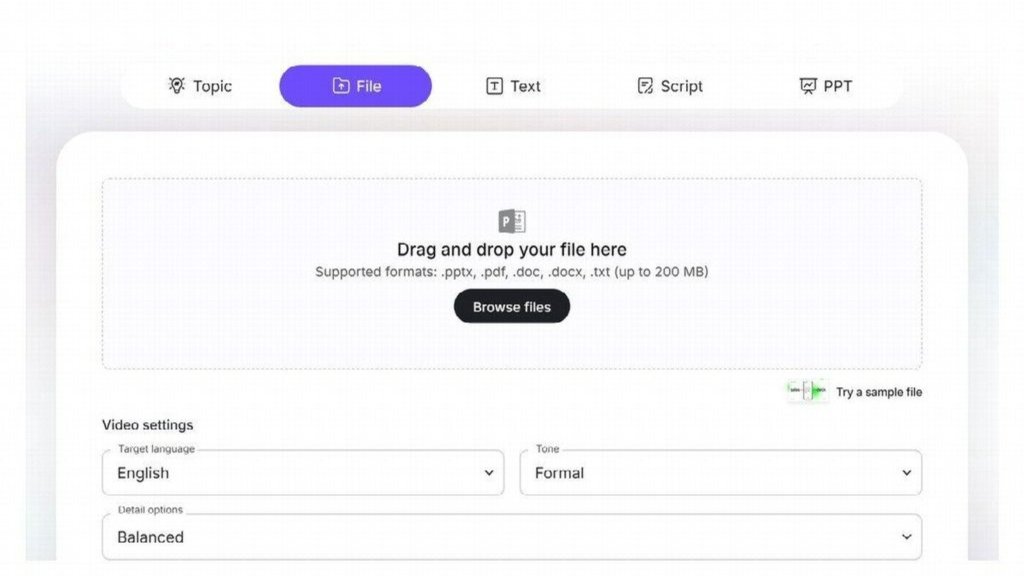
Because each slide or document section sits in its own scene card, editing a video works just like editing a presentation. If a manager spots an outdated screenshot on Scene 4, you swap that one image, adjust one sentence of narration, and export a fresh version without touching Scenes 1 through 3.
Stage 4: Localize scripts and verify industry terms before distribution
In a multicultural hub like the UAE, automated translation gets you 85 percent of the way there, but the final 15 percent requires a human check. Duplicating an approved English project into a new language draft across 88 supported languages and 175 dialects takes less than a minute. Still, never publish a translated safety or client-facing clip cold.
Have a native-speaking team lead spend ten minutes checking two things: local terminology (such as specific Dubai Municipality permit names, RERA forms, or warehouse rack codes) and subtitle legibility. Because many field technicians and retail associates watch training clips on their phones with the sound turned down in a break room, follow the W3C Web Accessibility Initiative caption standards: keep subtitles to one or two lines per frame and leave the bottom 15 percent of your slides clear of critical labels so captions never cover important numbers.

Keeping your video library alive after launch
The real test of an internal video system happens ninety days after launch, when the first batch of procedures changes. Keep a simple spreadsheet or Notion table that tracks every active video alongside its source document owner and review date.
Assign a clear file naming convention such as OPS-12-ColdChain-Handover-EN-v1.3 so supervisors immediately know whether they are sharing the current version. When a quarterly audit or software update changes a step, the owner edits that single scene card, exports the updated file, and replaces the link in the team portal before the next morning shift starts.