

As Emergency Care Demand Rises Across MENA, St. George’s University Expert Says Doctor Training Must Evolve


Emergency departments across the Middle East and North Africa are facing growing pressure, highlighting the need for medical education to prepare future doctors for faster decision-making, complex cases and high-pressure clinical environments.
At King’s College Hospital London Dubai, an analysis of 15,679 emergency department visits found that injury-related presentations increased by 66% between 2021 and 2025, while cases involving non-communicable diseases rose by 44% over the same period. Meanwhile, Saudi Arabia has significantly reduced emergency response times, from 25 minutes in 2016 to 10 minutes in 2025.
The combination of rising demand and the need for highly trained clinicians is prompting medical educators to reconsider how students are prepared for emergency care, where patients often arrive without a clear diagnosis and decisions must be made rapidly.
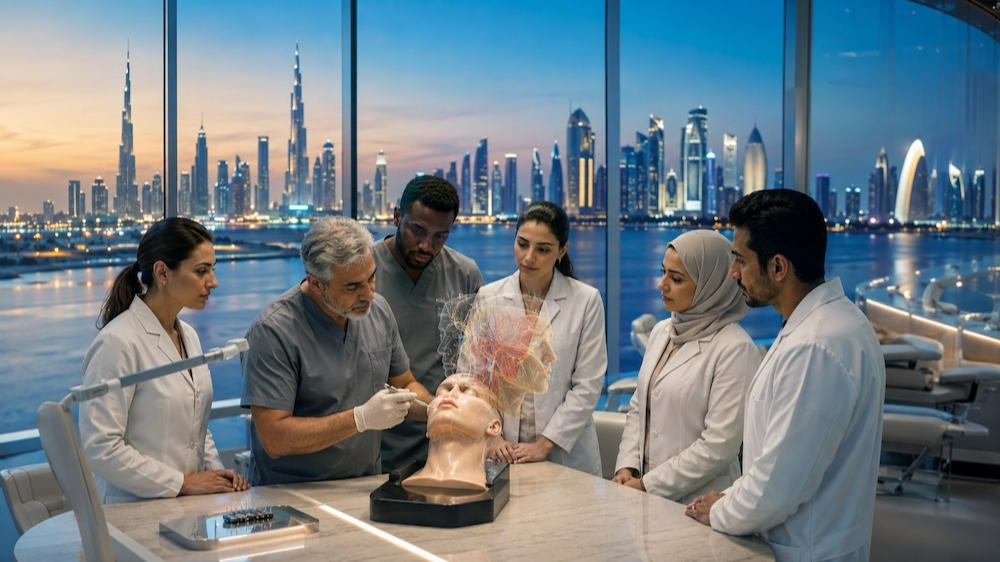
At St. George's University School of Medicine, simulation-based learning is being integrated into medical education well before students begin clinical rotations. Dr. Robert Grant, Senior Associate Dean for Clinical Studies, says students encounter standardized patients, high-fidelity simulations and case-based exercises designed to replicate real clinical situations. SGU confirms Dr. Grant's position as Senior Associate Dean of Clinical Studies.
“These simulation experiences expose students to acute care situations such as trauma, cardiac emergencies, respiratory distress, and shock, allowing them to practice clinical assessment, communication, teamwork, and decision-making in a safe learning environment,” said Dr. Grant.
Students are also introduced to technologies increasingly used in modern healthcare, including electronic health records, diagnostic imaging and point-of-care clinical decision-support tools. The objective is to ensure that students develop familiarity with the pace and collaborative nature of emergency medicine before entering hospital-based training.
Preparing Doctors to Think Under Pressure
Emergency medicine requires more than the ability to recall medical knowledge. Doctors must rapidly identify critical findings, recognize deterioration and determine which patients require immediate attention.
Simulation and problem-based learning can give students opportunities to repeatedly practise these skills in controlled environments.
“Students are taught to identify critical findings, recognize deteriorating patients, and prioritize patient care, skills that are directly applicable to emergency medicine,” Dr. Grant said.
Repeated exposure to clinical scenarios can help students connect theoretical knowledge with practical decision-making, while also developing communication and teamwork skills.
Technology Is Changing Clinical Training
Modern emergency departments increasingly rely on digital systems and diagnostic technologies. Familiarity with these tools during medical school can help students transition more effectively into clinical environments.
SGU's clinical education structure includes extensive clinical training opportunities across hospitals and health systems in the United States, Canada and the United Kingdom.
The broader objective is to make clinical education reflect the environments in which graduates will eventually practise—where medical knowledge, technology, communication and rapid judgment must work together.
Well-Being Is Part of Clinical Readiness
Preparing doctors for emergency medicine also means addressing the emotional demands of the profession.
Medical training can expose students to stressful clinical situations, difficult conversations and emotionally challenging patient outcomes. At SGU, students have access to academic advising, faculty mentorship, counselling, wellness programmes and peer-support networks.
“Medicine is both intellectually and emotionally demanding and fostering student well-being is an essential component of our educational mission,” said Dr. Grant.
Reflective practice can also help students process difficult clinical experiences and develop stronger communication skills when working with patients and families during crises.
Building the Emergency Doctors of Tomorrow
As emergency care systems across MENA continue to evolve, medical education will need to evolve alongside them. Faster response times, increasing patient volumes and increasingly sophisticated healthcare environments all place greater demands on the clinicians responsible for frontline care.
The emphasis on simulation, clinical reasoning, technology, communication and student well-being reflects a broader shift away from education based primarily on knowledge acquisition toward preparation for real-world clinical decision-making.
For medical schools, the challenge is increasingly clear: doctors must not only know what to do they must be prepared to decide what to do when time, information and certainty are limited.
Dr. Grant currently serves as Senior Associate Dean for Clinical Studies at SGU, where he is responsible for aspects of the university's medical clinical training activities.