

Palpitations That Come and Go: How a 24-Hour Holter Test Helps Find the Cause

It happens in the middle of a meeting. Your heart thuds, then races for a few seconds, then settles. By the time you get to a clinic, days later, the ECG is perfectly normal, and the doctor has nothing to go on. This is one of the most common frustrations in cardiology, and it is exactly the problem a Holter monitor was designed to solve.
Why a normal ECG does not settle the question
A standard ECG records the heart’s electrical activity for around 10 seconds. If symptoms occur only from time to time, they may not happen during the test. So, a normal ECG means the heart rhythm looked normal while it was being recorded. It does not rule out a heart rhythm problem at other times.
What is a Holter monitor?
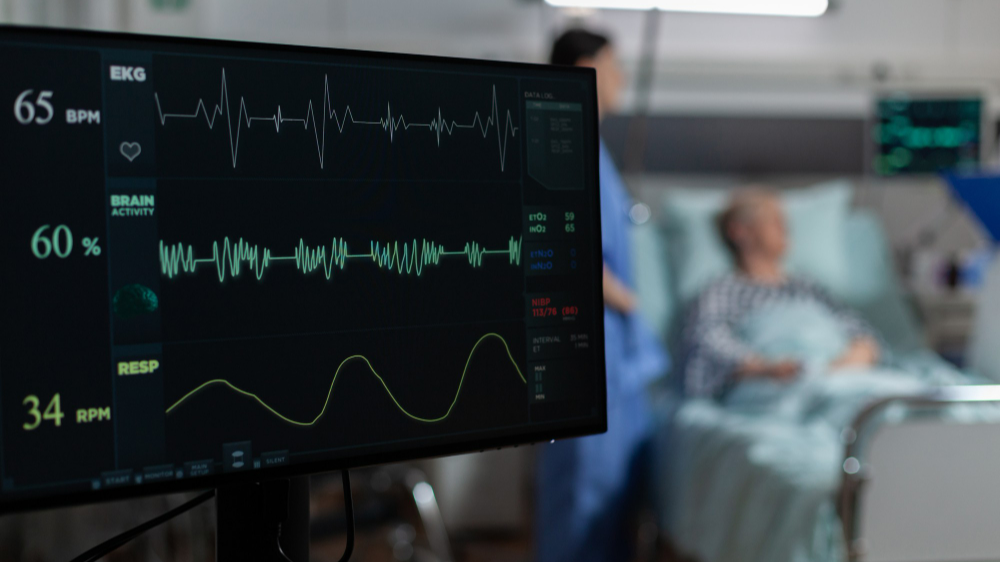
A Holter is a small, portable ECG recorder. A few sticky electrodes are placed on your chest and connected to a device about the size of a phone, worn on a belt or strap. It records every heartbeat, usually for 24 or 48 hours, while you go about your normal day.
You will be asked to keep a simple diary, noting the time of any symptoms and what you were doing: climbing stairs, drinking coffee, lying in bed. Afterwards, the recording is analysed and matched against the diary; if a symptom coincides with an abnormal rhythm, that is valuable; if a symptom coincides with a perfectly normal rhythm, that is valuable too.
Practical points
Fitting the monitor usually takes about 15 minutes. Most Holter monitors need to be kept dry, so you should avoid showering and swimming while wearing one. Loose clothing can make it more comfortable, and you may be advised to avoid electric blankets or other sources that could interfere with the recording. After a few hours, most people get used to wearing the device.
What can a Holter test detect?
A Holter monitor can pick up several types of abnormal heart rhythms. These may include extra beats, which are often harmless, and atrial fibrillation, which can increase the risk of stroke and may require treatment. It can also detect episodes of a fast heartbeat, such as supraventricular tachycardia, as well as slow heart rates or pauses that may be linked to dizziness or fainting. In some cases, the recording may show heart block, where electrical signals between the upper and lower chambers of the heart are delayed or do not pass through properly.
When 24 hours is not enough
If your symptoms occur once a week or less, a 24-hour recording may miss them. Doctors may then use longer monitors: patch recorders worn for up to two weeks, event recorders you activate during symptoms, or a tiny implantable loop recorder placed under the skin that can monitor for years.
After the result
Most Holter results fall into one of three groups. Some show nothing abnormal, which, if symptoms were recorded, is genuinely reassuring. Some show harmless extra beats that need no treatment beyond reducing triggers. And some reveal a rhythm that needs attention, whether medicines, a procedure such as ablation or, for slow rhythms, a pacemaker. Your cardiologist should explain which group you fall into and why.
Common triggers worth knowing-H2
Not every palpitation is a heart problem. Caffeine, energy drinks, nicotine, shisha, alcohol, dehydration, poor sleep, stress, an overactive thyroid and anaemia can all cause them. Dubai's heat makes dehydration an easy trigger, and long shifts or late nights do not help. Your doctor may check thyroid function and blood count alongside the Holter.
When palpitations need urgent care
Call 998 if palpitations come with chest pain, severe breathlessness, fainting or near-fainting, or if they start after exertion and do not settle. Those combinations need immediate assessment, not an outpatient test.
Choosing where to go
Many people start by searching for the best hospital in Dubai, but for a Holter the practical questions are narrower. Will a cardiologist review the full recording, not just an automated summary? If something shows up, can you move quickly to an echo, a longer monitor or a rhythm specialist without starting again elsewhere? Is the result explained to you clearly, including what to do next?
Where can I get a Holter test in Dubai?
Aster Hospitals offers a 24-hour Holter monitor test in Dubai. The group's Dubai sites include Muhaisnah, Mankhool, Al Qusais and Aster Cedars Hospital in Jebel Ali. Holter monitoring sits within its non-invasive cardiology services alongside ECG, ambulatory blood pressure monitoring, stress testing and echocardiography. If a rhythm problem is found, the cardiology team also provides electrophysiology studies, catheter ablation for complex arrhythmias and pacemaker implantation.
Palpitations are common, and most turn out to be harmless. The point of a Holter is to replace guessing with evidence, one heartbeat at a time.