

Brushing With Braces: The Two Spots Almost Everyone Misses


Table of contents
-
Introduction
-
Why cleaning changes the day the brackets go on
-
Missed spot one: the thin strip between bracket and gum
-
Blind spot two: the tongue side of the back teeth
-
A routine that works around the wire
-
Tools worth keeping, and ones you can leave on the shelf
-
Early warning signs to watch for
-
Small habits with food and drink
-
Conclusion
-
Contact us
Introduction
Patients usually leave the bonding appointment with a fresh toothbrush, a packet of tiny interdental brushes and every intention of doing this properly. Six weeks later the teeth have begun to move, and the gums along the edge of the brackets look red and slightly swollen. Nobody has been careless. Two areas of the mouth become much harder to reach once braces are fitted, and most people skip them without ever realising.
This article covers those two areas, explains why an ordinary brushing habit misses them, and gives you a practical way to fix it. Whether you have just started orthodontic treatment or you are a year in, these small changes protect the enamel and gums that your finished smile will sit on.
Why cleaning changes the day the brackets go on
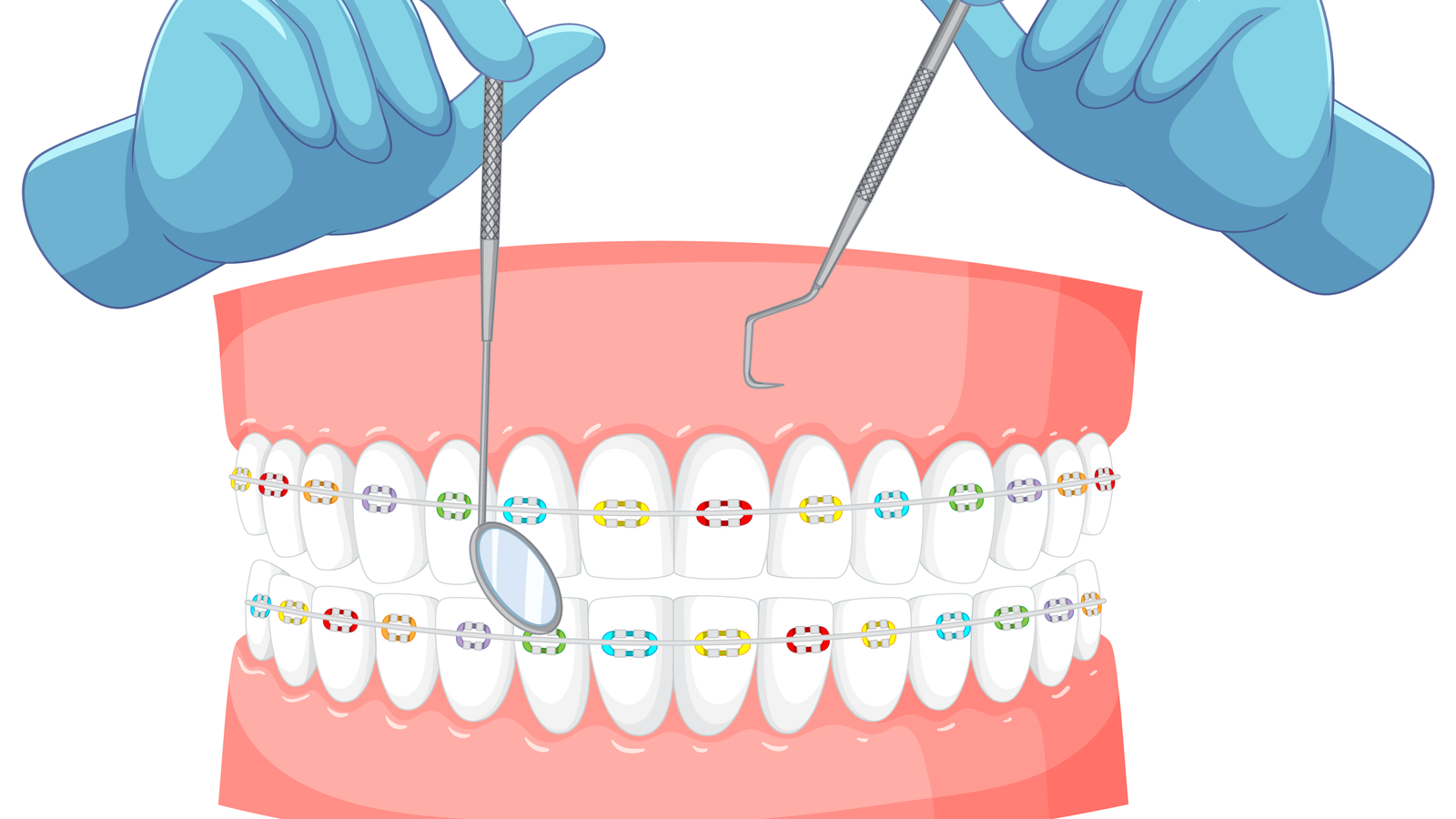
Braces work through brackets, which are small metal or ceramic attachments bonded to the front of each tooth and joined to their neighbours by a wire. Plaque, the soft sticky film of bacteria that rebuilds on teeth within hours, gathers around anything that stands proud of a flat surface. Each bracket creates four sheltered corners, and the wire running across them acts like a shelf that catches food.
Saliva normally washes over the teeth and helps rinse the surface. Brackets and the small elastic rings around them interrupt that flow, so plaque sits in the same places for longer. Bristles that once swept easily across a flat tooth now ride over the top of the bracket without touching the enamel around its edges. Your brushing feels the same as it always did, which is exactly why the gaps go unnoticed.
Missed spot one: the thin strip between bracket and gum
The first missed area is a band of tooth roughly two to three millimetres wide, sitting between the edge of the bracket and the gum line. On upper teeth it hides above the bracket, on lower teeth below it.
People miss it for a simple reason. When you look in the mirror, the bracket itself feels like the part that needs scrubbing, so the brush stays flat against it, and the bristles never tip toward the gum. Plaque left in that strip irritates the gum within days. Swelling follows, the tissue creeps over the bracket edge, and the area becomes even harder to clean.
The fix takes a change of angle rather than more effort. Tilt the brush head so the bristles point toward the gum at about forty-five degrees, with half of them resting on the gum and half on the tooth. Work in small circles on two or three teeth at a time, then move along. Repeat the same pass from the other side of the bracket so the wire itself gets cleaned underneath.
Slight bleeding in the first week of doing this properly is common, because the gum is already inflamed. Bleeding that carries on beyond two weeks deserves a check with your dentist.
Blind spot two: the tongue side of the back teeth
The second area sits out of sight. Most patients have brackets only on the outer surfaces, so the inner surfaces of the back teeth feel like they need no attention. In practice, the lower molars and the inside of the lower front teeth collect hardened plaque, called calculus, faster than almost anywhere else, because the salivary glands sit right there.
Reaching the area is awkward, since the hand has to rotate and the cheek gets in the way. Try turning the brush upright for the inside of the front teeth and using the tip of the head in short strokes. For the molars, angle the handle across the mouth from the opposite side, then walk the brush backward tooth by tooth. Give the very back surface of the last molar a few seconds of its own, since nothing else touches it.
A small-headed brush helps here far more than a large one. Patients with metal bands fitted around the molars should also run the bristles along the edge where the band meets the tooth. Taking extra care while brushing helps the orthodontic treatment do its magic.
A routine that works around the wire
Order matters with dental braces, because the last thing you do gets done the least well when you are tired.
-
Rinse with water first to shift loose food from around the wire.
-
Start along the gum line above and below the brackets while your attention is sharpest.
-
Move to the inner surfaces, and the chewing surfaces next.
-
Pass an interdental brush under the wire between each pair of teeth, then rinse it.
-
Finish with floss once a day using a threader or orthodontic floss, which slides under the wire and reaches the contact point between teeth.
Spit out the toothpaste at the end and skip the water rinse, so the fluoride stays on the enamel a little longer. The whole routine takes about three minutes at night. A quick brush after lunch keeps the day from ending with a buildup that needs rescuing.
Tools worth keeping, and ones you can leave on the shelf
Interdental brushes in two sizes cover most gaps around a wire. An electric brush with an orthodontic head suits people who rush, since the timer slows them down. Water flossers help flush food from under the wire, though they work best alongside brushing rather than in place of it. Disclosing tablets, which stain plaque bright pink for a minute, show you your own missed spots better than any advice can.
Fluoride toothpaste with 1450 ppm is the sensible daily choice for teenagers and adults with dental braces. A fluoride mouthrinse used at a different time of day gives the enamel another contact point. Leave charcoal pastes and hard bristle brushes out of it, and postpone whitening toothpaste, which cannot reach the enamel under the brackets anyway.
Early warning signs to watch for
Chalky white squares around the edges of the brackets are the sign nobody wants. These marks are early enamel demineralisation, the stage where minerals have started to leach out of the surface. Caught early, they can be helped with fluoride and better cleaning. Left for months, they may remain visible after the braces come off.
Swollen gums that bleed, a lasting bad taste, or tenderness in one spot are all worth mentioning at your next braces adjustment rather than waiting. Many clinics now record intraoral scans and clinical photographs at review appointments, so gum levels and enamel can be compared with earlier visits instead of judged from memory.
Small habits with food and drink
Sipping sweetened drinks through a long afternoon does more harm than one dessert eaten in ten minutes, because every sip restarts the acid attack. Iced coffees, karak with sugar and sports drinks are easy to nurse for hours in the Dubai heat, so keep water in between. Dates and sticky sweets need a rinse afterwards at the very least.
Hard foods break brackets. Cut apples and carrots into pieces, pull corn off the cob, and stay away from ice cubes and popcorn kernels.
Conclusion
Keeping braces clean in Dubai doesn't require anything unusual, just consistent attention to the right spots. Cleaning around braces comes down to two areas that a normal brushing habit ignores: the narrow strip of tooth beside the gum line, and the inner surfaces of the back teeth. Change the angle of your brush, add an interdental brush under the wire, and check your own work with a disclosing tablet now and then. Most patients who protect their enamel through teeth straightening do it with these small adjustments rather than with more scrubbing. Your dentist or orthodontist can watch the same areas at each visit and step in early if something needs attention.
Contact us
From routine check-ups to advanced treatments, Magnum Dental Clinic's Arjan location is open now.
Name: Magnum Dental Clinic – Arjan
Address: Building 88, Al Barsha South, Near Miracle Garden, Arjan, Dubai, United Arab Emirates
Phone: +971 55 890 8653