


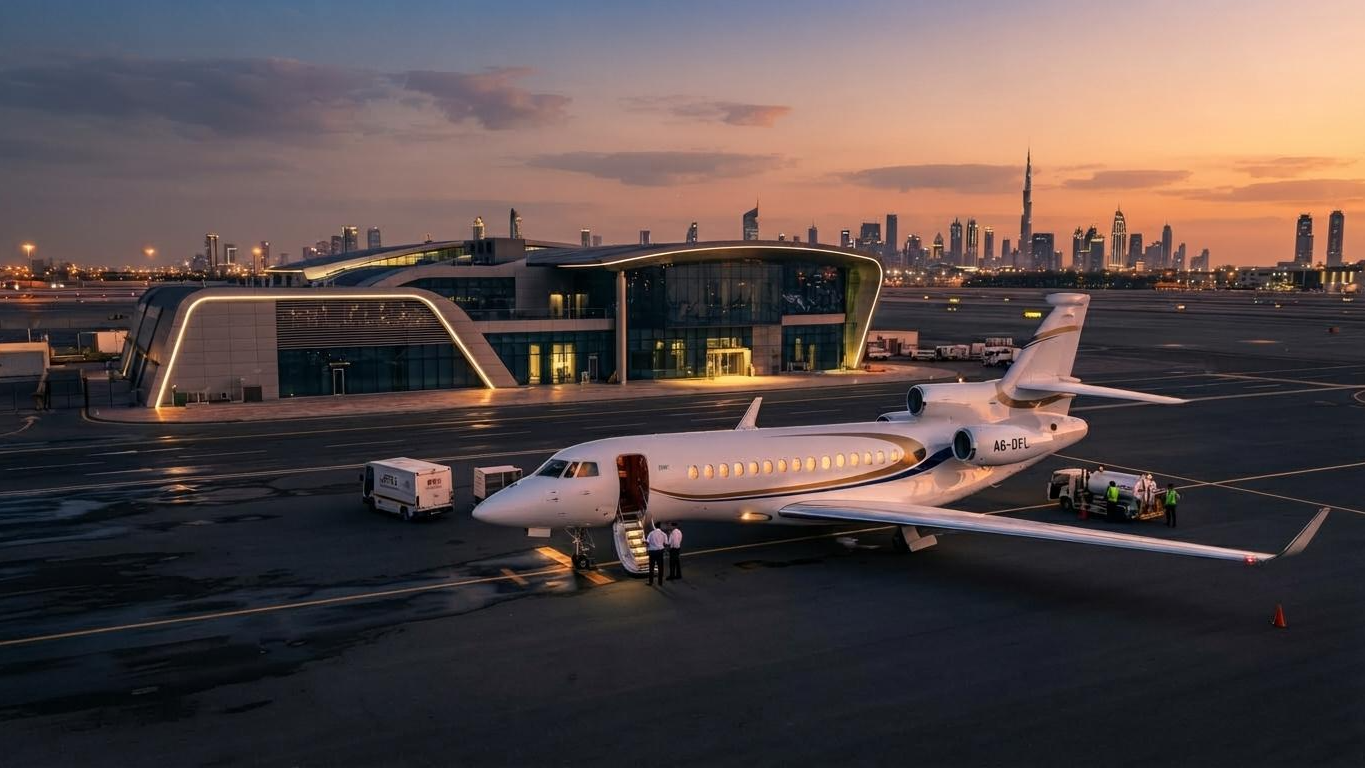
Flying private out of Dubai sounds simple until the quotes arrive. One says $14,000, another says $22,000 for the same route, and neither explains positioning fees, crew overnights, or which airport the aircraft will use. Small details like these decide whether the trip runs smoothly or turns into a costly surprise. This guide explains how to hire a private jet in Dubai, from choosing the aircraft to clearing immigration at the private terminal.
Why Private Charter Works So Well in Dubai
Dubai is one of the easiest cities in the world to fly to privately. The emirate sits within a few hours of the Gulf capitals, India, East Africa, and much of Europe, which puts a wide range of destinations within easy reach of light and mid-size jets. Two airports handle business aviation traffic, and both have dedicated private terminals that keep passengers away from the commercial halls.
The infrastructure is also growing. The Dubai Media Office announced the approval of an AED 128 billion passenger terminal at Al Maktoum International, with a long-term capacity of 260 million passengers and all operations from Dubai International are set to move there over the coming years. For private flyers, the practical effect is that the Dubai South area around Al Maktoum is becoming the natural base for business aviation.
Demand comes from several groups. Executives use private jets for same-day trips to Riyadh, Doha, or Muscat. Families charter larger cabins for holidays in the Maldives or Europe. Event travel adds seasonal spikes, especially during the winter months when the city hosts major sporting, business, and cultural events.
Picking the Right Aircraft Size
The aircraft category drives most of the price, so the goal is to match the cabin to the passenger count, luggage, and distance without paying for an empty space. A four-person trip to Muscat does not need the same jet as a family of ten flying to London.
|
Category |
Typical passengers |
Typical range |
Good for from Dubai |
Approx. hourly rate (USD) |
|
Turboprop |
6-8 |
Short regional |
Abu Dhabi, Al Ain, Oman |
2,000-3,500 |
|
Light jet |
5-7 |
Around 2-3 hours |
Doha, Bahrain, Muscat |
4,500-6,500 |
|
Midsize jet |
7-9 |
Around 4-5 hours |
Riyadh, Kuwait, Karachi |
6,500-9,000 |
|
Heavy jet |
10-14 |
6+ hours |
Europe, India, East Africa |
10,000-15,000 |
|
Ultra-long-range jet |
12-16 |
12+ hours nonstop |
London, Singapore, New York |
13,000-20,000 |
|
VIP airliner |
19-50+ |
Intercontinental |
Group, government, and family travel |
18,000-25,000+ |
These figures are broad market ranges, not quotes. Rates move with aircraft age, cabin layout, fuel prices, and how busy the season is.
Luggage matters more than many travellers expect. Light jets have small holds, so golf bags, shopping, or long-stay suitcases can push a group into a midsize cabin even when the seat count looks fine. It is worth telling the broker or operator the number and size of bags at the quote stage.
Charter, Jet Card, or Empty Leg: Choosing How to Book
Most first-time flyers book an on-demand charter, where the whole aircraft is hired for a specific trip. The price covers the aircraft, crew, and standard operating costs, and the itinerary is set around the passenger's schedule. Frequent flyers sometimes move to jet cards or memberships, which lock in hourly rates in exchange for a prepaid balance.
The second decision is whether to book through a broker or directly with an operator. The operator owns or manages the aircraft and holds the legal responsibility for the flight. In the UAE, the General Civil Aviation Authority (GCAA) requires every commercial operator based in the country to hold an Air Operator Certificate and operations specifications before selling flights. Privately operated aircraft carry a Private Operator's Certificate instead, which does not permit paid charter work.
A broker sources aircraft from many operators, compares availability, and handles logistics on the client's behalf. That wider view is useful in Dubai, where the right aircraft may be sitting in Doha or Riyadh rather than on the local ramp. Brokers such as JetFinder publish indicative Dubai route prices based on previous trips, listing a light jet to Abu Dhabi from around $4,500 and a heavy jet to London from about $82,900, giving travellers a realistic starting point before they request firm quotes.
Empty legs are the third option. When an aircraft flies one way to drop off passengers, it often has to return empty, and operators sell that return sector at a discount. The savings can be large, but the original booking fixes the dates and times, so empty legs suit travellers with flexible plans.
What a Dubai Private Jet Really Costs
The hourly rate is only one part of the final invoice. A realistic quote includes the flight hours plus several items that can add a meaningful amount to the total.
-
Positioning: If the aircraft is based elsewhere, the client usually pays for it to fly to Dubai and back to base.
-
Airport and handling fees: Landing, parking, and private terminal handling charges apply at both ends of the trip.
-
Crew costs: On multi-day trips, the crew's hotel, meals, and daily allowances are added, and some operators apply a daily minimum flying charge while the aircraft waits.
-
Permits and routing: Overflight and landing permits for certain countries add cost and lead time.
-
Catering and extras: Premium catering, specific drinks, ground transport, and on-board requests are usually billed separately.
A round trip with a short stay can cost less than two one-way charters, because the aircraft does not need to fly home empty in between. For longer stays, two one-ways with a different aircraft on each leg are often cheaper than keeping a jet and crew on the ground for a week.
DXB or DWC: Choosing the Right Airport
Dubai International (DXB) is the city's main commercial hub and sits close to Downtown, Deira, and Business Bay. It has a dedicated executive terminal for private flights, so passengers do not pass through the main halls. The trade-off is slot pressure. DXB is one of the busiest airports in the world, and private movements have to fit around a very dense airline schedule, particularly at peak times.
Al Maktoum International (DWC) in Dubai South is the preferred choice for most charter operators. It has a 4,500-metre runway that handles every aircraft type, fewer slot restrictions, and a VIP terminal hosting several fixed-base operators, including Jetex, Jet Aviation, and ExecuJet. Customs, immigration, and security checks happen inside the terminal, and passengers usually walk from car to aircraft in minutes.
The main drawback of DWC is distance. It is around 37 kilometres from central Dubai, so the drive to Downtown or Palm Jumeirah usually takes 30 to 50 minutes, depending on traffic. Many travellers book a chauffeur to meet the aircraft, and this guide to premium airport transfers in Dubai explains what the service normally includes. For trips to Abu Dhabi or Jebel Ali, DWC is actually the closer option.
How to Hire a Private Jet in Dubai, Step by Step
The booking process is straightforward once the key details are ready. Following the same order each time avoids delays and quote revisions.
-
Define the trip. Confirm dates, departure and arrival airports, flexible time windows, passenger numbers, luggage, pets, and any special requests.
-
Request several quotes. Ask two or three brokers or operators for itemised prices, so that positioning, fees, and crew costs are visible line by line.
-
Compare like for like. Check the exact aircraft model, year of manufacture, cabin refurbishment date, seating layout, and whether Wi-Fi works on the planned route.
-
Verify the operator. Ask for the operator's name, its AOC, and insurance details, and check whether it holds third-party safety ratings such as ARGUS or Wyvern, or is registered under the IS-BAO safety standard run by the International Business Aviation Council.
-
Review the contract. Read the cancellation terms, payment schedule, and what happens if the aircraft has a technical problem before departure.
-
Send passenger documents. The operator needs passport details for every traveller to file manifests and handle immigration in advance.
-
Arrange ground transport and catering. Confirm pick-up points, meal preferences, and any on-board requirements at least 24 to 48 hours before departure.
For a regional trip in the quiet season, a charter can sometimes be arranged within hours. For peak dates, large cabins, or multi-leg itineraries, booking two to four weeks ahead gives a much better choice of aircraft.
Visas, Customs, and Passenger Documents
Flying private does not change UAE entry rules. Every passenger still needs a valid passport and the correct visa, and private terminals apply the same immigration checks as commercial ones, just faster and in a quieter setting. Many nationalities can get a visa on arrival, while others need a pre-approved visa, and the UAE Ministry of Foreign Affairs visa exemption list is the best place to check the current rules for each passport.
Passport validity of at least six months is the safest standard for most travellers. Customs rules for cash, medication, and restricted items also apply in full, so prescription medicines should travel with a copy of the prescription. Operators usually ask for passenger details 24 hours before departure, and international routes with several stops may need them earlier.
When to Book for the Best Availability
Dubai's peak private aviation season runs roughly from October to April. The cooler weather brings tourists, conferences, and major events, and large-cabin aircraft can be fully booked around the New Year period, big sporting weekends, and school holidays. Booking early for these dates secures the aircraft and usually results in a better price.
Summer is quieter for inbound leisure travel but busy for outbound family trips to Europe. This creates plenty of one-way traffic, which means more empty legs back to Dubai in late summer and early autumn. Travellers with flexible dates can often pick up good value during these months.
Common Mistakes First-Time Charter Clients Make
Most problems on a first charter come from a handful of avoidable errors.
-
Comparing headline prices only. A lower hourly rate means little if positioning and handling fees push the total above a competing quote.
-
Choosing the wrong airport. Landing at DXB for a meeting in Dubai South or Abu Dhabi adds unnecessary road time.
-
Underestimating luggage. Bags that do not fit in the hold can force a last-minute aircraft change.
-
Skipping the operator check. Every charter should be flown by a licensed commercial operator, not a private aircraft offered for cash.
-
Leaving visas to the last minute. Immigration rules apply at private terminals too, and a missing visa can ground a passenger.
Frequently Asked Questions
How much does it cost to hire a private jet in Dubai?
Most charters from Dubai cost between about $2,000 per flight hour for a turboprop and $25,000 or more for a VIP airliner. A short light-jet hop to Abu Dhabi sits at the low end, while a heavy jet to London can pass $80,000 one way. Final prices depend on positioning, fees, and season.
Can I hire a private jet in Dubai for a single flight?
Yes, on-demand charter allows travellers to book a single trip without a membership or contract. The whole aircraft is hired for that flight, and the price covers the aircraft and crew. This is how most first-time private flyers book.
Which airport do private jets use in Dubai?
Private jets use both Dubai International (DXB) and Al Maktoum International (DWC). DWC is the preferred option for most operators because it has fewer slot restrictions and a large VIP terminal. DXB is closer to central Dubai but busier.
How far in advance should I book a private jet in Dubai?
For regional flights outside peak season, a few days is usually enough, and same-day departures are sometimes possible. For peak dates, large cabins, or long-haul trips, two to four weeks is a safer lead time. Holiday periods can sell out earlier.
How many passengers can a private jet carry?
Light jets usually seat five to seven people, midsize jets seven to nine, and heavy jets ten to fourteen. VIP airliners can carry 19 to more than 50 passengers, depending on the cabin layout. Luggage space also limits how many people can travel comfortably.
What is an empty leg flight?
An empty leg is a sector an aircraft would otherwise fly without passengers, usually on its way back to base. Operators sell these flights at a discount to recover some of the cost. The trade-off is that dates and times are fixed.
Do I need a visa if I fly to Dubai on a private jet?
Yes, visa rules are the same for private and commercial passengers. Many nationalities receive a visa on arrival, while others must apply in advance. The UAE Ministry of Foreign Affairs publishes the current exemption list.
Is it cheaper to charter a jet or buy first-class tickets?
For a single traveller, first class is usually the cheaper option. For a group of six or more, the per-person cost of a light or midsize jet can come close to first-class fares on short regional routes. The private option also saves time at both airports.
Can I bring pets on a private jet from Dubai?
Most operators allow pets in the cabin, subject to the aircraft owner's rules. Pets still need the correct health certificates and import permits for the destination. It is best to mention pets when requesting a quote.
How do I check that a charter operator is legitimate?
Ask for the operator's name and its Air Operator Certificate, which UAE commercial operators must hold from the GCAA. Independent safety audits such as ARGUS, Wyvern, or IS-BAO add another layer of assurance. A reputable broker will share these details without hesitation.
Conclusion
Hiring a private jet in Dubai involves a few clear choices: the right booking route, an aircraft sized to the group and luggage, the airport that fits the itinerary, and a licensed operator behind the flight. Itemised quotes, early booking for peak dates, and visas sorted in advance help remove most of the surprises. With those pieces in place, the trip starts with a short walk from the car to the aircraft instead of a long queue at the terminal.















Comments
0 commentsNo comments yet. Be the first to share your thoughts!