
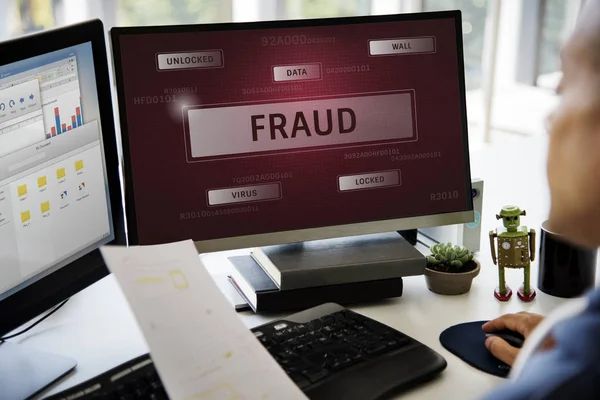
Cyber fraud in international transactions: how to protect your business and investments
In recent years, cyber fraud has become one of the key threats to businesses and private investors involved in international transactions. The development of global online transactions and digital platforms has made business more convenient but also more vulnerable. Fraudsters are increasingly using digital technologies to deceive, leading to significant financial losses and legal consequences for companies and individuals. In this article, we will examine the main risks faced by participants in international transactions and propose measures to minimise them.
How cyber fraud manifests in international transactions
Cyber fraud in international transactions can take many forms. One of the most common schemes involves fake intermediary companies that appear legitimate during contract negotiations. Criminals may provide counterfeit bank details for payments, persuading the partner to transfer funds to fraudulent accounts.
Another frequent scenario involves unauthorised access to corporate databases, allowing fraudsters to manipulate transaction details, delivery terms, or account information. In many cases, cybercriminals exploit weak links in the supply chain or use gaps in cross-border regulations to bypass corporate security systems.
Alt: Cyber fraud in international transactions
Why International Deals Are Particularly Vulnerable
The vulnerability of international transactions often stems from the coexistence of multiple legal systems and regulatory standards. Each country has its own laws on data protection, cybersecurity, and fraud prevention. This lack of uniformity complicates investigations and allows offenders to exploit jurisdictional loopholes.
Fraudsters often take advantage of differences in enforcement and cooperation between countries, making cross-border investigations more difficult. In particular, the growing complexity of UAE cyber crime regulations highlights the importance of understanding how national and international laws interact in cases of digital fraud. The absence of a unified global regulatory mechanism provides additional opportunities for concealment and manipulation of funds and data.
Why are international deals particularly vulnerable?
One of the key reasons for the vulnerability of international deals is the presence of different legal systems in different countries. Countries with varying legislative norms may approach the regulation of cybercrimes differently, which complicates the investigation of crimes and the taking of measures against perpetrators.
Fraudsters often exploit these differences in jurisdictions to bypass international norms and laws. It is also worth noting that the absence of a unified global regulatory mechanism provides criminals with additional opportunities for secrecy and manipulation of data and funds.
Legislation and law enforcement practice
In different countries, including the UAE, laws on combating cyber fraud vary. In the UAE, for example, there is a strict cybercrime law that provides for fines and prison terms for data theft, fraud, and interference with the operation of online systems. However, despite the stringent legislation, cybercriminals often exploit international differences in laws to evade responsibility.
When it comes to international transactions, it is important to consider the requirements of several legal systems simultaneously. In case of suspicion of cyberattacks or fraud, it is necessary to immediately contact specialised professionals, such as cybercrime lawyers, who have experience in cross-border cases and can provide the necessary legal assistance.
How to protect your interests in international transactions
To protect against cyber fraud in international transactions, it is important to follow several simple but effective steps. Firstly, always verify counterparties, their legal reputation and financial activities. This can be done through various international databases and partner verification services.
It is also important to ensure the protection of all communication channels used for concluding deals. Use encrypted and secure platforms for data exchange and conducting transactions. At the initial stage of the deal, it is worth involving experienced lawyers for support to avoid vulnerabilities in the legal aspect. Additionally, for conducting international transactions, secure payment systems should be used to minimise the risks of money manipulation.
Constant monitoring of the situation at all stages of the transaction also plays a key role in preventing cybercrimes. The earlier a threat is detected, the easier it is to neutralise it.
Actions in case of suspected cyber fraud
If you suspect that you have fallen victim to cyber fraud in an international transaction, it is important to take several steps immediately to minimise the damage. Firstly, gather all digital evidence as quickly as possible, including screenshots, correspondence, call recordings, and transaction data. This will help speed up the investigation and increase the likelihood of recovering lost funds.
It is necessary to immediately contact local and foreign law enforcement agencies to document the fact of fraud. It is also important to involve cyber experts and lawyers with international experience who can assist in the investigation and restoration of your rights.
Conclusion
Cyber fraud in international transactions is a multi-layered issue that requires a careful and professional approach. Every stage of the transaction should be accompanied by security measures, including counterparty verification and protection of communication channels. If you have fallen victim to cybercriminals, it is important to immediately contact experienced specialists, such as Dubai cybercrime lawyers, to minimise risks and protect your assets and reputation. The earlier a specialist intervenes, the higher the chance of successfully resolving the issue and restoring your rights.








Add Your Directory With Us
Boost your visibility with our Business Directory

Add Your BCard With Us
Open the door to new professional connections.
DayOfDubai
Business Services
