
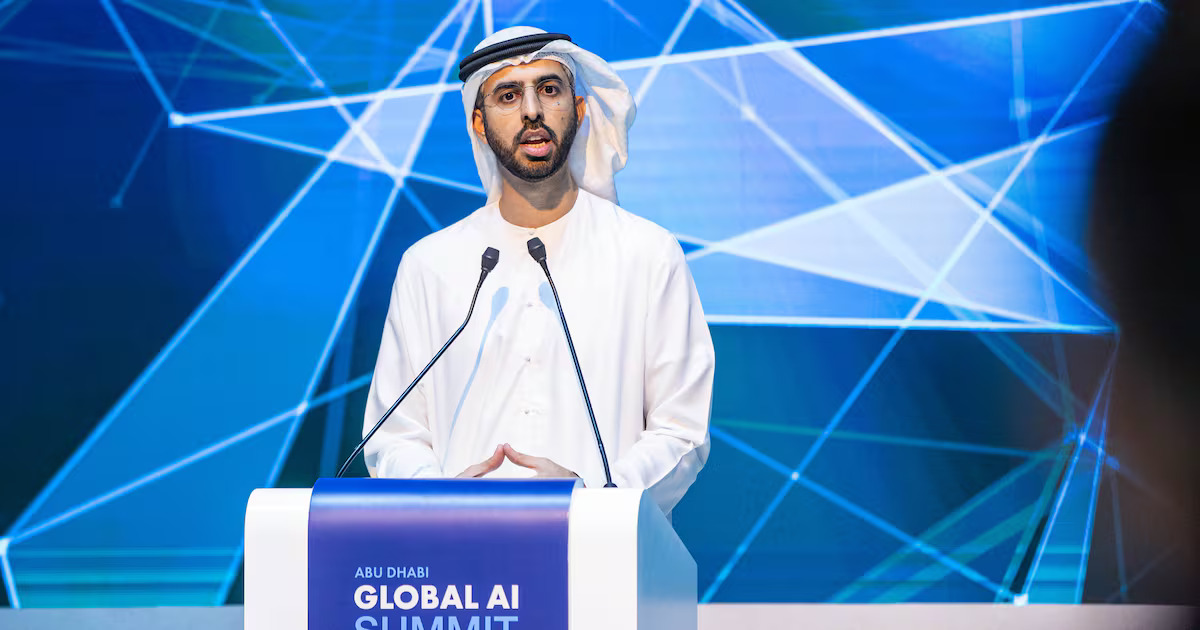
UAE minister calls for governments to rethink roles amid rise of AI and brain sciences at WGS opening
A UAE minister has urged world leaders to redesign how governments operate to keep pace with rapid technological and societal change, warning that a “new kind of humanity” is emerging as artificial intelligence, advanced medicine and digital environments reshape daily life.
Speaking at the opening keynote of the World Governments Summit (WGS) 2026 in Dubai, Mohammad Al Gergawi, UAE Minister of Cabinet Affairs and Chairman of the World Governments Summit, said public institutions must adapt faster to remain relevant and effective.
Addressing an audience of heads of state, ministers, CEOs and policymakers at Madinat Jumeirah, Al Gergawi identified four major forces that are rapidly redesigning the world: artificial intelligence, advanced medicine, brain sciences, and digital environments.
He said these forces represent not just a technological shift but a turning point in human evolution itself. He added that governments are increasingly dealing with Gen Z, a generation shaped by instant access and continuous connectivity, which is projected to account for around 40% of the global workforce by 2040.
“After every revolution, there was a redefinition of government,” Al Gergawi said. “The question today is: are governments designed for the man of tomorrow or the man of yesterday?” He urged leaders to move beyond bureaucracy and focus on future-oriented governance, stressing that the primary role of governments is to serve mankind.
Four forces reshaping the world
Al Gergawi said artificial intelligence is the first major force, describing AI as an expanding partner in human thinking and decision-making. He noted its growing use in sectors such as medical diagnosis and predicted that AI computing power could increase dramatically over the next decade, enabling more advanced forms of decision support.
The second force, advanced medicine, includes progress in genomics and early disease detection. Falling genome sequencing costs and predictive health tools could allow diseases to be identified earlier, potentially reshaping labour markets, pension systems, and social policy, he said.
The third force, brain sciences, is accelerating through technologies such as neural implants and brain–computer interfaces. Al Gergawi referenced ongoing trials by companies such as Neuralink, where participants have demonstrated the ability to control devices using brain signals, raising new policy and investment questions for governments.
The fourth force is the expansion of digital environments, with more than 5.5 billion people now connected online. He said digital spaces are reshaping identity, behaviour and attention, with many individuals managing multiple digital personas across platforms.
Lessons from history
Al Gergawi also traced major milestones in human development — including the agricultural revolution, the invention of writing, and the creation of legal systems — noting that each transformation was initially met with fear and resistance.
“Humanity never regressed because of fear,” he said. “It evolved when it gained audacity.”
He described the current period as a historic opportunity for governments to redefine their structures and missions in response to accelerating change.








Add Your Directory With Us
Boost your visibility with our Business Directory

Add Your BCard With Us
Open the door to new professional connections.
DayOfDubai
Business Services
