

ERP Systems Emerge as Key Foundation for AI Adoption in Saudi Arabia, SAP Survey Finds

Enterprise resource planning (ERP) systems are becoming a key foundation for artificial intelligence adoption among businesses in Saudi Arabia, with nearly two-thirds of senior IT decision-makers identifying them as the primary platform supporting AI-driven processes and decisions.
The findings come from a YouGov survey of 260 senior IT decision-makers in the Kingdom, commissioned by SAP. The research was highlighted ahead of the SAP NOW AI Tour Riyadh, scheduled for December 2, 2026, where business leaders and technology experts will discuss how organisations can integrate AI into their operations while maintaining reliable data and appropriate oversight.
According to the survey, 63% of respondents said ERP was the primary platform enabling AI-driven processes and decisions across their organisations. Another 27% said it supported AI across several core business functions, pointing to the growing importance of enterprise systems in wider AI adoption.
Saudi Businesses Confident in Enterprise Systems
The survey also found strong confidence in the ability of existing enterprise systems to support more advanced AI and automation.
Around 60% of respondents said they were very confident that their ERP and enterprise systems could handle more advanced AI and automation over the next two years. A further 35% said they were somewhat confident.
When asked where increasingly autonomous enterprises and ERP systems could deliver the greatest value, respondents identified faster and higher-quality decision-making as the leading benefit, at 54%.
Employee productivity followed at 48%, while 46% pointed to improved operational efficiency and resilience.
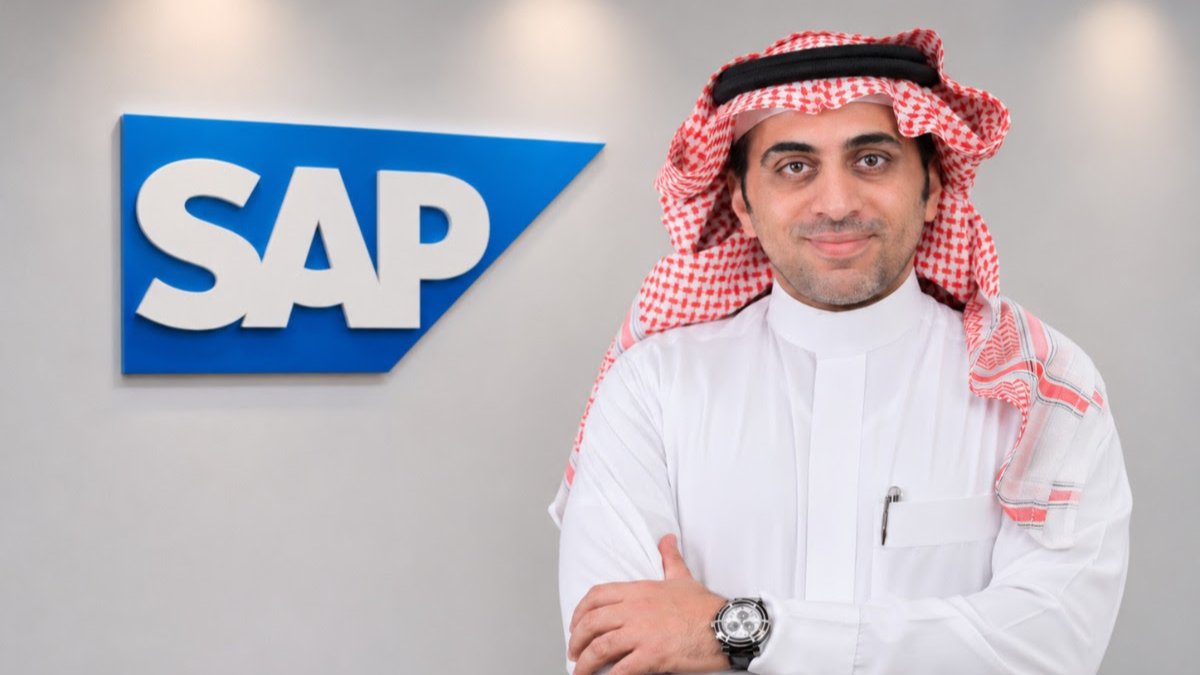
Dr. Fahd Nawwab, Vice President of SAP Saudi Arabia, said businesses in the Kingdom were increasingly looking at ways to apply AI across their operations.
He said connecting AI with existing applications, data and business processes could provide the context needed for more reliable decisions, while allowing organisations to introduce greater automation with appropriate oversight.
SAP to Showcase Autonomous Enterprise Approach at Riyadh Event
The concept of the Autonomous Enterprise will be a central theme at SAP NOW AI Tour Riyadh, which will take place at Saraj Venue on December 2.
SAP describes the Autonomous Enterprise as an approach in which business applications, data and AI work together across different organisational functions. Under this model, AI agents can assist with tasks and processes by using business information, with governance and human oversight remaining important.
The event's keynote programme will explore how SAP's Joule AI copilot can help employees access information and carry out tasks across business applications.
Demonstrations and discussions will also cover cloud ERP, finance, human resources, supply chains and customer experience. A dedicated session on Saudi Arabia's AI ambitions will address SAP's long-term commitment to the Kingdom, including forthcoming collaborations aimed at supporting local talent and innovation.
The programme will bring together SAP executives, customers and technology partners to examine practical applications of AI in business operations.
AI Adoption Linked to Saudi Arabia's Vision 2030
The integration of enterprise systems and AI is particularly relevant as Saudi Arabia continues to invest in digital transformation and economic diversification under Vision 2030.
Industries such as manufacturing, logistics, energy and services rely on accurate information and coordination across departments to manage increasingly complex operations. Connected business systems can help organisations use this information more effectively and identify opportunities to improve productivity and decision-making.
Nawwab said AI adoption was entering a phase in which businesses were paying closer attention to how the technology performs within their existing operations.
He added that connecting business processes with reliable data could improve productivity and decision-making while ensuring people remain accountable for outcomes.