
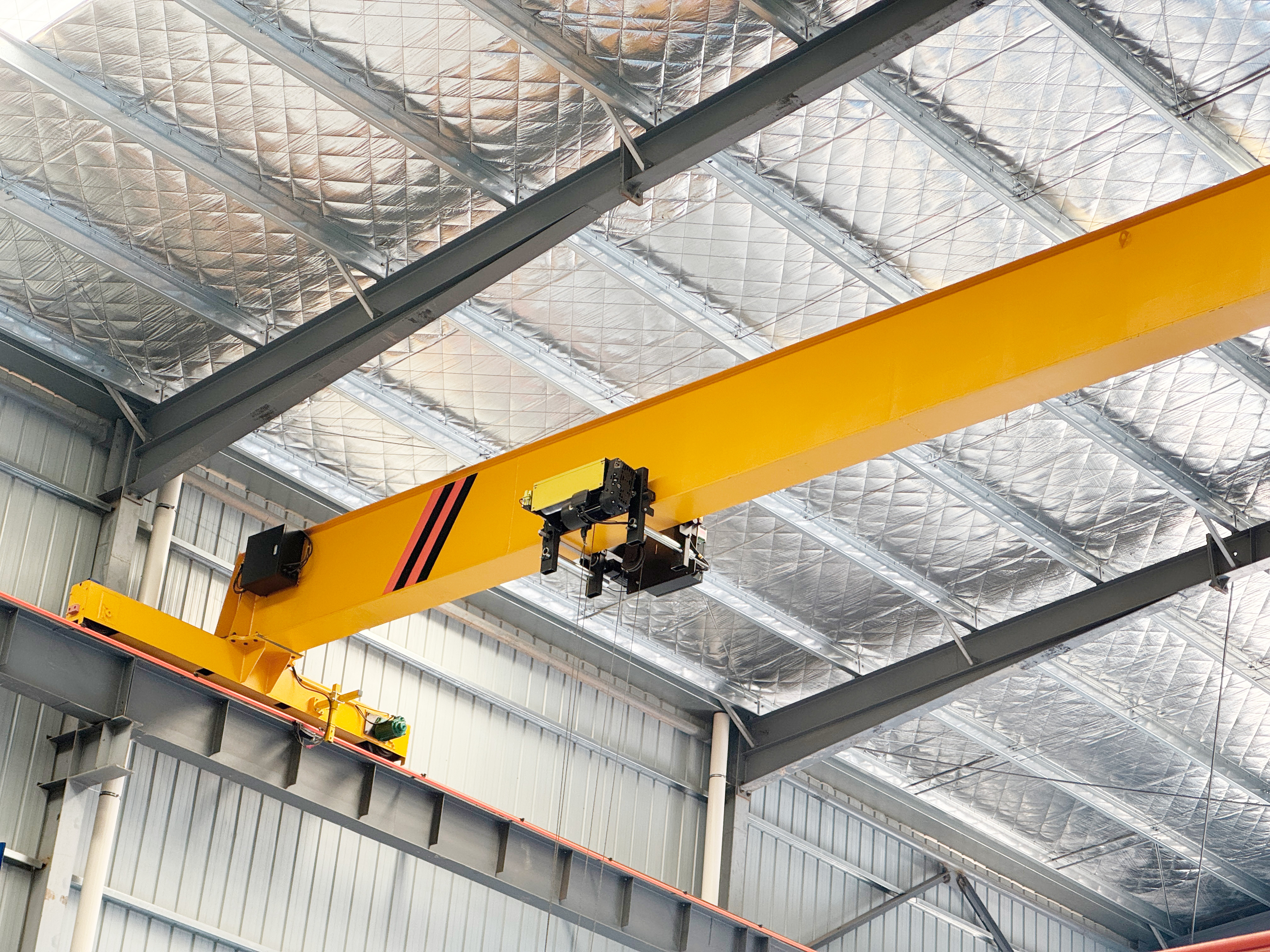
FEM Hoist Explained for Industrial Buyers
When comparing wire rope hoists, industrial buyers often encounter technical specifications such as FEM 1Am, 2m, 3m, or 4m. While these classifications appear frequently in product catalogs and quotations, many buyers are unsure what they actually mean and why they matter.
In reality, FEM classifications are among the most important indicators of a hoist's long-term performance, durability, and suitability for a specific application. Selecting the wrong duty classification can lead to premature wear, increased maintenance costs, and unexpected downtime.
For facilities operating overhead cranes on a daily basis, understanding FEM standards is essential before making a purchasing decision.
What Does FEM Mean?
FEM stands for the European Materials Handling Federation, an organization that developed technical standards for cranes, hoists, and lifting equipment.
The FEM classification system evaluates a hoist based on:
- Load spectrum
- Operating frequency
- Daily working cycles
- Service life expectations
- Mechanical stress levels
Rather than focusing only on lifting capacity, FEM standards assess how intensively the equipment will be used over time.
This approach provides a more realistic picture of long-term performance.
As a result, many industrial buyers now prefer a FEM Standard Wire Rope Hoist when specifying lifting equipment for manufacturing plants, warehouses, steel processing facilities, and automated production lines.
Why Lifting Capacity Alone Is Not Enough
Many buyers assume that if two hoists both lift 10 tons, their performance will be similar.
In practice, this is rarely true.
Consider two facilities:
- Factory A lifts 10-ton loads a few times per day.
- Factory B lifts 10-ton loads hundreds of times every shift.
Although both require the same lifting capacity, the second application places significantly greater stress on the hoist.
Without the appropriate FEM classification, critical components such as gears, motors, brakes, and wire ropes may wear out much faster than expected.
This is why experienced engineers evaluate duty classification before comparing prices.
Understanding FEM Duty Groups
FEM classifications generally range from lighter-duty applications to intensive industrial use.
FEM 1Am
Suitable for occasional lifting operations.
Typical applications include:
- Equipment maintenance
- Small workshops
- Low-frequency lifting tasks
FEM 2m
Designed for moderate industrial workloads.
Commonly used in:
- Warehouses
- Logistics facilities
- General manufacturing environments
FEM 3m
Suitable for higher operating frequencies and more demanding production schedules.
Often found in:
- Fabrication shops
- Machinery manufacturing
- Assembly plants
FEM 4m
Designed for intensive industrial applications with frequent lifting cycles.
Typical industries include:
- Steel processing
- Heavy manufacturing
- Continuous production facilities
Higher FEM classifications generally require stronger structural components, more durable gear systems, and higher-performance braking systems.
How FEM Relates to European Hoists
One reason European-style hoists have become increasingly popular is their focus on duty classification and long-term operational performance.
Most modern European electric hoists are designed according to FEM standards, making it easier for buyers to match equipment specifications with actual operating requirements.
Compared with many conventional wire rope hoists, European designs often offer:
- Higher duty classifications
- More compact structures
- Better energy efficiency
- Improved safety performance
- Longer service life
For industrial users focused on lifecycle value rather than initial purchase price, these advantages can be significant.
Among manufacturers supplying European-style lifting equipment, RELY CRANE has developed hoist systems covering duty classifications from FEM 1Am through FEM 4m, allowing buyers to select solutions based on actual operating conditions rather than relying on generic specifications.
Why Duty Classification Impacts Ownership Costs
Many purchasing decisions focus heavily on initial equipment price.
However, maintenance expenses, downtime, spare parts consumption, and equipment replacement costs often exceed the original investment over time.
A properly selected FEM-rated hoist can provide:
- Longer service life
- Reduced component wear
- Lower maintenance requirements
- Greater operational reliability
- Improved production efficiency
This is particularly important for facilities where crane downtime directly affects production output.
In such environments, selecting a higher-duty hoist often produces a better return on investment despite a higher upfront cost.
Additional Features Industrial Buyers Should Consider
While FEM classification is critical, it should be evaluated alongside other performance factors.
Variable Frequency Drive (VFD)
Provides smooth acceleration and deceleration while reducing load swing.
Low Headroom Design
Maximizes available lifting height within existing building structures.
High-Strength Wire Rope
Improves durability and resistance to fatigue.
Reliable Braking Systems
Enhances safety and reduces stopping distances.
Protection Ratings
IP55 and IP65 protection levels improve performance in harsh industrial environments.
Modular Construction
Simplifies maintenance and reduces downtime.
A combination of these features and the correct FEM classification usually results in the most reliable lifting solution.
Common Buyer Mistakes
One of the most common mistakes is selecting equipment solely based on lifting capacity and purchase price.
Other frequent issues include:
- Ignoring daily lifting frequency
- Underestimating future production growth
- Choosing a lower-duty hoist to reduce upfront costs
- Overlooking maintenance requirements
- Failing to evaluate total lifecycle cost
These decisions can lead to increased maintenance expenses and reduced operational efficiency.
Final Thoughts
FEM classification is one of the most important specifications industrial buyers should evaluate when selecting a wire rope hoist. It provides a practical method for matching equipment performance with actual operating conditions, helping ensure long-term reliability and lower ownership costs.
Whether the application involves warehouse operations, manufacturing facilities, steel processing plants, or heavy industrial production, understanding FEM standards can help buyers make more informed purchasing decisions.
Rather than focusing only on lifting capacity, evaluating duty classification, operating frequency, and lifecycle requirements will ultimately lead to a more reliable and cost-effective lifting solution.
Event Information
 Event Venue:
 Date:
Date:
 Phone:
 Website:
 Address:
 Ticket Rate:

Add Your Directory With Us
Boost your visibility with our Business Directory

Add Your BCard With Us
Open the door to new professional connections.
DayOfDubai
Business Services
