
Recover Money Lost to Online Trading Scams | Gulf Recovery Group
The Latest Financial Extortion Scheme: What Is Behind the Threat to Suspend Your Investment Platform?
Imagine carefully monitoring the growth of your investment portfolio through what appears to be a professional online trading platform, only to receive a sudden notification that your account has been frozen.
Shortly afterward, you may receive a call or message claiming that additional payments are required before you can access your funds. These demands are often described as taxes, compliance charges, insurance fees, verification costs, or withdrawal commissions.
Victims are frequently pressured into sending more money under the false belief that doing so will unlock their profits or prevent account suspension.
In many cases, these requests are not legitimate financial procedures. Instead, they may represent the final stage of an online trading scam designed to extract additional funds before communication ceases entirely.
Across the UAE, Saudi Arabia, Kuwait, Qatar, Bahrain, and Oman, investors continue to report cases involving frozen trading accounts, withdrawal problems, suspicious payment requests, and unauthorized trading platforms.
When confronted with these situations, immediate evidence preservation and professional case assessment become critical.
Understanding Online Trading Fraud and Broker Scams
Online trading fraud has become increasingly sophisticated.
Fraudulent operators often create convincing websites, professional-looking dashboards, and persuasive sales teams designed to build trust quickly. Victims are encouraged to make an initial deposit and are then shown apparent profits that appear to grow rapidly.
As confidence increases, additional investments are requested.
The warning signs typically appear when the investor attempts to withdraw funds.
Common indicators of a broker scam include:
- Requests for taxes before withdrawal.
- Unexpected insurance or compliance fees.
- Delayed or rejected withdrawal requests.
- Pressure to deposit additional funds.
- Unsolicited phone calls from account managers.
- Communication conducted primarily through WhatsApp or messaging applications.
- Trading accounts being frozen without clear explanation.
Understanding these warning signs can help investors identify a fake broker before additional losses occur.
Why Traditional Financial Advice Is Often Not Enough
Many victims initially seek help from financial advisors. While financial advisors specialize in investment planning and portfolio management, they are not typically trained to investigate online trading fraud, analyze deceptive transaction patterns, or prepare structured dispute documentation.
Cases involving investment fraud often require:
- Financial investigation.
- Transaction analysis.
- Evidence preservation.
- Banking dispute preparation.
- Regulatory complaint support.
Without a structured approach, important deadlines may be missed and critical evidence may be lost.
How Trading Scam Recovery Cases Are Evaluated
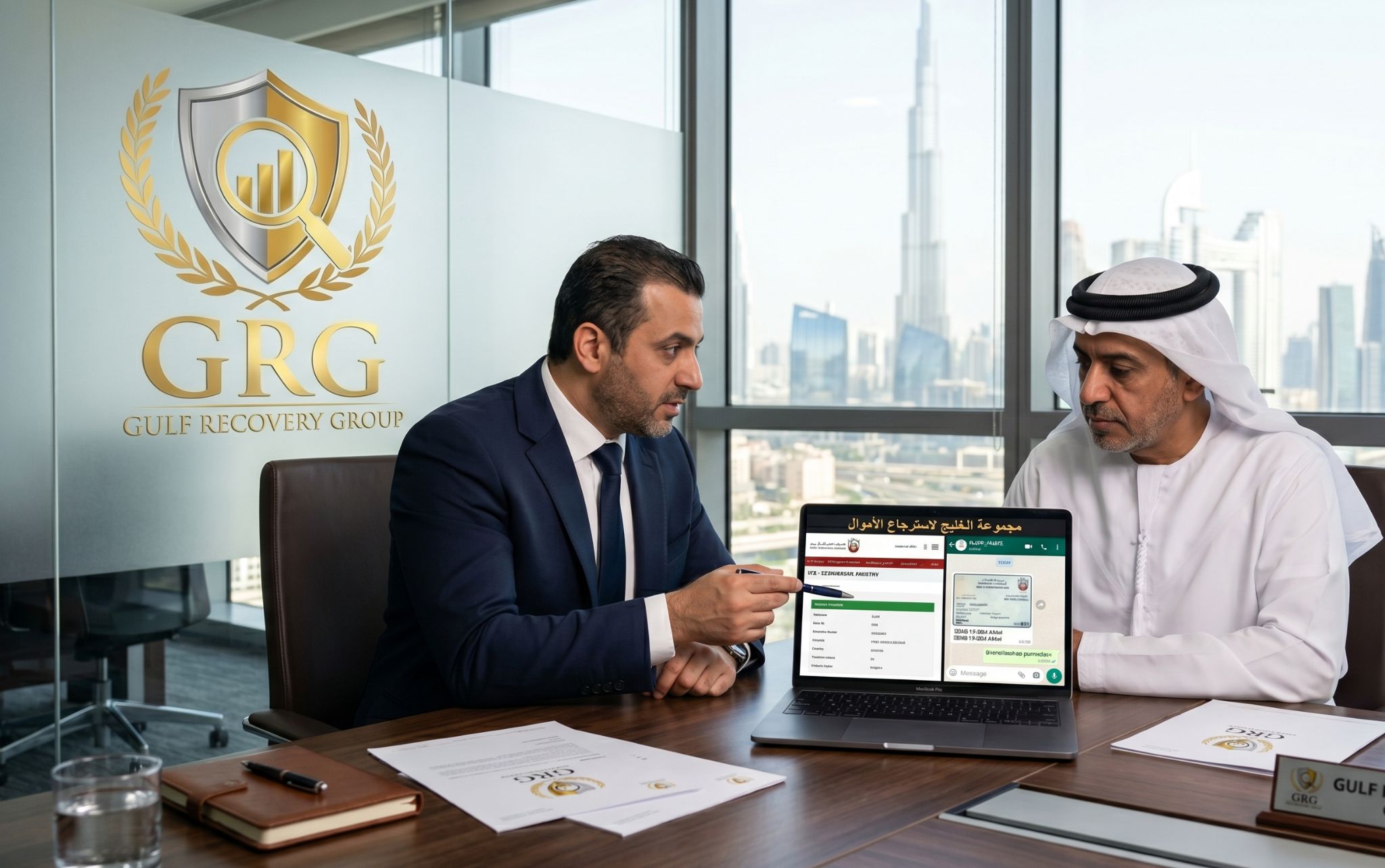
At Gulf Recovery Group, we regularly review cases involving suspected online trading fraud, broker scams, withdrawal disputes, and frozen trading accounts affecting investors across the GCC region.
Every case begins with a detailed review of the available evidence.
This process may include:
- Case Review & Evaluation.
- Transaction Analysis.
- Financial Investigation.
- Documentation Assessment.
- Timeline Reconstruction.
The objective is to understand how the events unfolded and identify the available procedural options based on the specific circumstances of each case.
Following the Money: The Importance of Transaction Analysis
One of the most important aspects of any trading scam recovery process is understanding where funds were transferred and how transactions were processed.
Transaction analysis may help identify:
- Payment routes.
- Receiving entities.
- Transaction patterns.
- Supporting financial records.
- Relevant banking documentation.
Combined with financial investigation techniques, this information helps establish a clear and documented sequence of events.
This structured approach is particularly important when dealing with investment scam recovery matters involving multiple transfers and communication channels.
Transforming Evidence Into a Structured Case File
Financial institutions and regulatory authorities rely on evidence rather than assumptions.
A properly documented case file may include:
- Bank transfer receipts.
- Credit and debit card statements.
- Trading platform screenshots.
- Withdrawal requests.
- Email communications.
- Chat records.
- Account statements.
- Notes regarding interactions with account managers.
By organizing evidence chronologically, it becomes easier to present a coherent picture of what occurred.
Banking Reviews and Regulatory Complaints
Once evidence has been collected and organized, two procedural paths are often considered.
Banking Review
This process focuses on presenting relevant documentation to financial institutions for review.
Supporting materials may include:
- Transaction records.
- Communications.
- Evidence of misleading representations.
- Documentation relating to disputed transactions.
Regulatory Complaint Support
In some circumstances, concerns may also be reported to relevant authorities or regulators.
Well-organized documentation helps authorities understand the facts and evaluate the information available.
The options available will always depend on the jurisdiction, payment methods, timing, and evidence associated with the case.
Example Scenario
Consider a hypothetical example.
An investor responds to an advertisement for an online trading opportunity and deposits funds with a platform that appears legitimate.
Over time, the account displays significant profits.
When the investor attempts to withdraw funds, additional payments are demanded in the form of taxes and processing fees.
Recognizing the warning signs of a trading platform scam, the investor refuses to send more money and immediately begins preserving evidence.
The investor saves emails, screenshots, transaction records, and chat conversations before seeking assistance.
Although no outcome can ever be guaranteed, this early action helps preserve valuable evidence and creates a stronger foundation for future procedural review.
How to Choose a Qualified Fund Recovery Service
Individuals affected by investment fraud are often targeted a second time by organizations making unrealistic promises.
Before engaging any provider, consider the following:
- Do they explain realistic procedural options?
- Do they understand online trading fraud and broker scams?
- Do they discuss limitations openly?
- Do they avoid guaranteeing results?
- Do they provide ongoing support and documentation assistance?
Any organization promising guaranteed recovery outcomes should be approached with caution.
Why Acting Quickly Can Protect Your Rights
Time is one of the most important factors in any financial fraud matter.
Digital evidence can disappear quickly. Websites may be removed, communication channels may be shut down, and records may become inaccessible.
Banks and financial institutions also operate within strict review periods.
Acting quickly can help preserve evidence, organize documentation, and ensure that procedural options remain available for consideration.
The sooner evidence is collected and reviewed, the stronger the foundation for any future action.
Frequently Asked Questions
Can I recover money lost to a trading scam?
Every case is different and outcomes depend on numerous legal, banking, regulatory, and factual considerations. No recovery can ever be guaranteed.
Why is my trading account frozen?
Some fraudulent platforms use account freezes as a tactic to pressure investors into sending additional funds. However, legitimate restrictions may also occur in certain circumstances. Each situation requires careful review.
What should I do if a broker asks for taxes before withdrawal?
You should request supporting documentation, preserve all communications, and avoid making additional payments until the situation has been properly assessed.
How can I identify a fake broker?
Common warning signs include guaranteed profits, pressure to deposit funds quickly, withdrawal problems, unexpected fees, and limited transparency regarding licensing or regulation.
Can online trading fraud be reported?
Depending on the circumstances, reports may be submitted to financial institutions, regulators, or other relevant authorities.
Need Help Understanding Your Situation?
If you believe you may have been affected by an online trading scam, broker scam, investment fraud, withdrawal problems, or a frozen trading account, Gulf Recovery Group can help you conduct an initial review of your situation.
Our team assists with evaluating available evidence, organizing documentation, reviewing transaction records, and helping clients understand the procedural options that may be available based on their specific circumstances.
Every case is unique, and no result can be guaranteed. However, acting early may help preserve critical evidence and ensure your case is properly documented for further review.







Add Your Directory With Us
Boost your visibility with our Business Directory

Add Your BCard With Us
Open the door to new professional connections.
DayOfDubai
Business Services
