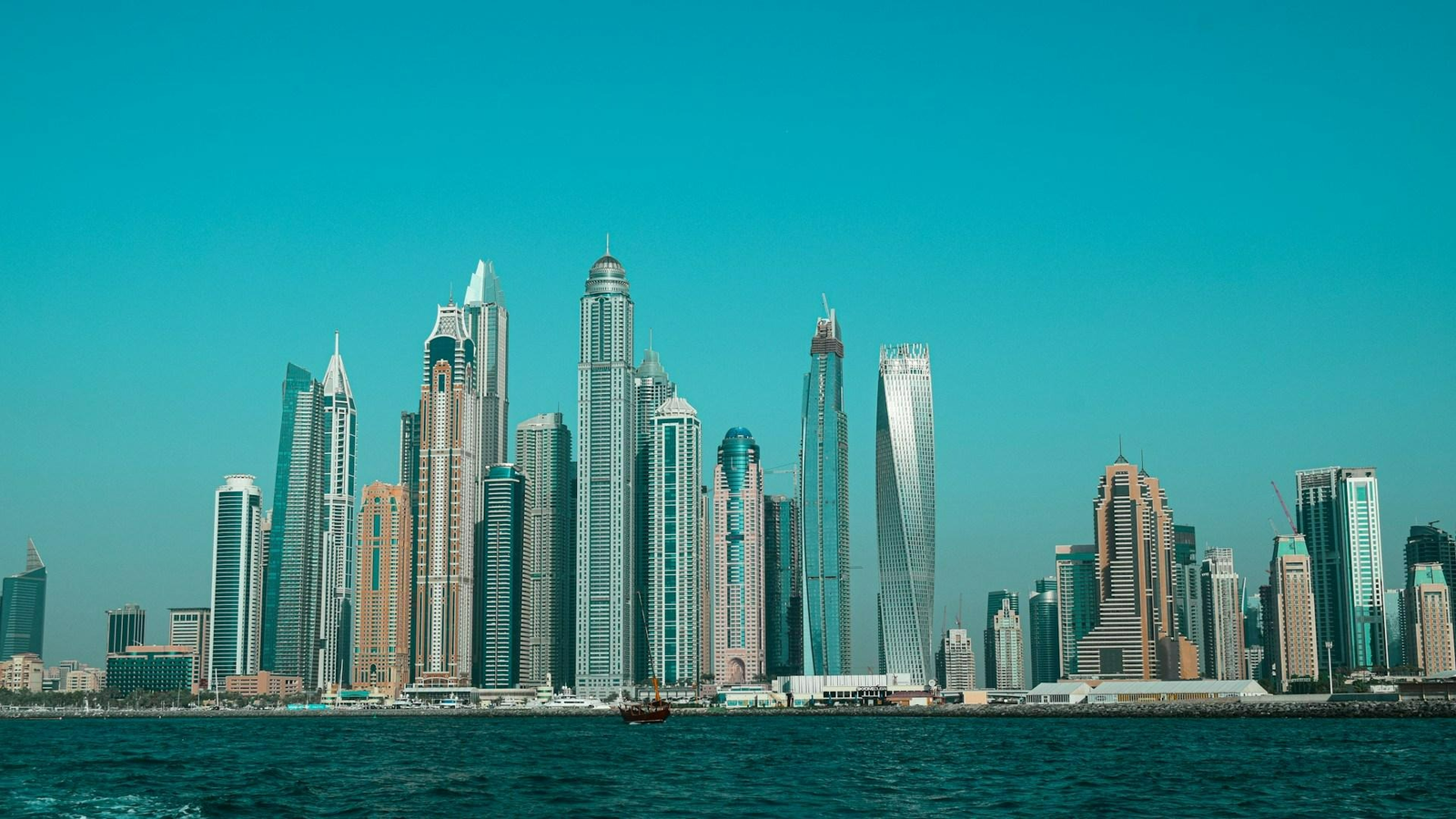


Real Estate Investment in Dubai in 2026


Dubai continues to strengthen its position as one of the world’s most active destinations for international property investment. Investors enter the market for different reasons. Some focus on rental income, others target capital appreciation, while many combine both strategies to build a balanced real estate portfolio.
Real estate investment in Dubai generally means purchasing a ready or off-plan property with the objective of generating financial returns. What makes Dubai particularly attractive is the combination of a tax-efficient environment, continuous infrastructure development, international demand, flexible property ownership options, and a large pipeline of new communities.
However, investing successfully is not simply about choosing a popular project or buying in a well-known location. The property, developer, entry price, payment structure, future supply, community development, and investment timeline should all support the investor’s objectives.
As a professional real estate investment advisor in Dubai, I, Siraj Sultanli (RERA License No. 93112), work with investors who want to approach the Dubai property market strategically and make decisions based on their individual investment goals.
Why Investors Choose Dubai Real Estate
Dubai attracts buyers from Europe, Asia, the Middle East, North America, and other international markets. Its geographical position between Europe, Asia, and Africa has helped the city develop into a major global business and lifestyle destination.
There are several reasons behind Dubai’s appeal to property investors.
The emirate does not currently impose annual property tax, personal rental income tax, or capital gains tax on individual property investors in the way many other international markets do. Investors can also benefit from relatively attractive rental yields, potential long-term capital appreciation, strong infrastructure development, and an internationally regulated property market.
Property investment may also support eligibility for UAE residency programs, including long-term residence options, depending on the investor and property meeting the applicable requirements.
Dubai also continues to expand geographically. New roads, transport links, business districts, residential communities, tourism destinations, and waterfront developments regularly create new areas of investor interest.
Ready Property vs Off-Plan Property
One of the first decisions an investor needs to make is whether to purchase a completed property or invest in an off-plan development.
Off-Plan Property Investment
An off-plan property is purchased before construction has been completed. In some cases, investors enter projects during the earliest launch stages.
Rather than purchasing an existing unit, buyers invest based on the developer’s master plan, floor plans, specifications, expected completion date, and contractual commitments.
One of the main advantages is the payment structure. Developers commonly allow the purchase price to be paid progressively through installments instead of requiring the full amount immediately.
Off-plan properties can also provide opportunities to enter emerging communities before infrastructure and surrounding developments have been fully completed.
For investors seeking capital appreciation over approximately three to five years, this can be particularly attractive.
However, not every off-plan project represents a good investment. A reputable developer alone does not guarantee strong returns. Entry price, future supply, community planning, unit selection, construction timeline, market timing, and expected demand all need to be considered.
Dubai’s transaction data also demonstrates the importance of the off-plan sector. According to DXBinteract data referenced for Q1 2026, 33,692 off-plan transactions were recorded during the quarter, representing approximately 70% of Dubai’s overall property sales transactions.
The value of those off-plan transactions reached approximately AED 124.7 billion.
Ready Property Investment
Ready properties are already completed and can normally be occupied or rented immediately after the transaction is finalized.
This investment model is particularly suitable for buyers whose main objective is immediate rental income.
Another advantage is visibility. Investors can physically inspect the property, evaluate the existing building, understand the surrounding infrastructure, and review actual rental demand before completing the purchase.
For investors prioritizing predictability and cash flow rather than waiting several years for completion, ready properties can therefore be an attractive alternative.
Three Common Dubai Property Investment Strategies
The right property depends heavily on the investor’s strategy.
Three approaches are particularly common.
Capital Appreciation Strategy
Investors pursuing capital appreciation generally aim to purchase a property at an attractive entry point and benefit from increasing property values over time.
This strategy is often associated with off-plan projects and developing communities.
For example, an investor entering a master-planned community during its early development stage may potentially benefit as infrastructure, schools, retail facilities, transport connections, parks, and additional residential phases are completed.
Timing remains critical. Purchasing too late in a development cycle may reduce the potential upside even when the underlying project is strong.
Rental Income Strategy
Rental-focused investors normally prioritize locations with established tenant demand.
The objective is to purchase the right unit at a price that can produce an attractive net rental return after service charges and other ownership expenses.
Dubai is known for relatively strong rental yields compared with many major international cities, although actual performance varies significantly by location, unit type, purchase price, operating costs, and market conditions.
This strategy is generally better suited to investors looking for regular cash flow rather than relying primarily on future resale.
Hybrid Investment Strategy
A hybrid strategy combines capital appreciation and rental income.
An investor may purchase an off-plan property early, hold it throughout construction, and then rent the unit after handover rather than selling it.
The investor can therefore potentially benefit from appreciation during the construction period and rental income after completion.
This strategy can be especially effective when purchasing within well-planned communities expected to develop strong long-term residential demand.
Dubai Real Estate Market Performance in Q1 2026
Dubai’s property market continued to record significant activity during the first quarter of 2026.
According to DXBinteract figures, approximately 47,820 property sales transactions were completed during Q1 2026.
Total sales value reached approximately AED 175.9 billion.
The average property transaction price was approximately AED 1,755 per square foot, representing a year-on-year increase of around 12.3%.
Interestingly, total transaction value increased considerably faster than transaction volume. While sales transactions increased approximately 5.3% year-on-year, total sales value increased approximately 23%.
The figures suggest that investors should look beyond transaction numbers alone when evaluating market performance.
Price movements, property type, transaction value, project launches, location-level performance, and supply should also be considered.
Where to Invest in Dubai in 2026
There is no single “best area” for every property investor.
A location suitable for rental income may not necessarily provide the greatest capital appreciation opportunity. Similarly, a developing community offering strong long-term potential may not suit an investor who requires immediate rental income.
Established locations such as Downtown Dubai and Dubai Marina continue to attract investors because of their global recognition, developed infrastructure, and established rental markets.
At the same time, emerging destinations such as Dubai South, Dubai Islands, Palm Jebel Ali, and The Oasis are attracting attention from investors looking for future growth opportunities.
Master-planned communities such as Dubai Hills Estate and Dubai Creek Harbour represent another category. These areas combine residential development with parks, retail, schools, transport infrastructure, and other facilities designed to support long-term community growth.
The important question is therefore not simply, “Which area is popular?”
A better question is, “Which area supports my investment strategy at today’s entry price?”
Property Prices Vary Significantly Across Dubai
Dubai should not be treated as one uniform property market.
Even properties located within the same community can perform differently depending on the developer, building, floor, view, unit layout, size, payment plan, service charges, and purchase price.
DXBinteract’s Q1 2026 data illustrates these differences.
For example, average apartment transaction prices were approximately AED 2.96 million in Dubai Creek Harbour, AED 2.68 million in Dubai Islands, AED 2.27 million in Business Bay, and AED 1.28 million in Dubai South.
Price per square foot provides another important comparison.
Dubai Creek Harbour averaged approximately AED 2,564 per sq. ft., Dubai Islands AED 2,781, Business Bay AED 2,595, while Dubai South averaged approximately AED 1,532 per sq. ft.
This is why investors should avoid evaluating opportunities solely according to total property price.
Unit size, price per square foot, expected rent, future competition, project quality, and comparable transactions should be examined together.
Financing Property Investment in Dubai
Purchasing Dubai real estate does not always require paying the entire price upfront.
Off-plan developers frequently provide installment-based payment plans. Depending on the project, payments may continue throughout construction and sometimes after handover.
Mortgage financing is another option.
Both UAE residents and qualifying non-residents can potentially obtain mortgages from UAE banks. Financing percentages, interest rates, income requirements, age limits, and documentation vary according to the bank and applicant profile.
As a general market structure, residents may qualify for higher loan-to-value ratios than non-residents.
Investors considering financing should therefore evaluate mortgage eligibility before committing to a property.
Steps to Invest in Dubai Real Estate
A property investment should normally begin with the investor’s objective rather than the project.
First, determine whether the priority is rental income, capital appreciation, long-term ownership, or a combination of these objectives.
The next stage is market research. This includes evaluating locations, developers, individual projects, prices, comparable transactions, future supply, and infrastructure plans.
After selecting a property, the transaction process depends on whether the purchase is off-plan or secondary.
For an off-plan property, the buyer normally reserves the unit, signs the Sales and Purchase Agreement, completes the required payments, and has the property registered through the applicable off-plan registration system.
For a ready resale property, the parties typically enter into the required sale documentation before completing the ownership transfer through the Dubai Land Department process.
After purchase, an off-plan investor continues following the developer’s payment schedule until handover. A ready-property investor can generally proceed with leasing the property or holding it for future appreciation.
The Importance of Professional Property Selection
One of the biggest mistakes investors can make is assuming that every Dubai property will automatically increase in value.
Dubai offers significant investment opportunities, but performance varies considerably between projects.
A strong investment decision requires evaluating the developer, location, master plan, supply pipeline, unit type, floor plan, payment structure, price per square foot, comparable transactions, expected rental demand, exit strategy, and investment horizon.
Investors should also understand why they are purchasing a particular property before committing capital.
Buying simply because a project is heavily marketed, because a developer is famous, or because an area is trending is not a complete investment strategy.
Final Thoughts
Real estate investment in Dubai in 2026 continues to offer opportunities for international and local investors seeking rental income, capital appreciation, or a combination of both.
The strength of Dubai lies in the diversity of its market. Investors can choose between completed properties and off-plan developments, established communities and emerging districts, apartments and villas, immediate rental income and longer-term growth strategies.
However, opportunity alone does not guarantee a successful investment.
The quality of the decision depends on selecting the right property, in the right location, at the right price, with a strategy that matches the investor’s financial objectives.
I, Siraj Sultanli, am a professional real estate agent in Dubai (RERA License No. 93112), helping foreign investors select suitable properties and clearly understand how to buy property in Dubai. My approach focuses on helping investors understand the market, compare available opportunities, and make well-informed property investment decisions based on their individual objectives.