


Kamran Pitafi: The Gap Between Making Products and Moving Them; A Manufacturing Problem with No Single Culprit

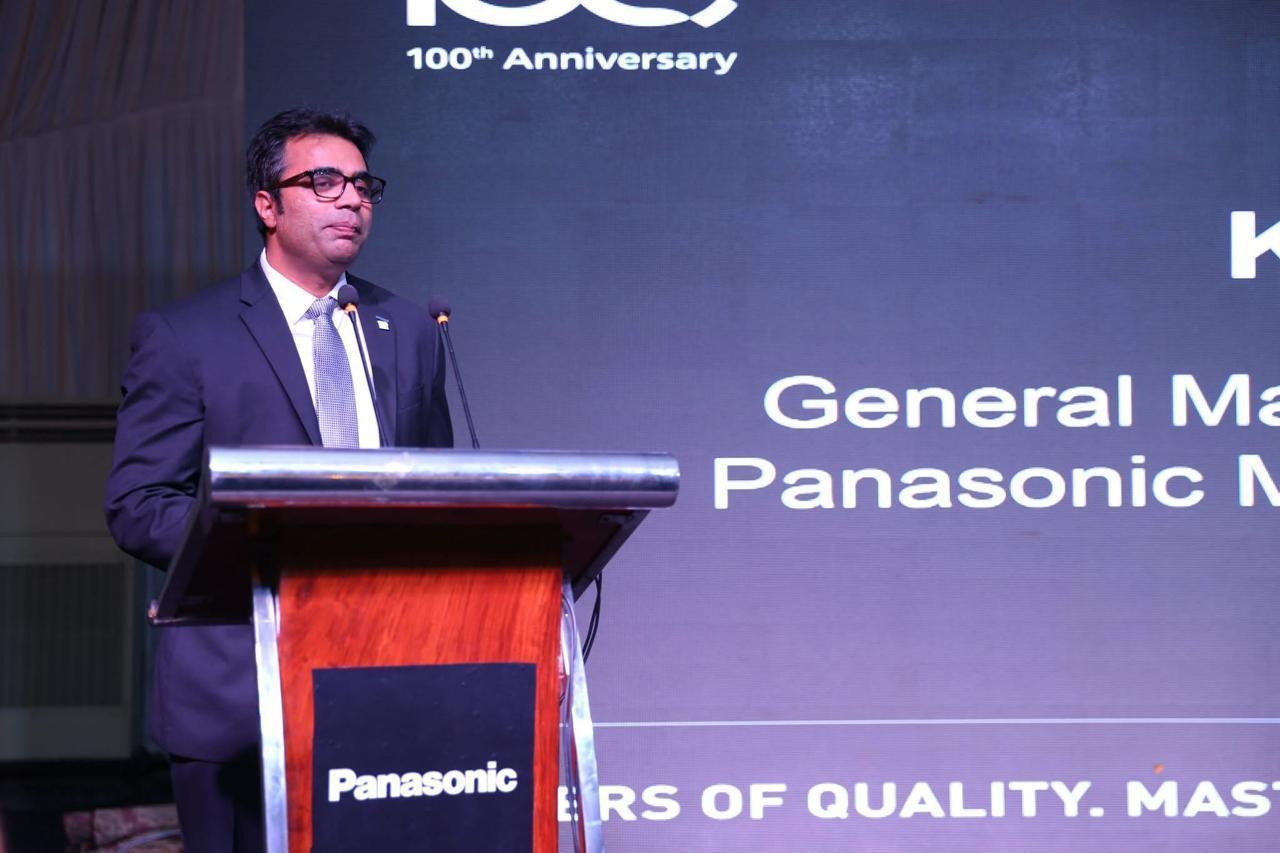
In 2019, a multinational electronics manufacturer faced a familiar problem: warehouses in Dubai held excess inventory of mid-range televisions while identical models were out of stock in Riyadh for weeks. The factory had met its production targets. The logistics network had functioned as designed. The failure was elsewhere, in the gap between what was being manufactured and what regional markets were actually demanding. Kamran Pitafi, then General Manager of the Middle East and Africa Division at Panasonic, had seen this pattern repeatedly for over two decades in the industry.
Industry data supports this pattern. A 2022 McKinsey survey of 325 global manufacturers found that 67% reported production efficiency gains of 15% or more over five years, while only 23% reported comparable improvements in demand forecasting accuracy. The disconnect between manufacturing capability and market responsiveness has become a documented structural issue rather than an isolated operational failure.
From Regional Sales to Multi-Country Operations
Over the course of two decades, Kamran Pitafi has built a career defined by steady progression rather than sudden success. Beginning in engineering before moving into business development and strategic planning, he advanced through successive commercial leadership roles to become General Manager and Head of Department for Panasonic Middle East & Africa. From the company's regional headquarters in Dubai, he has spent more than 19 years helping shape commercial operations across the Middle East and Africa, leading regional growth strategies, strengthening distribution ecosystems, and managing business across markets characterized by diverse regulatory environments and rapidly changing economic conditions. His experience spans every stage of the commercial value chain—from planning and channel development to sales leadership, customer engagement, logistics, and multi-country P&L management—providing a practical perspective that continues to inform his work on business transformation and commercial excellence.
A New Perspective on Manufacturing
This year, Pitafi published The Manufacturing-to-Market Framework (M2M): Connecting Production, Distribution, and Commercial Growth, a book that distills more than two decades of commercial leadership across the Middle East and Africa into a structured approach for improving coordination between manufacturing, distribution, and market demand. Rather than treating distribution networks solely as channels for moving products, the framework argues they should function as continuous sources of market intelligence, allowing regional sell-through information to influence production planning far more rapidly than traditional quarterly planning cycles typically allow.
The framework also examines several large-scale industry disruptions to illustrate the consequences of disconnected decision-making. Among them is the global semiconductor shortage between 2021 and 2023, which exposed how manufacturers with sophisticated production capabilities still struggled to respond quickly when procurement, manufacturing, and commercial planning operated on separate timelines. In the book, Pitafi describes this organizational disconnect as structural latency, the delay between recognizing changes in market demand and translating those signals into operational decisions. Rather than proposing another technology solution, the framework argues that manufacturers may achieve greater long-term competitiveness by redesigning how information moves across commercial and operational functions.
Advisory Roles in Pakistan's Innovation Ecosystem
He serves as a Senior Member at Plan9, the Punjab Information Technology Board's flagship technology incubator and Pakistan's first government-backed startup accelerator. The Senior Member designation is reserved for industry veterans with a minimum of ten years in senior operational roles, nominated by existing members and vetted by a selection committee. In this capacity, he reviews business plans and advises early-stage technology ventures on commercialization strategy, drawing on his experience scaling consumer electronics distribution across fragmented emerging markets.
He also holds a Mentor appointment at BNU Innovatrium, the innovation center of Beaconhouse National University. The center supports student entrepreneurs and faculty-led ventures translating research into commercial products. His mentoring focuses on operational readiness, helping founders bridge the gap between product development and market entry.
Additionally, he mentors at the National Incubation Center Lahore, one of Pakistan's premier platforms for high-growth ventures established under the Ministry of Information Technology and Telecommunication. The center selects founders through a competitive application process and provides structured mentorship on scaling operations, securing investment, and entering regional markets. He works with approximately six to eight companies annually, advising on supply chain setup, distributor negotiations, and the operational challenges of manufacturing partnerships.
Where the Framework Stands
While the Manufacturing-to-Market Framework is newly introduced, the operational challenges it addresses are well established across the manufacturing industry. A 2024 Gartner report found that 41% of manufacturers continue to operate with planning cycles exceeding one month, highlighting the difficulty many organizations face in responding quickly to changing market conditions. Whether Pitafi's proposed framework gains broader industry adoption will become clearer over time, but it contributes a practitioner-led perspective drawn from more than two decades of executive leadership across complex international markets, emphasizing organizational integration as a means of improving manufacturing responsiveness.
ABOUT THE AUTHOR:
Murali Ekarool is the Founder & CEO of Day Of Dubai. A media person, well into art and business with proven expertise in multimedia and photography.
Set into business ventures with Signature Group of Companies. Later on, picked up taste for media and unveiled the unique idea of a digital local business information hub, a first-of-its-kind in the UAE – Day of Dubai.