


How Dubai’s Digital-First Economy Is Raising the Standard for UI/UX Design

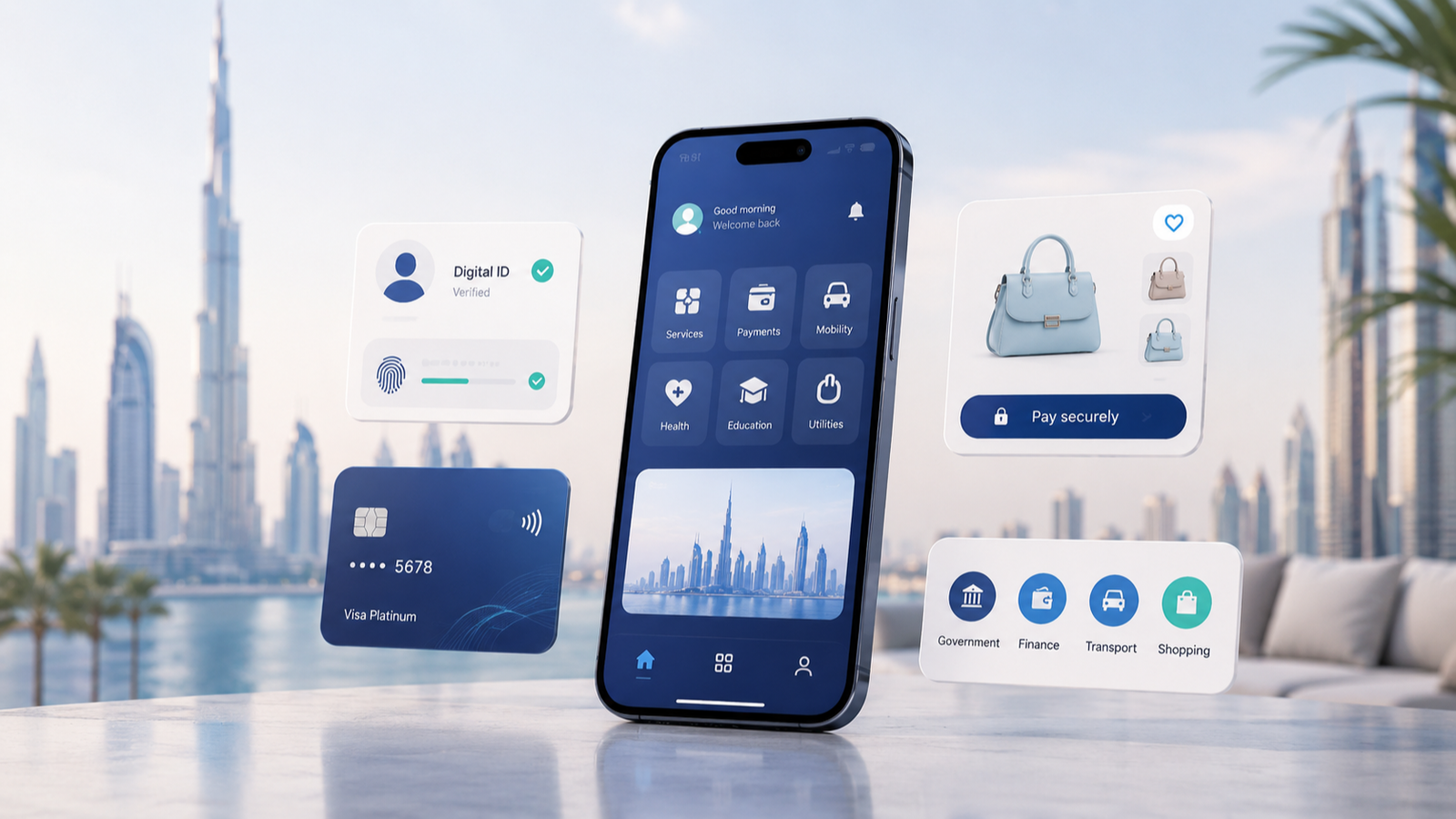
A Dubai resident can renew a vehicle registration, transfer money, order groceries, book a ride, and pay bills without leaving their phone. These experiences may come from different platforms, but users do not judge them separately. Once people become accustomed to fast, connected, and intuitive digital services, they begin expecting the same standard from every website and application they use.
This shift is changing what good UI/UX design means in Dubai. A polished interface is no longer enough if the journey is slow, fragmented, or confusing. Government platforms have normalised integrated services, fintech apps have raised expectations around speed and trust, e-commerce has reduced tolerance for checkout friction, and super apps have demonstrated the value of continuity across multiple services.
As Dubai’s economy becomes increasingly digital-first, businesses must create experiences that are not only visually modern but also simple, reliable, mobile-friendly, and locally relevant.
Dubai’s Digital Transformation Is Resetting the Baseline
These higher expectations are closely tied to Dubai’s long-term investment in digital public services.
When the Dubai Digital Strategy was launched in 2023, the government reported that 99.5% of its services had been digitised, the paperless-government objective had been achieved, and digital channels accounted for 87% of government service transactions. These figures reflect a broader shift from physical paperwork and disconnected portals towards faster, more accessible digital journeys.
The important change, however, is not simply that services are available online. Users can increasingly verify their identity digitally, make payments, submit information, receive confirmations, and track service progress without visiting an office or repeatedly switching between channels.
These experiences establish clear UI/UX expectations. People become less tolerant of confusing navigation, repetitive form fields, unclear requirements, slow mobile interfaces, and actions that provide no immediate feedback. Responsive design, secure authentication, digital payments, and visible service status are no longer considered premium features. They are becoming basic requirements.
This raises the benchmark for private businesses across Dubai. Customers do not compare a banking app only with other banking apps or an online store only with competing retailers. They compare every digital interaction with the smoothest services they already use.
Government platforms have played a major role in establishing this standard by showing how complex, multi-step processes can become simpler and more connected user journeys.
Government Platforms Teach Users to Expect Complete Journeys
Government platforms have turned Dubai’s wider digital ambitions into everyday expectations. Instead of requiring people to understand which department controls each stage of a service, the strongest digital journeys are organised around one practical question: what is the user trying to complete?
UAE PASS supports this approach by providing residents with a secure digital identity that can be used across government and private-sector services. Users can verify their identity, access participating platforms, share official documents, and sign documents digitally. DubaiNow builds on this system by bringing services from multiple entities into one application with a single sign-on experience.
The technical integration behind these platforms may be complex, but the visible experience is designed to feel simple. Users do not need to create a separate account for every interaction or repeatedly provide information that has already been verified. Once people become familiar with this continuity, repetitive registration processes and disconnected systems elsewhere feel unnecessarily difficult.
The same principle applies to the complete service journey. A government transaction may involve identity verification, document submission, payment, approval, and confirmation. When these stages are connected within one digital flow, users can focus on completing the task instead of navigating the structure of the organisations involved.
This is an important lesson for private businesses. Customers do not care whether separate departments, software systems, or external providers manage different stages behind the scenes. They expect the experience to remain consistent from beginning to end. That gap between internal structure and customer expectation is where most redesigns start. Musemind's UI/UX team in Dubai works on exactly this problem, mapping where a journey breaks across systems before touching the interface.
Clarity matters just as much as integration. Dubai’s official usability guidance recommends simple language, responsive layouts, consistent interaction patterns, and visible service status across digital touchpoints. These principles help users understand what information is required, whether an action has succeeded, and what they need to do next.
Government platforms have therefore raised the standard for task completion, continuity, and feedback. Fintech applications add another layer by proving that even sensitive and security-heavy processes must still feel fast, clear, and trustworthy.
Fintech Makes Trust Part of the Interface
The expectations established by government platforms become even more demanding in fintech. When people are transferring money, verifying their identity, or managing personal finances, convenience matters, but confidence matters just as much.
A fintech product cannot rely on a polished interface alone. Users need to understand what information is being requested, why it is required, and what will happen after they submit it. During onboarding, identity checks and document verification should feel like clear stages of one process rather than unexpected barriers.
Digital identity systems such as UAE PASS can make these journeys more secure and connected, but the experience still depends on how clearly each step is communicated.
The same principle applies to payments and transfers. Before confirming an action, users should be able to review the amount, recipient, fees, and expected processing time. Once the transaction is completed, the interface should immediately confirm the result and provide an accessible record. Unclear fees, vague error messages, or uncertain payment status can quickly undermine trust.
This is where UI and UX work together. The UI determines how balances, warnings, buttons, and confirmations are presented. The UX determines whether users understand the action, feel in control, and can recover easily when something goes wrong.
Security and regulatory checks should therefore be built into the journey rather than added as disconnected obstacles. Authentication, fraud prevention, and customer verification are essential, but they should appear at the right moment, explain their purpose, and avoid asking users to repeat information unnecessarily.
Fintech products have raised Dubai’s digital standard by showing that secure processes do not have to feel confusing or slow. They can be fast, transparent, and reassuring at the same time. E-commerce platforms increase the pressure further because every moment of hesitation can interrupt the path to purchase.
E-Commerce Turns UX Friction Into Lost Revenue
Fintech products show how uncertainty can weaken trust. In e-commerce, that uncertainty often has a more immediate consequence: the customer abandons the purchase.
The buying journey begins before checkout. Users must be able to find relevant products, compare options, and understand essential details without unnecessary effort. Clear categories, accurate search results, practical filters, and well-structured product pages reduce the time between interest and decision.
This is especially important in Dubai’s mobile-first market, where customers frequently browse and purchase through smartphones. Product images, filters, navigation, and calls to action must remain easy to use on smaller screens. A desktop experience that has simply been compressed for mobile can create excessive scrolling, hidden controls, and frustrating interactions.
As users move closer to purchasing, transparency becomes critical. The total price, delivery charge, estimated arrival date, stock availability, and return conditions should be clear before the final confirmation. Revealing unexpected costs or restrictions late in the journey creates hesitation at the point when customers should feel most confident.
Checkout should remove effort, not introduce it. Forced account creation, repetitive fields, limited payment choices, or unclear error messages can interrupt customers who are already prepared to buy. A stronger flow keeps the number of steps reasonable, supports familiar payment methods, preserves entered information, and immediately confirms whether the transaction was successful.
The experience does not end when payment is completed. Order updates, delivery tracking, support access, cancellations, and returns all influence whether customers trust the business enough to purchase again. A smooth checkout may secure one sale, but a connected post-purchase experience helps build retention.
E-commerce has therefore raised expectations around speed, transparency, and control throughout the customer journey. Super apps take this further by showing that identity, payment information, preferences, and service history can remain connected across several related experiences.
Super Apps Create Expectations of Continuity
E-commerce connects the buying journey from discovery to delivery. Super apps extend this continuity by connecting multiple everyday services within one platform.
Careem is a clear regional example. Users can access rides, food delivery, groceries, payments, and other services through one account, with saved addresses, payment information, and familiar navigation carried across different journeys.
This has raised expectations around convenience and continuity. Users increasingly expect digital products to remember relevant information instead of making them restart every process.
However, the lesson is not that every company should build a super app. Adding unrelated features often creates clutter and weakens the product’s main purpose. The better approach is to connect services that naturally belong to the same customer journey.
Super apps have therefore raised the standard for consistency, personalisation, and seamless movement between related services. In Dubai, these connected experiences must also work effectively across different languages, layouts, and user needs.
Dubai’s Audience Requires More Than English-First Design
Connected experiences are only effective when they work for the people using them. In Dubai’s multilingual market, that means designing for Arabic and English users from the beginning rather than translating an English interface after it has been completed.
Arabic localisation affects more than written content. Interfaces may require right-to-left layouts, right-aligned text, adjusted navigation, mirrored directional elements, and typography that remains readable across different screen sizes. The Dubai Design System supports bilingual interfaces through language-switching components and right-to-left layouts.
Designers must also consider how different text lengths affect buttons, menus, forms, and page hierarchy. A layout that works well in English can become crowded or confusing in Arabic when spacing and component behaviour have not been tested properly.
Accessibility requirements should remain consistent in both languages. Readable contrast, responsive text, keyboard navigation, and screen-reader compatibility must be considered throughout the experience rather than added after launch.
For Dubai businesses, localisation should therefore begin during research, information architecture, and wireframing. Arabic-speaking and English-speaking users should both be included in usability testing before the product launches.
Translation changes the language people see. Proper localisation ensures that the entire experience remains clear, natural, and usable. These expectations give Dubai businesses a practical benchmark for evaluating whether their current products still meet the standards users encounter elsewhere.
What Dubai Businesses Should Review Before Their Next Redesign
Meeting Dubai’s rising digital standards does not always require rebuilding an entire product. Businesses should first identify the specific points where users become confused, lose trust, or abandon the journey.
Review the Complete Customer Journey
The review should begin with the main task customers are trying to complete. Whether they are opening an account, booking a service, submitting a request, or purchasing a product, they should be able to move from the first step to final confirmation without switching channels or repeatedly entering the same information.
Identify Where Users Experience Friction
Behavioural data can reveal where that journey breaks down. Analytics may show where users leave, while support requests, customer feedback, and usability testing can help explain why. Common problems include unclear navigation, difficult forms, hidden costs, weak mobile interactions, and missing feedback after an action.
Test the Product Under Local Conditions
Dubai businesses must test their experiences under local conditions. Arabic and English journeys should receive equal attention, including right-to-left layouts, text spacing, terminology, payment options, and mobile behaviour. Testing only an English desktop version provides a limited view of how the product will perform for its actual audience.
Review Error Handling and Recovery
Error recovery is another important measure of usability. When something goes wrong, users should understand the problem, know how to correct it, and retain the information they have already entered. A minor mistake should not force them to restart the entire process.
The purpose of this review is not simply to modernise the interface. It is to determine which obstacles prevent users from completing their goals and remove them in the most effective way.
Better UI Is Visible, but Better UX Is Felt
Dubai’s digital-first economy has changed how people judge websites and applications. Government platforms have normalised connected services, fintech products have made clarity and trust essential, e-commerce has reduced tolerance for friction, and super apps have demonstrated the value of continuity across related tasks.
These experiences have raised expectations beyond visual design. Users now expect digital products to respond quickly, explain information clearly, work smoothly on mobile devices, support both Arabic and English, and guide them confidently from the first step to completion.
For Dubai businesses, UI/UX design should not be treated as a cosmetic layer added near the end of development. It influences how services are structured, how easily customers make decisions, and whether they trust the product enough to continue using it.
A modern interface may capture attention, but a strong user experience removes unnecessary effort. In a market shaped by increasingly seamless digital services, the products that succeed will be those that make complex tasks feel simple, clear, and connected.